

Products and services

When we think about prejudice, we think about people. People who are prejudiced against us; people whom we may be prejudiced against (whether we admit it or not).
Yet not all prejudice is directed against people. Sometimes it can be directed against an animal. Or a bird.
The cormorant is one such bird. It has been hated for centuries for eating fish that human beings would like to eat themselves. Or that human beings think they would like to eat themselves (cormorants in fact tend to eat fish that humans don’t eat).
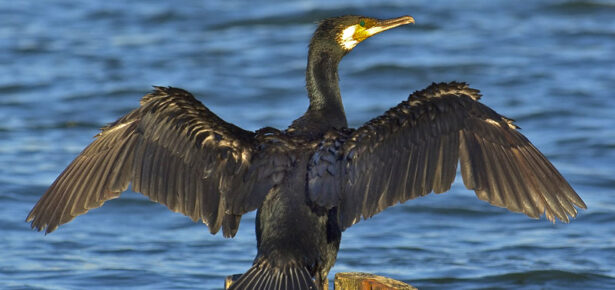
Certainly, there are obstacles in the way of loving cormorants. Anyone who has seen a cormorant colony will be aware that tree-nesting cormorants destroy with their own acid, odorous shit the trees they nest in. Avian traits that appeal to human beings – melodic song, brightly coloured plumage, sociability with humans – are all unavailable to cormorants. They do not sing. They do not have the haunting late-night call of a loon or of a raft of eiders offshore. Hook-beaked, heavy-tailed, heavy-footed, cormorants can appear cold, aloof, prehistoric, belonging to a time before animals were obliged to interact with human beings. This sense of distance, social and temporal, has led poets to invent a catalogue of unfavourable comparisons for this bird. Standing on a rock with its wings stretched out to dry, the cormorant has been described as looking like a broken umbrella, a crucifixion – even a swastika. Such comparisons resonate unhappily, in part because they have a very long history, and they have an impact in the world. They give meaning to a bird, and the meaning they give that bird is destructive.
Cormorant: A Cultural History of Greed and Prejudice is a book about a bird, but it is also a book about prejudice, about the way prejudice moves back and forth across the intangible line between humans and nonhuman animals, about the way prejudice about a bird or animal is always also prejudice against human beings. I show how the cormorant has provoked prejudice that echoes and sustains prejudice against human beings. Due in part to their position as competitors with human economic activity and in part to something more nebulous – the cultural meanings of blackness; the valences of the prehistoric; Christian symbology; human indignation at an animal that appears unbiddable – cormorants have over time become a vehicle for an array of prejudices, above all racism. In Shakespeare’s day, if you were a ‘cormorant’, then you were either Jewish or a usurer or both. These days, cormorants are more likely to be invoked in or alongside negative discourse about Muslim migrants. The vehicle stays the same, the tenor adapts: the prejudice remains, and it is destructive both to the natural world and to human society.
Ranging from the medieval pairing of (evil) cormorant and (Christ-like) pelican to the late-nineteenth-century Peruvian ‘Guano Rush’, from Paradise Lost to the Gulf War, from the Liverpool slave trade to traditional Chinese fishing, from the Lindisfarne Gospels to James Bond, Cormorant is a natural and cultural history of greed and prejudice – habits that have long been attributed to the bird but that are far more clearly those of human beings – offering a sweeping global history of poetry, religion, science, race, capitalism, colonial extraction and the Anthropocene.
Read it, and you will never look at a cormorant in the same way again.
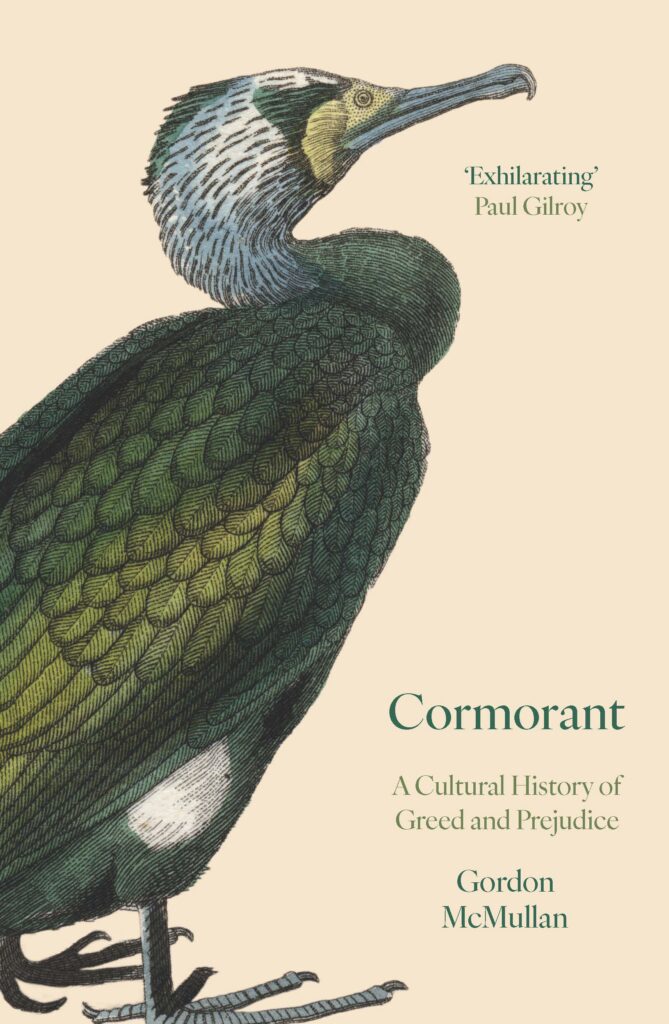
Cormorant by Gordon McMullan

Gordon McMullan is Professor of English at King's College London. He has written about early modern drama, late-life creativity and cultures of commemoration and has edited plays b...
View profile >Keep up with the latest from Cambridge University Press on our social media accounts.



Latest Comments
Have your say!