

Products and services

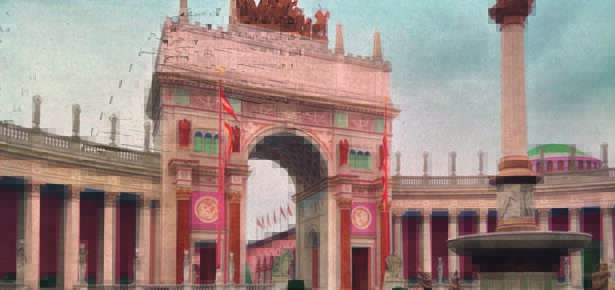
Nashville is often associated with music; it is home to the Grand Ole Opry and claims to have the most recording studios of any American city. But its most iconic building may be a full-scale replica of the Parthenon, the most famous temple from 5th-century-BCE Athens. So you might ask: why is there a Parthenon in Nashville?
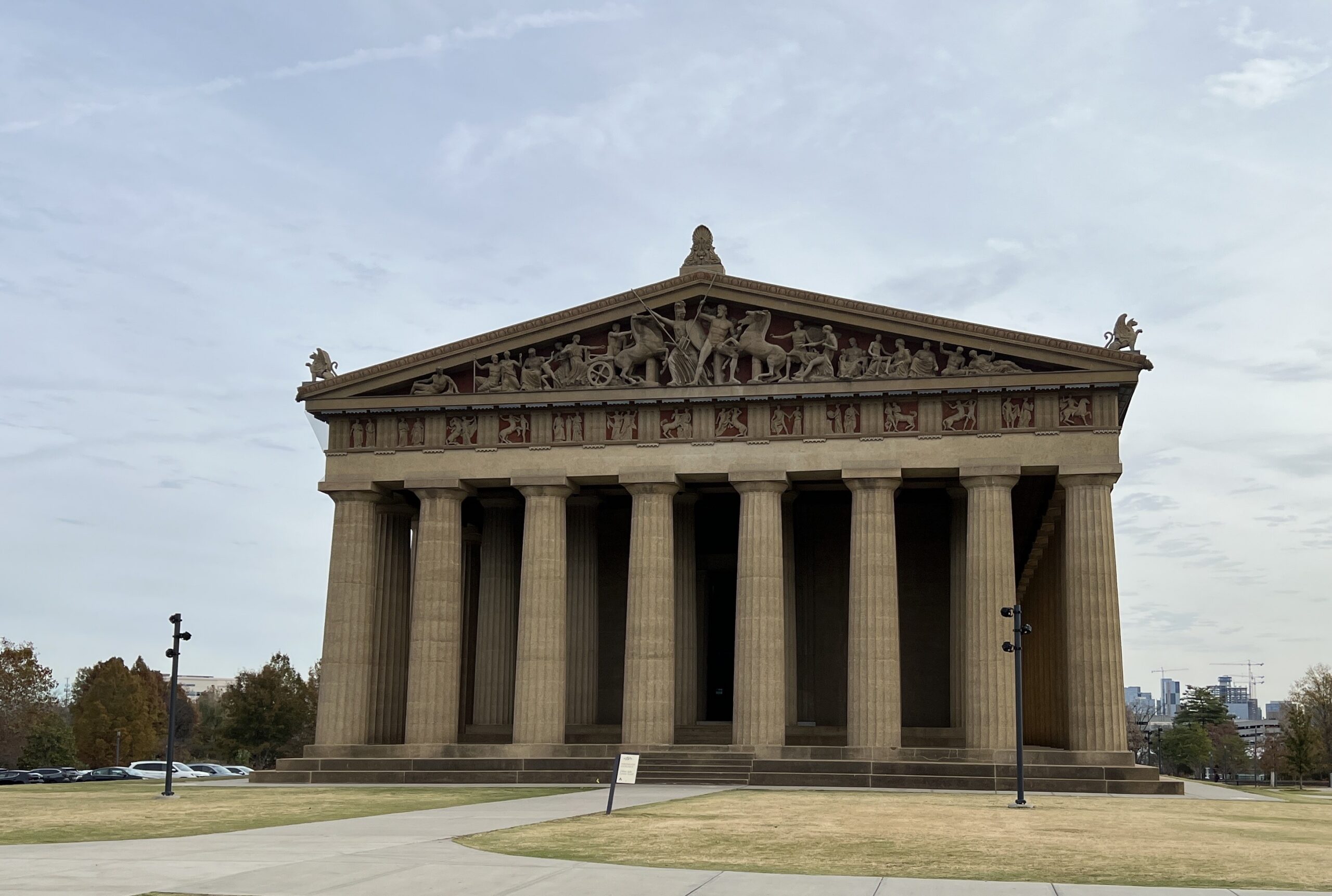
Caption: The Parthenon, Nashville.
Since the late 18th century, politicians in the United States have looked to the classical world for political inspiration and justifications. To lend legitimacy to the new American democracy, architects and politicians reinterpreted classical-Greek and Roman-architecture for public buildings. Since the mid-nineteenth century, Nashville presented itself as the Athens of the South because of its many universities. The city’s famous buildings adapted ancient Greek architecture. Architect William Strickland modeled the Tennessee State Capitol (1845–59) on an Ionic Greek temple; each side has a grand portico with Ionic columns and a pediment. On top of the building is a circular tower, modeled on the Choragic Monument of Lysicrates from Athens, which celebrated Lysicrates’s victory in a choral competition in 334 BCE. By using Greek-inspired architecture for its Capitol building, Tennessee expressed its commitment to the American experiment in democracy.
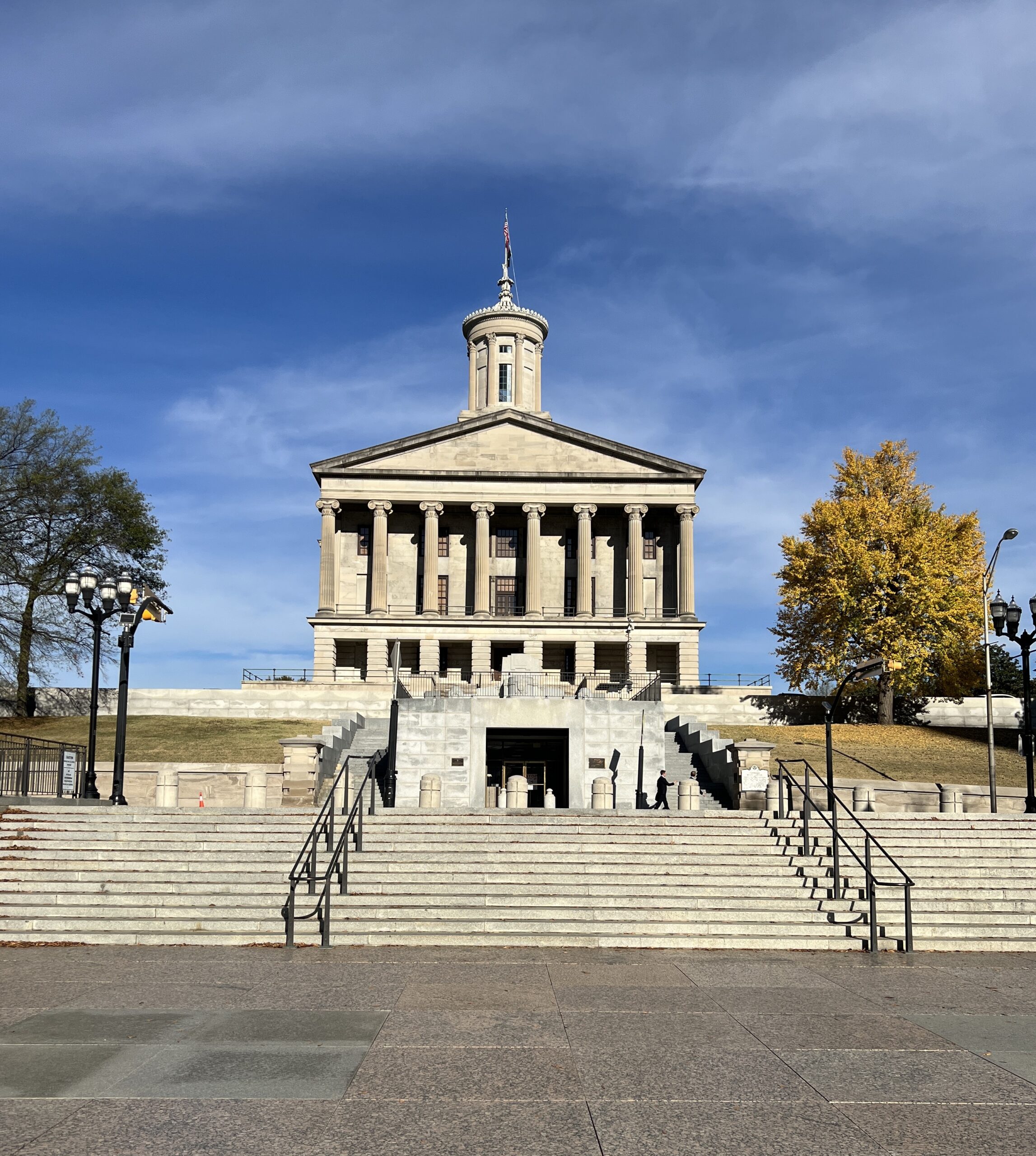
Caption: Tennessee Capitol Building, Nashville.
Unsurprisingly, when the grandees of Nashville decided to host a world’s fair in 1897 to celebrate the centennial of Tennessee’s admission as a state to the United States, they chose ancient Greek architecture for their fair. World’s fairs were one of the most important cultural phenomena of the 19th and 20th centuries. Hundreds of millions of Americans visited the American fairs between 1876 and 1965. My book, Ancient Fantasies and Modern Power: Neo-Antique Architecture at American World’s Fairs, 1893–1915, demonstrates that the Parthenon and other famous ancient Greek, Roman, and Egyptian buildings were purposefully reinterpreted at Chicago (1893), Nashville (1897), Omaha (1989), St. Louis (1904) and San Francisco (1915). The popularity of the Greek and Roman architecture at these fairs made classicizing architecture one of the dominant American architectural styles at the start of the 20th century. Because European architects had long reinterpreted classical forms for public buildings, using classical architecture-rather than a local style-allowed the United States to connect to a longer tradition and to signify its modernity and cultural sophistication.
Because Nashville defined itself as a new Athens, the fair organizers built a replica of the Parthenon as its architectural centerpiece. Based on archaeological reports, photographs, and drawings, William C. Smith designed an archaeologically-informed building of staff, a type of plaster of Paris. The building’s sculptures were inspired by the original: the pediments depicted the battle between Athena and Poseidon to be Athens’ patron god, and the metopes showed centauromachy, a mythological battle between the Lapiths, a legendary Greek people, and the centaurs. A centauromachy was typically interpreted as symbolizing the battle between civilization and barbarism. Nashville’s Parthenon even incorporated color, making this replica even more like the ancient Greek buildings, which were also painted. Appropriately, it was the fine arts building. When the fair closed, the Parthenon was one of the few buildings to survive. In the 1920s, the building was renovated and made permanent.
America’s engagement with classical antiquity is fraught; before the Civil War, ancient slavery was used to justify American chattel slavery, and white nationalists have sought to use the classical past to justify their nefarious aims today, but African American leaders, like Frederick Douglass, drew on classical antiquity in their fight for equality. Because of its longevity and potency, classical antiquity is open to many reinterpretations, both positive and negative. For Nashville, the Parthenon endures as a symbol of the state’s cultural sophistication and democratic traditions.
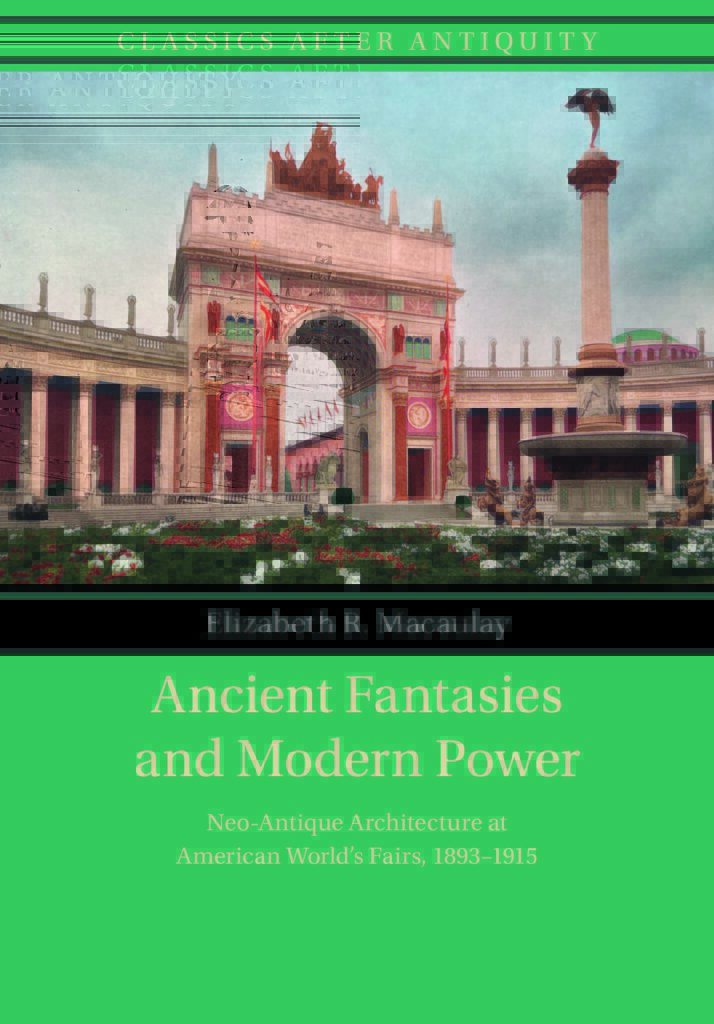
Ancient Fantasies and Modern
Power by Elizabeth R. Macaulay

ELIZABETH R. MACAULAY is Professor of Liberal Studies, Anthropology, Classics, Middle Eastern Studies, and Digital Humanities at The Graduate Center, The City University of New Yor...
View profile >Keep up with the latest from Cambridge University Press on our social media accounts.


Latest Comments
Have your say!