

Products and services

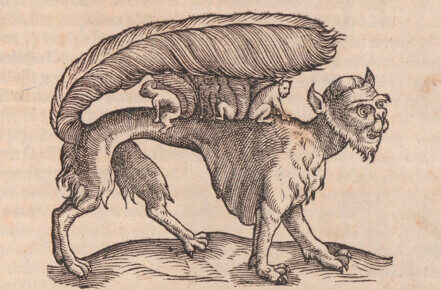
Everyone who discovers a new species nowadays has the right to name it. This name has to conform to rather intricate rules established by international professional associations. These conventions can be traced back to the eighteenth century, when Carl Linnaeus (1707–1778) introduced a taxonomic nomenclature based on a binomial system: every species receives a two-part designation consisting of the name of the genus and a specific epithet, such as Bellis perennis – the daisy. Linnaeus’ naming system was a response to the confusing abundance of names for animals, plants and minerals that had emerged during the early modern period. This era witnessed an unprecedented surge in knowledge about so-called naturalia, that is, animals, plants and minerals. Ancient authors knew about five hundred different plants, and Leonhart Fuchs (1501–1566), one of the so-called “fathers of botany”, described a similar number of species in his De historia stirpium commentarii insignes of 1542. Yet only 80 years later, Caspar Bauhin (1560–1624) listed more than 6,000 different plants in his Pinax theatri botanici of 1623.
This example already illustrates the sheer number of new names coined during the early modern period. With no uniform system in place, many natural objects acquired several different names; conversely, the same name was often used to refer to entirely different things. It is not difficult to imagine the increasingly unmanageable confusion that took hold in early modern natural history. The results of the early modern naming processes are in part still with us today as we continue to use many names and technical terms that were introduced in previous times. Because of the relevance of these technical terms in contemporary science, the results of the naming processes are comparatively well-known. The processes themselves, however, – that is, how a word was established and accepted as a name or technical term – have received far less scholarly attention. My monograph “Naming New Things and Concepts. The Case of Natural History” addresses precisely this issue and helps to close this research gap.
The process of scientific naming was anything but straightforward. At the beginning of the sixteenth century, many scholars were still convinced that the rediscovered Greek and Latin texts of antiquity contained in essence all the knowledge, albeit knowledge in need of restoration. For instance, these texts contained many designations for naturalia whose meanings had been lost over the centuries. Early modern scholars, hence, tried to identify the names in ancient texts with plants, animals or minerals they encountered in their environment. Sometimes they were successful but often two or more scholars proposed conflicting identifications. Given the general belief in the superior knowledge of ancient authors, early modern naturalists were initially reluctant to recognize species that did not appear in classical writings. Only after the limited knowledge of antiquity became apparent – not least through systematic research into American flora and fauna from the mid-sixteenth century onwards – did people increasingly emancipate themselves from ancient authorities and willingly create new names for newly discovered naturalia.
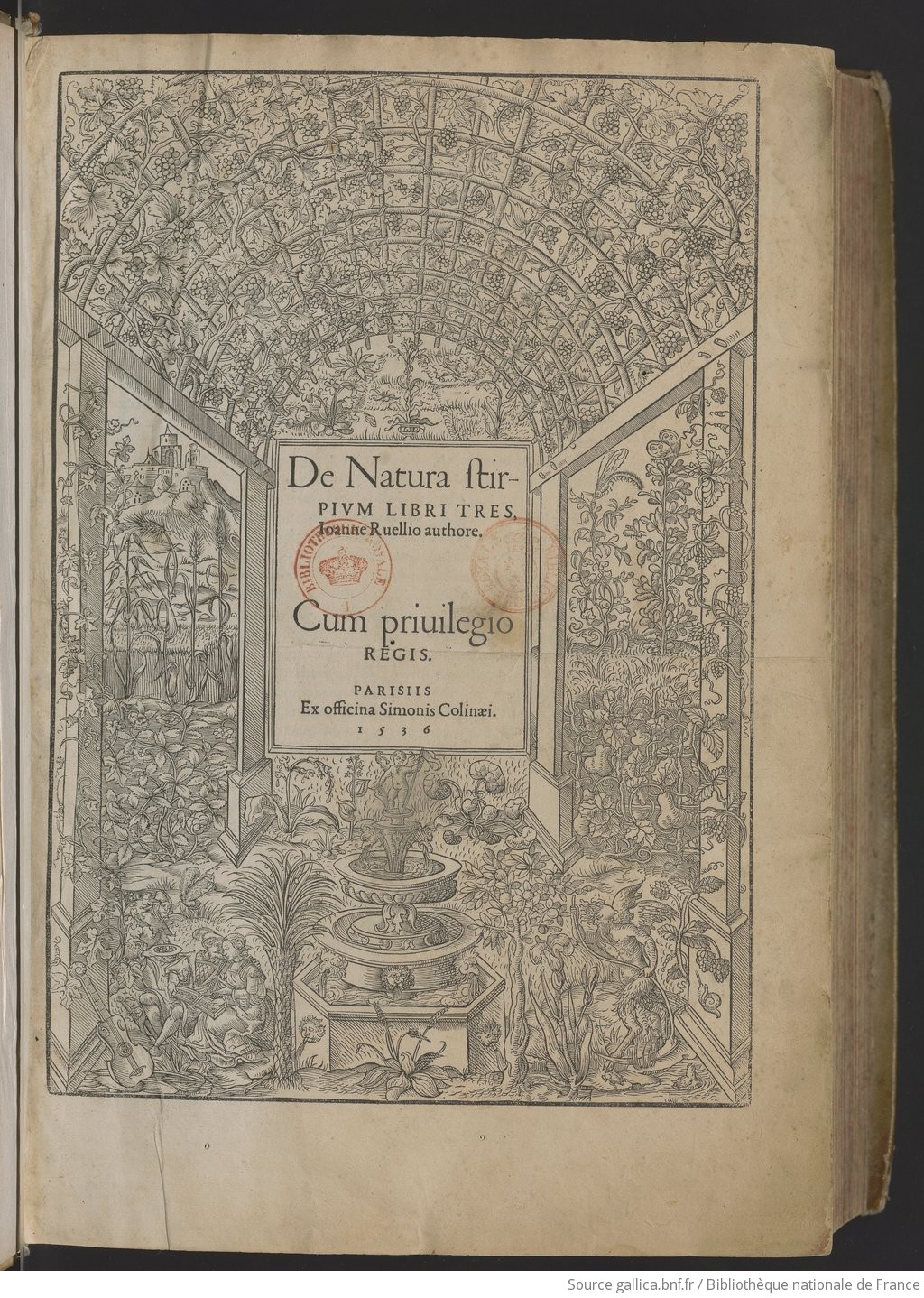
Caption: Frontispiece of Jean Ruel, De natura stirpium libri tres, Simon de Colines: Paris 1536. Source gallica.bnf.fr / BnF. https://gallica.bnf.fr/ark:/12148/bpt6k8707404h.
Still, my study shows that many terms were not coined by a particular individual for a specific aim, nor have they necessarily retained their meaning to this day. Rather, a considerable number of our modern scientific terms were never intended to function as such, were founded on wrong assumptions, and changed their meaning, or rather meanings, over time. Misunderstanding and chance played a significant role in these processes. The monograph also underscores the importance of Latin as the lingua franca of early modern science. Although works on subjects such as botany and zoology were increasingly published in the vernacular, Latin remained the language in which knowledge was collected, systematised and communicated to an international readership well into the eighteenth century. Considerations of linguistic aesthetics and the ideal of a vocabulary based on classical ancient authors also had a significant influence on scientific nomenclature. It is for this reason that, to this day, many scientific names are Latin or, particularly in the case of compound terms, Ancient Greek.
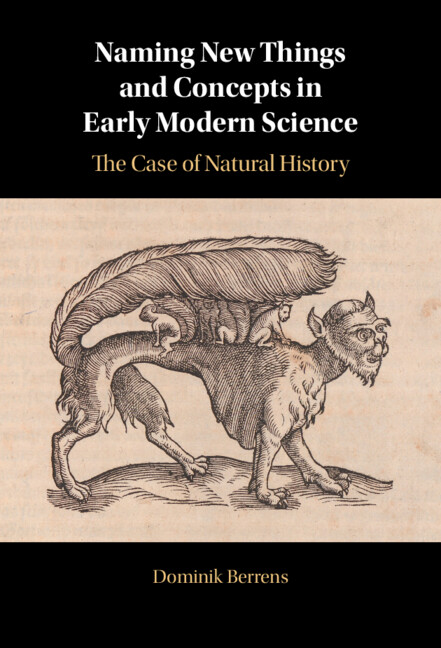
Naming New Things and Concepts
in Early Modern Science by Dominik Berrens

Dominik Berrens is a Postdoctoral Researcher at the Institut für Altertumswissenschaften/Klassische Philologie at the Johannes Gutenberg-Universität Mainz and was educated in cla...
View profile >Keep up with the latest from Cambridge University Press on our social media accounts.


Latest Comments
Have your say!