

Products and services

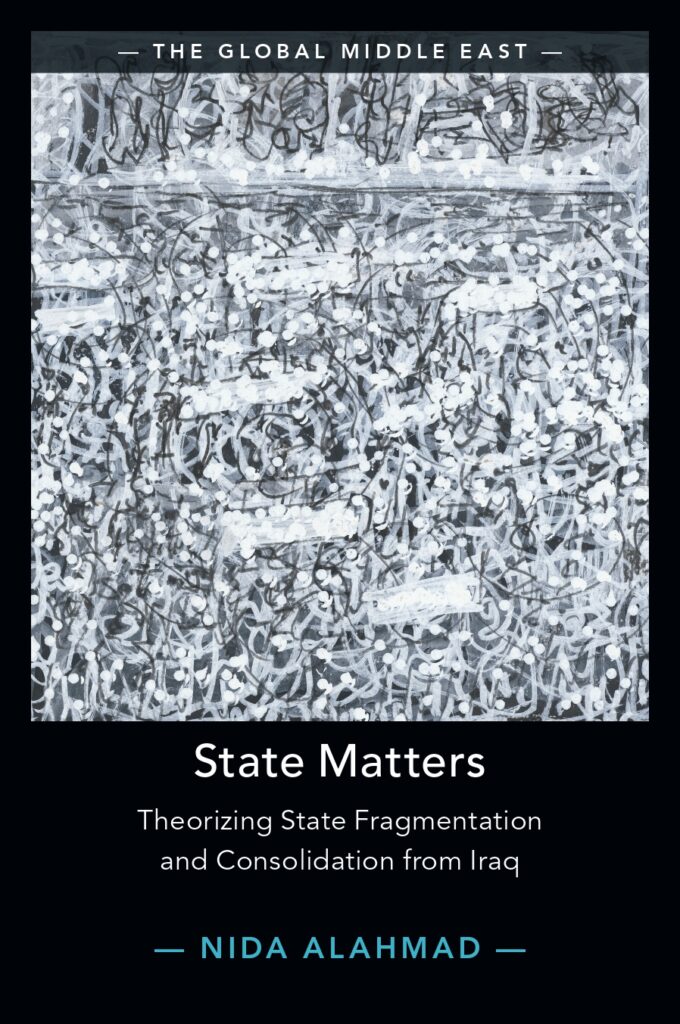
State Matters began with a life rupture, not a theoretical puzzle. Before it became an intellectual project, it was something I lived through—watching political events tear through ordinary life. For me, a Palestinian who grew up in Iraq during the 1980s, my life and that of my ancestors were shaped in no small ways by stories of states: states created, invaded, collapsed, and remade.
The book reflects on a question that emerged from my encounter with a Baghdadi woman in 2003, shortly after the American invasion of Iraq. She was explaining to me what the lack of public order that emerged with the arrival of the occupation troops meant to her in practical ways. During our conversation, she exclaimed, “Now there is no state!”. She was not a social scientist or a theorist, nor was she being rhetorical. She was stating what she saw as a fact of the post-invasion collective life that she is part of.
Her statement informed my first question, “How did she know?” How do people know, how does anyone, know the “state”? Slowly, the question has gone from “How did she know the state?” to “Why did it matter to her?” Why and how did/ does the state matter? During the journey of working on this book, it became clear that those two sets of questions are intimately related.
State Matters draws on connective analysis of sociological texts by social theorists (Ali al-Wardi, Pierre Bourdieu, Carl Schmitt and Max Weber) and historicised empirical trends over the past 100 years of the Iraqi state’s history. It argues that the modern state, as an order that arbitrates the collective life of those who become its subjects, is never a fixed “thing.” Rather, it is a set of arrangements that must be maintained and produced in a process that I call state consolidation.
Consolidation rests on two interconnected and sequential factors: domination (of land and population), and legitimation (whereby the state is accepted and expected by the population to be the final arbitrator of collective life based on common principles). While it is easy to recognise what domination should look like, legitimation is a trickier task to navigate.
When the US forces and their Iraqi allies toppled the Ba‘thist regime in 2003 through a military invasion, they introduced what they thought was a legitimate order: a democratic system. However, in the absence of state domination—due to the collapse and dismantlement of the state’s coercive institutions upon the 2003 occupation—that democratic system did not matter to my interlocutor. Although she was critical of the authoritarian Ba‘thist regime, she did not equate it with the state itself.
She expressed a nuance that the 2003 state makers did not fully appreciate: the state must establish domination in order for it to be able to arbitrate collective life. Legitimizing how it arbitrates is a necessary, but subsequent, condition to consolidating the state and stabilizing its order. Since 2003 the Iraqi state’s authority has been fragmented causing a chronic legitimation crisis. State Matters explores how this came to be and what does this trajectory tell us about the state as a phenomenon that is both dreaded and desired by its people.
The state matters to its people because of the normative virtues that a state order has the potential to deliver. At the top of that list is the question of social justice. I explore and theorize the relation of social justice to state consolidation through the work of Iraqi sociologist Ali al-Wardi as well as through the voices and actions of Iraqi state makers, activists and writers. State consolidation—or, in other words, the state itself—can be understood as a political project with high normative stakes because of its unique capacity to affect political possibilities of social justice.
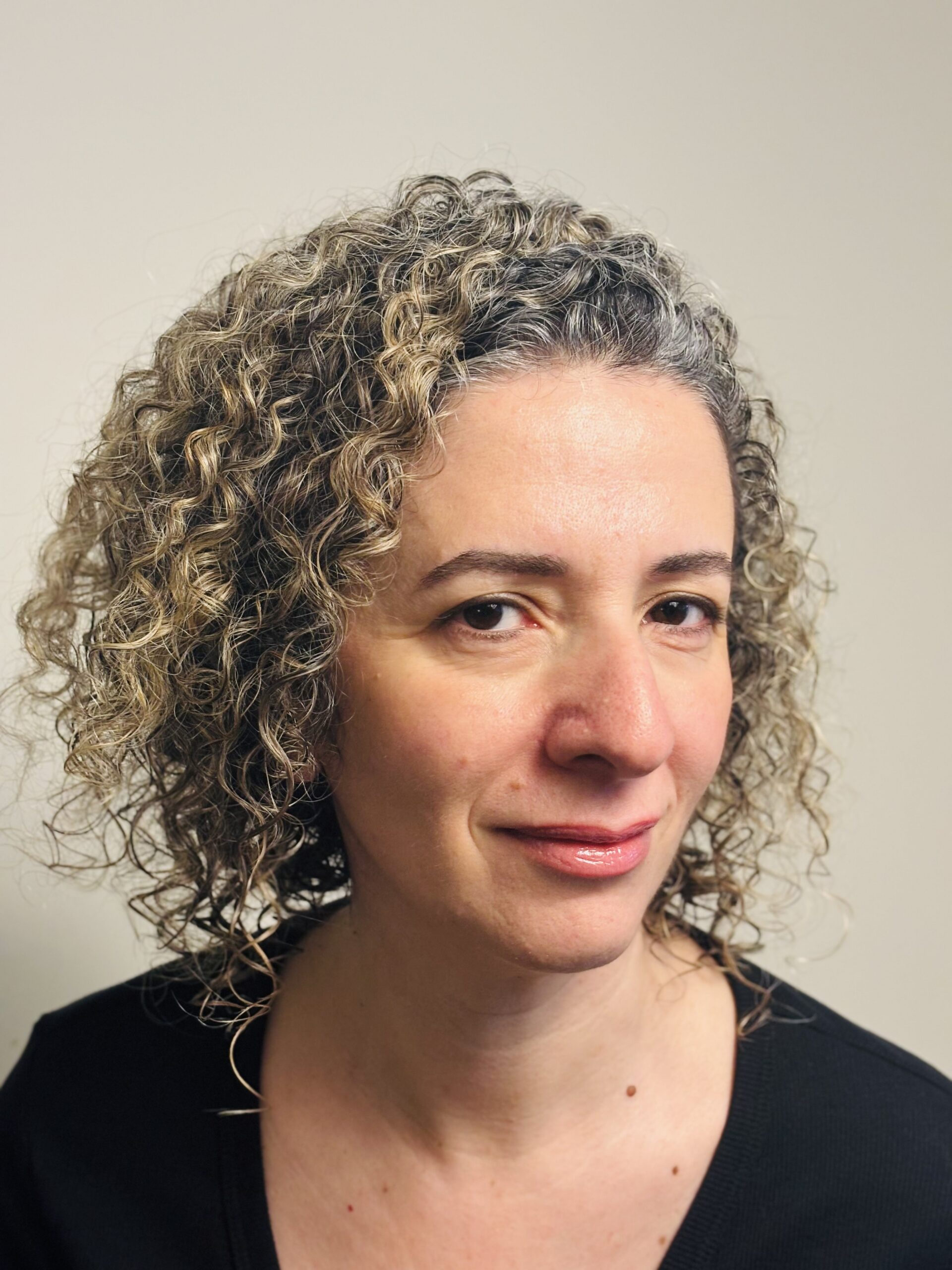
Nida Alahmad is a Senior Lecturer at the University of Edinburgh. Her research interests connect social theory with Middle East politics. Alahmad has published in journals includin...
View profile >Keep up with the latest from Cambridge University Press on our social media accounts.



Latest Comments
Have your say!