

Products and services

Daoist philosopher Zhuangzi once wondered if he might be a dream that a butterfly was having. A couple of millennia later, a biologist asks a similar question in Greg Bear’s novel Vitals (2002). “Larger and older minds live inside our bodies and all around us,” Bear’s scientist declares. “Perhaps we are only a dream the bacteria are having.”
The question touches lightly on some of the deeper issues raised by contemporary biology. What kind of a self am I, if I cannot live without the trillions of microbes that compose my microbiome? And what is the “right” scale at which to view life, if I depend on the countless life forms composing the invisible ecosystems to which I belong? Bear’s (semi-mad) scientist suggests that the correct view can only be multi-scalar. We are not autonomous beings: we are ecosystems within ecosystems.
My book Entangled Life in Twenty-First-Century Fiction: A Multi-Scalar Poetics sees literature as a sensing instrument which helps us to perceive other scales of life. In a century marked by pandemic fears and ecological vulnerability, this perception is an urgent necessity. Reading across different narrative genres, including realist fiction, science-fiction, weird fiction and dystopian fiction, I analyse how a significant strand of recent Anglophone literature is connecting the meso-scale of human existence to the microscopic and macroscopic scales of ecological entanglements.
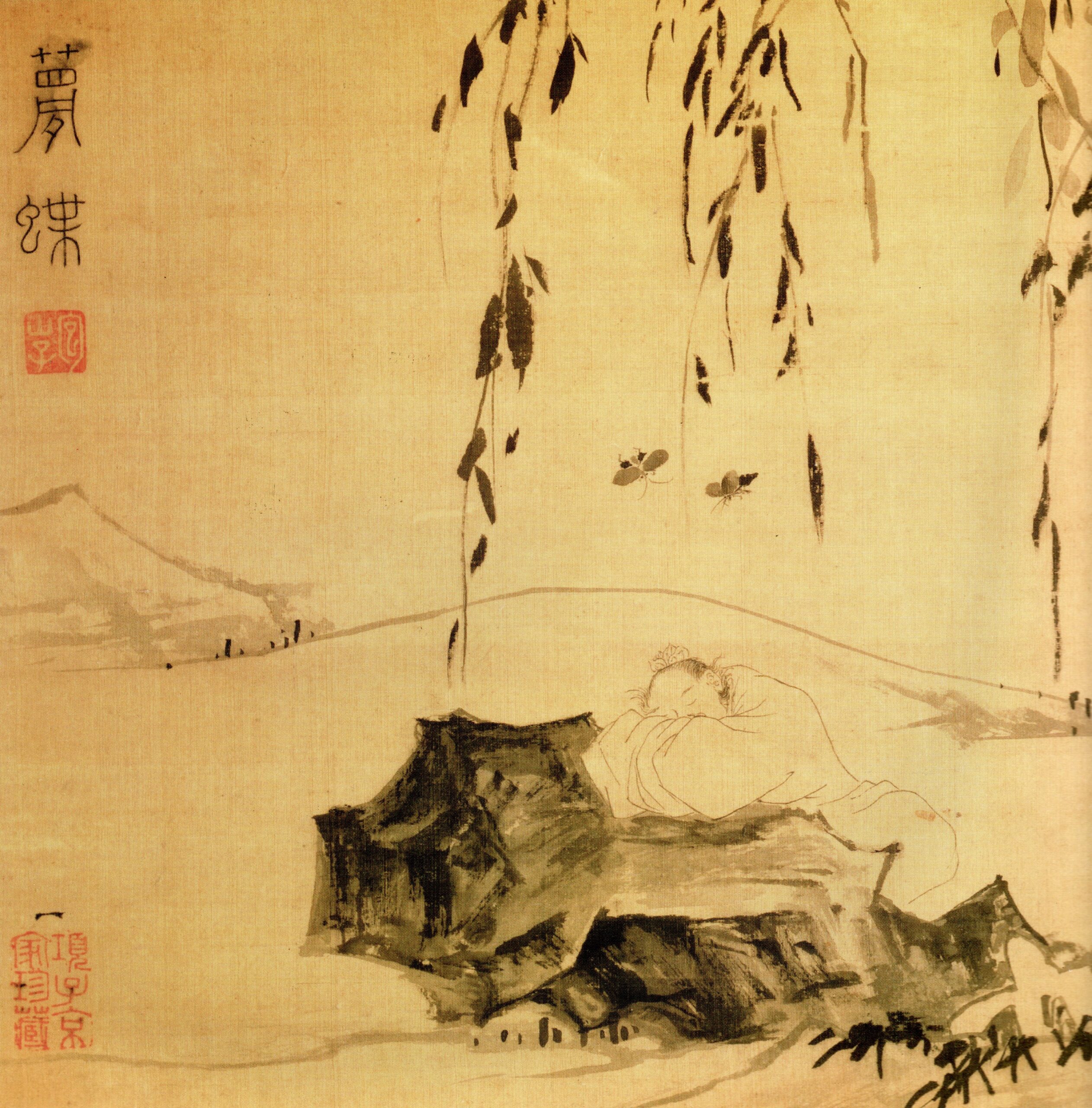
Image by Lu Zhi, Zhuangzi Dreaming of a Butterfly, mid-16th century, ink on silk
Scale is a slippery concept. It is a reality, since planet, bacteria and humans each exist at a certain scale. But it is also aconstruct, because the perception of other scales is enabled by technological and rhetorical mediations. This means that literary works are technologies of scale as much as telescopes are. The phrase “larger and older minds”, for instance, uses the kind of metaphor that scientists James Lovelock and Lynn Margulis proposed in the 1970s in their “Gaia hypothesis”, to describe the self-sustaining processes of life on Earth. Bear uses the word “mind” to shape our relation to the other scale, asking that we acknowledge nonhuman intelligence and agency. It is not the humans, but the nonhuman minds and bacteria that are grammatical subjects in the two sentences quoted above. Through imagery as well as syntax, Bear’s biologist refutes the superiority of a human “subject” over an “object” that would be nature.
What Bear does here on the scale of a sentence, others do on the scale of plot. Richard Powers’s The Overstory (2017) offers a different kind of story, where trees and forests might be the main characters, if only humans could pay attention. But many human readers, Powers remarks, find it too hard to look beyond themselves. Their brief attention spans are blind to the evolutionary co-dependence of humans and trees, and to the world-wide destruction of forests during the Anthropocene. By offering us both perspectives – the human focus on short-term satisfaction alongside the slow catastrophe of planetary deforestation – The Overstory asks us to see two scales at once.
In Powers’s novel as in Bear’s sentence, the double perspective creates an effect I call scalar irony, an ironic discrepancy between two scalar perspectives. Such ironies are inherent to contemporary ecopoetics, which often highlight the contradictions between ecological awareness and consumerist lifestyles. The long-term, planetary view clashes with the short-term urgencies and habits of daily life. Through concepts such as scalar irony, Entangled Life in Twenty-First-Century Fiction proposes a critical vocabulary for this century’s emergent poetics of scale, in literature and beyond.
Literature, then, is not a simple reflection of biological and ecological ideas. Rhetorical and narrative forms can enable new perceptions and develop ecological awareness, perhaps even response-ability. The important thing is not really which of the butterfly, the human, or the bacteria are dreaming. What matters is what the question does – whether it helps us to imagine their disparity, their inseparability, and their shared vulnerability.
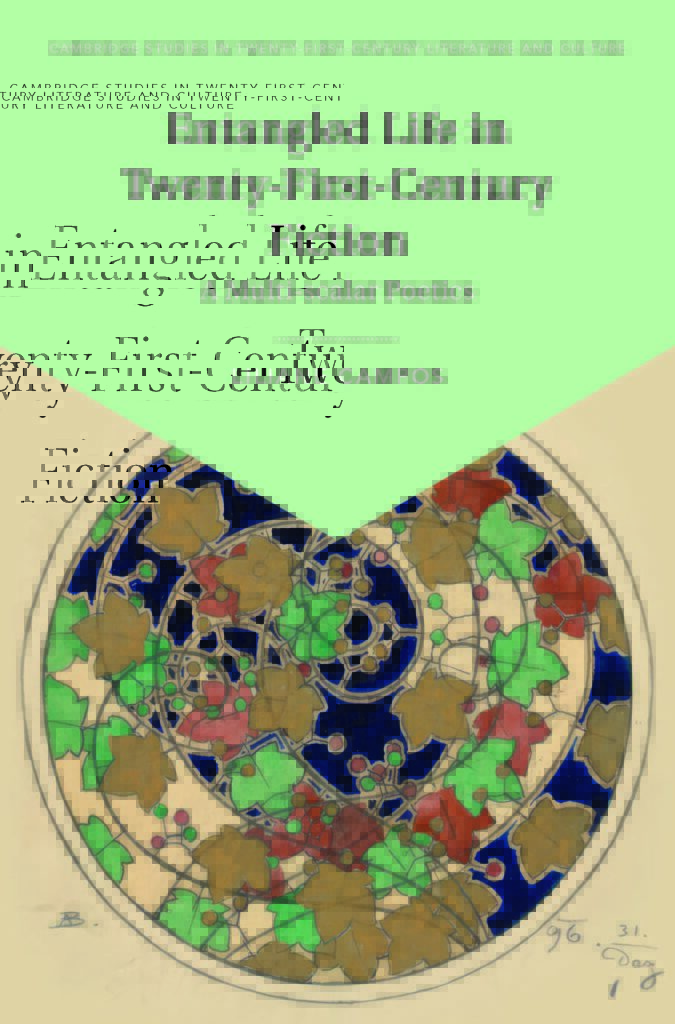
Entangled Life in Twenty-First-Century
Fiction by Liliane Campos
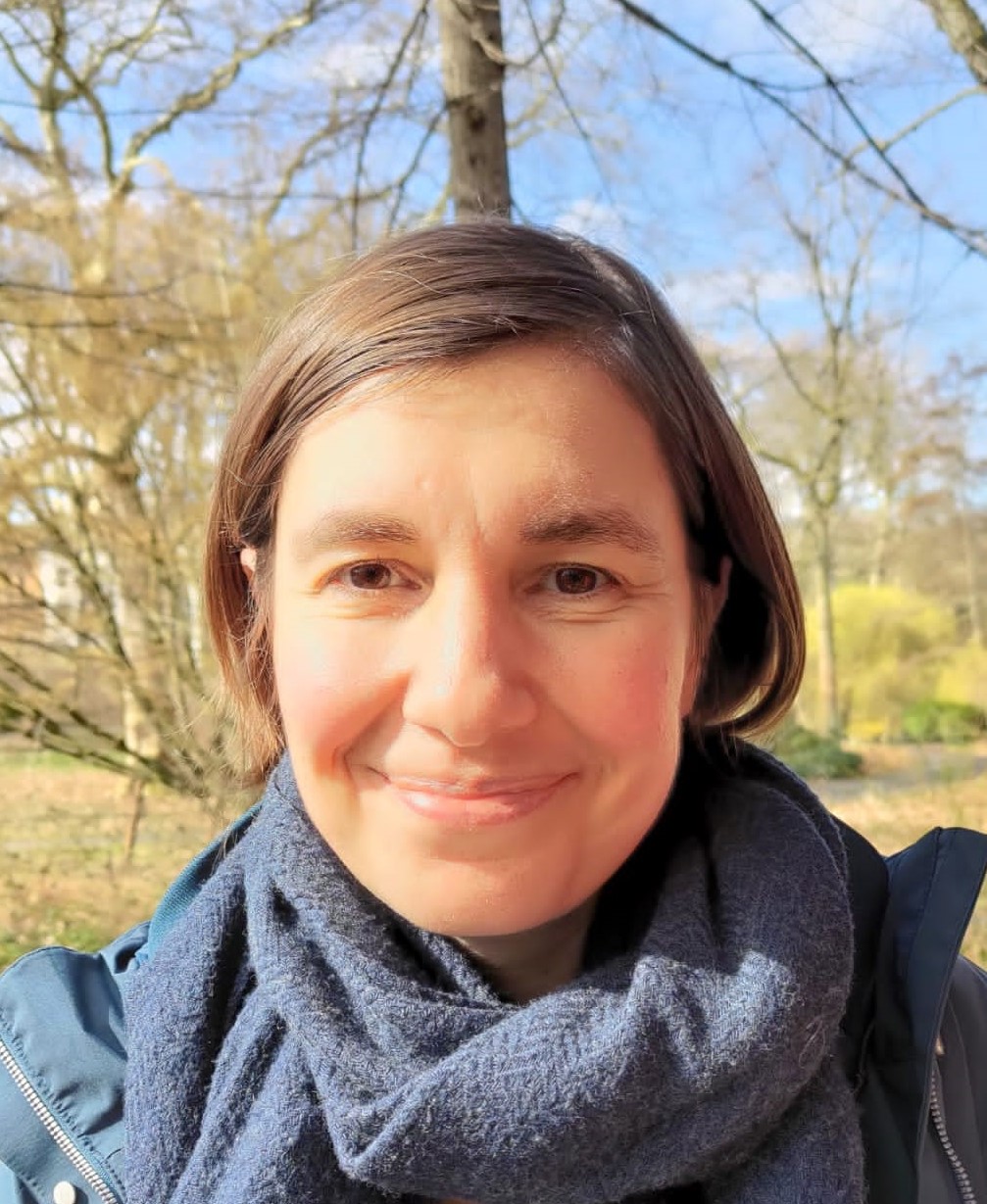
Liliane Campos is a Lecturer in English Studies at the Sorbonne Nouvelle and a Fellow of the Institut Universitaire de France. She is the author of The Dialogue of Art and Science ...
View profile >Keep up with the latest from Cambridge University Press on our social media accounts.


Latest Comments
Have your say!