

Products and services

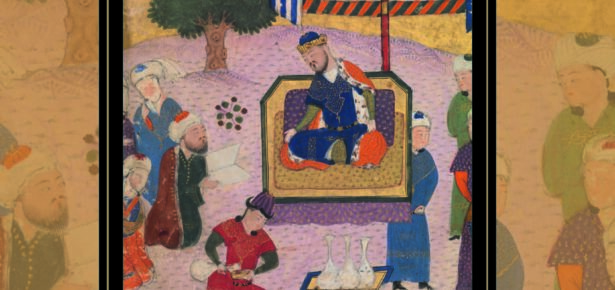
In the mid-tenth century ce, two Muslim scholars were having a chat in Baghdad. One of them, called Ibn al-Jiʿābī, was well known to contemporaries as a fairly prolific author and historian, even if none of his works survive today. While these two scholars were chatting, a group of Shiʿa approached them and handed Ibn al-Jiʿābī a purse of dirhams. They mentioned that they knew he was compiling a history of Baghdad’s scholars and other noteworthy inhabitants and asked him if he would add to his history ʿAlī b. Abī Ṭālib, the prophet Muḥammad’s cousin and son-in-law, considered by the Shiʿa to be the prophet’s legitimate successor. ʿAlī had died long before the foundation of Baghdad from 763 ce by the Abbasid caliph al-Manṣūr, but this was apparently no obstacle and Ibn al-Jiʿābī agreed to add him to the individuals included in his history of that city. The colleague with whom he had been talking, a Sunni scholar called Ibn Rizqawayh, asked him what the source basis was for his agreement to include ʿAlī in his history. Ibn al-Jiʿābī simply told him it was the group he had just seen.
The Muslim community famously established a vast empire over the seventh and eighth centuries, stretching by the 730s from the Atlantic Ocean to the mountain ranges of Central Asia. They took a bit longer than this to articulate the history of the formation of their community and the foundation of that empire. From the ninth century onwards, however, many scholars took up this task with enthusiasm and many historical works from this period and later centuries survive today. Some of the better known of these works are so-called universal histories and works with a transregional focus. It seems, however, that over the ninth-to-eleventh centuries, the main period of focus in this book, far more works of local history—histories of a particular town or region—were actually produced. They were clearly important and played a significant role in the ways that Muslim communities across the vast Islamic world thought about what united them and defined them. As the above anecdote—which actually survives in perhaps the most famous local history written in these centuries, al-Khaṭīb al-Baghdādī’s (d. 1071) History of Baghdad—demonstrates, local history-writing could be one battleground in the conflicts over communal identity and memory fought between different Muslim communities. Some groups were even willing to pay money, which the occasional unscrupulous historian was apparently willing to accept, to make sure that key figures in their community’s memory were commemorated in appropriate local histories.
Why was this such a popular and important form of history-writing for early Muslims and what purposes did it serve? This book sets to answer questions such as these against the backdrop of the creation over the early Islamic centuries of scholarly communities with different understandings of the potential universality of humanity, of the Muslim community (in Arabic, umma) and of its various local manifestations. As it does this, the book makes two particular arguments about the best way for us to understand the popularity of local history-writing over the ninth-to-eleventh centuries.
First of all, we should think beyond understanding local history-writing as simply an expression of local pride. This was probably very important to many local historians, but since local pride could be expressed in ways beyond compiling a history, it alone does not work all that well as an explanation for that activity’s popularity. Furthermore, a few historians compiled multiple works about many different individual towns and regions, some of which were not ‘local’ to them at all. Secondly, the book argues we have to rethink the relationship between universal and local history-writing and that the two approaches were in many ways closer to each other than is often appreciated. They represent two different ways of building a past/pasts for a community/communities, but the overlaps and divergences between them are not always where they have perhaps been expected or assumed.

Harry Munt is a Senior Lecturer in Medieval History at the University of York, where his research and teaching focuses on the history of the Islamic world, ca. 600–1500. Previous...
View profile >Keep up with the latest from Cambridge University Press on our social media accounts.



Latest Comments
Have your say!