

Products and services

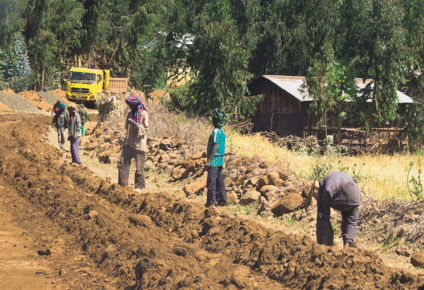
In 2012, Zambian President Michael Sata launched “Link Zambia 8000,” pledging 8,000 kilometers of new roads. Billions flowed from China, the World Bank, and OECD financiers. A decade later, less than 10% was completed. The new tarmac clustered in the Northern Province—a ruling-party stronghold—while the opposition’s Southern Province remained a patchwork of dusty tracks. As one official noted, decisions came “top-down from the state house, not from technocrats.”
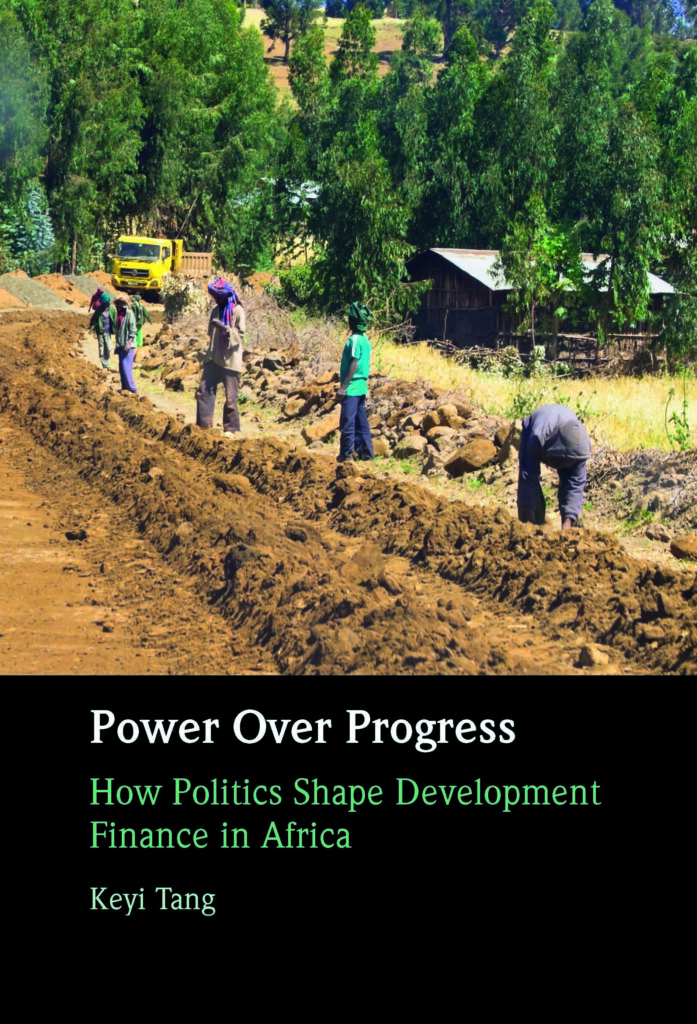
This story is not unique to Zambia. In my new book, Power Over Progress: How Politics Shape Development Finance in Africa, I analyze geocoded projects across forty-eight African countries (2000–2021), linking them to original subnational election data for 519 regions and 175 interviews in Washington, Beijing, Ethiopia, Ghana, and Zambia. Crucially, I hand-collected data on all foreign-financed roads in these three countries from ministries of finance and infrastructure over the past two decades, tracking at the administrative level exactly where money meets the ground. The central finding: where development finance lands—regardless of the lender—often reflects political survival strategies rather than development need.
Conventional wisdom draws a sharp dichotomy. China is criticized for “no strings attached” lending that fuels elite capture, while the World Bank is viewed as a technocratic partner whose conditionality ensures funds reach the poor. My research challenges this binary. When electoral competition intensifies, even the World Bank’s safeguards are often bypassed by governments that know how to game the system.
To understand why, view development finance as a two-level game. On one level, external financiers supply funds with varying accountability. On the second, domestic politicians face intense pressure to secure survival. Allocation reflects the interaction between these levels. In democracies like Ghana, where elections are tight and institutions are stronger, leaders target swing districts to secure marginal votes. Consequently, World Bank-financed roads often appear in electorally strategic areas rather than regions with the deepest deficits.
Conversely, in hybrid regimes like Zambia under the Patriotic Front, leaders facing high competition but weaker institutional checks channeled resources from both Chinese and Western sources to coethnic strongholds to solidify their base. Paradoxically, developmental autocracies can sometimes produce more equitable outcomes. In Ethiopia under the EPRDF, lower political competition allowed the regime to prioritize long-term national development goals over short-term electoral pork, resulting in a distribution of infrastructure that was less skewed by immediate political favoritism. The irony is stark: democratic transitions, without robust institutional guardrails, can exacerbate regional favoritism rather than curb it.
Why should financiers care? Politicized allocation is a performance problem. Projects chosen for votes are often poorly selected and rushed—raising risks of debt distress, social grievance, and weaker repayment. The answer is not to abandon development finance but to design around politics. This requires making subnational transparency the default, embedding political-economy diagnostics into appraisal, and investing in domestic oversight—legislatures and civil society—so citizens can contest misallocation in real time.

Keyi Tang is the Assistant Professor in international relations and global governance in the department of Society, Politics, and Sustainability at ESADE Business School, Universit...
View profile >Keep up with the latest from Cambridge University Press on our social media accounts.




Latest Comments
Have your say!