
Products and services

If the last year of geopolitical upheaval has taught us anything, it is that the international order is far more fragile than we cared to imagine. When established alliances like NATO fracture under the weight of internal tensions, or when a US President casually proposes treating a sovereign territory as an asset in a real estate deal, we are witnessing something more profound than mere diplomatic disruption. We are witnessing cracks emerging in the fragile varnish of rules-based international order as the raw logic of power reasserts itself.
We are witnessing the return of the state of nature.
The state of nature is not merely a vestige of early modern political philosophy or a hypothetical origin story about how humanity lived before the social contract. It is, rather, a powerful lens through which the modern West continues to make sense of itself: its fears, its fragility, and its potential for collapse.
We often comfort ourselves with the idea that the “war of all against all” is a primitive condition we have definitively escaped. Yet, as current events remind us, the social contract is less a fortress than a thin veneer laid over a volcanic human reality. The international stage today increasingly resembles the state of nature described by Thomas Hobbes, where covenants without the sword are but words, where “Force and fraud are in war the two cardinal virtues”, and where, ultimately, “irresistible might makes right”. In this arena, the weak have no rights that the strong are bound to respect, and security is guaranteed only by power, and the fickle good will of the powerful.
But the state of nature is not just a mirror for our present chaos; it is a warning about our possible future. Both Hobbes and Jean-Jacques Rousseau, the two great polar antagonists of social contract theory, are in accord about one chilling possibility: the state of nature is not just where we came from, it is where we may be heading.
For Hobbes, the terror of the state of nature was that it could erupt at any moment. He warned that if the sovereign’s authority crumbles, we do not simply evolve into a new form of society; we regress, sliding back into that “ill condition” where the breakdown of order is not a liberation but a decivilization.
Rousseau, often caricatured as the optimist of the pair, offers an even darker prophecy. In his Discourse on Inequality, he warns of a “new state of nature” that awaits us at the end of a long slide into corruption. This second state of nature is not the fruit of primitive innocence but of decadent excess. It arises when the social contract is hollowed out by tyranny and inequality, leading to the rule of law collapsing back into the arbitrary rule of the strongest. As Rousseau writes, this is a time when “all private individuals become equal again, because they are nothing,” and where “the blind obedience of the subject is the only virtue left.”
It is a motif that continues to haunt our modern imaginaries because it exposes the fragility of the institutions we have, for generations, taken for granted. It reminds us that civilization is an artificial construct, requiring deliberate and constant effort to hold back the tide of the ever-proximate state of nature.
To understand the modern West—its colonial legacy, its secular ambitions, its ecological crisis and its fragile order—we must reckon with the state of nature, not as a fable of the past, but as a figure haunting the present and a warning for the future.
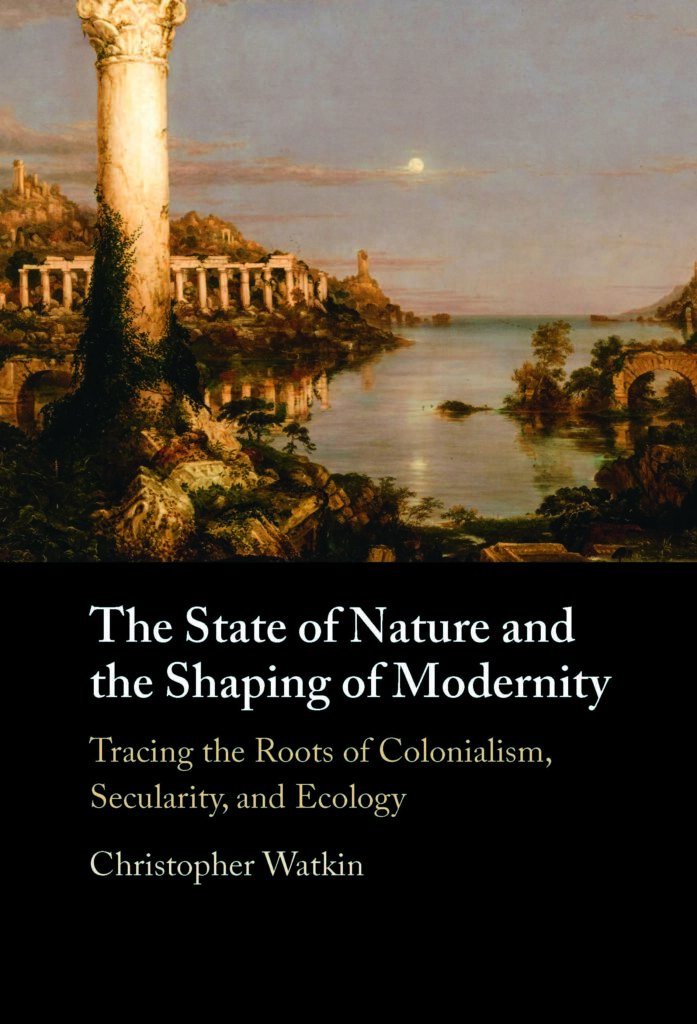
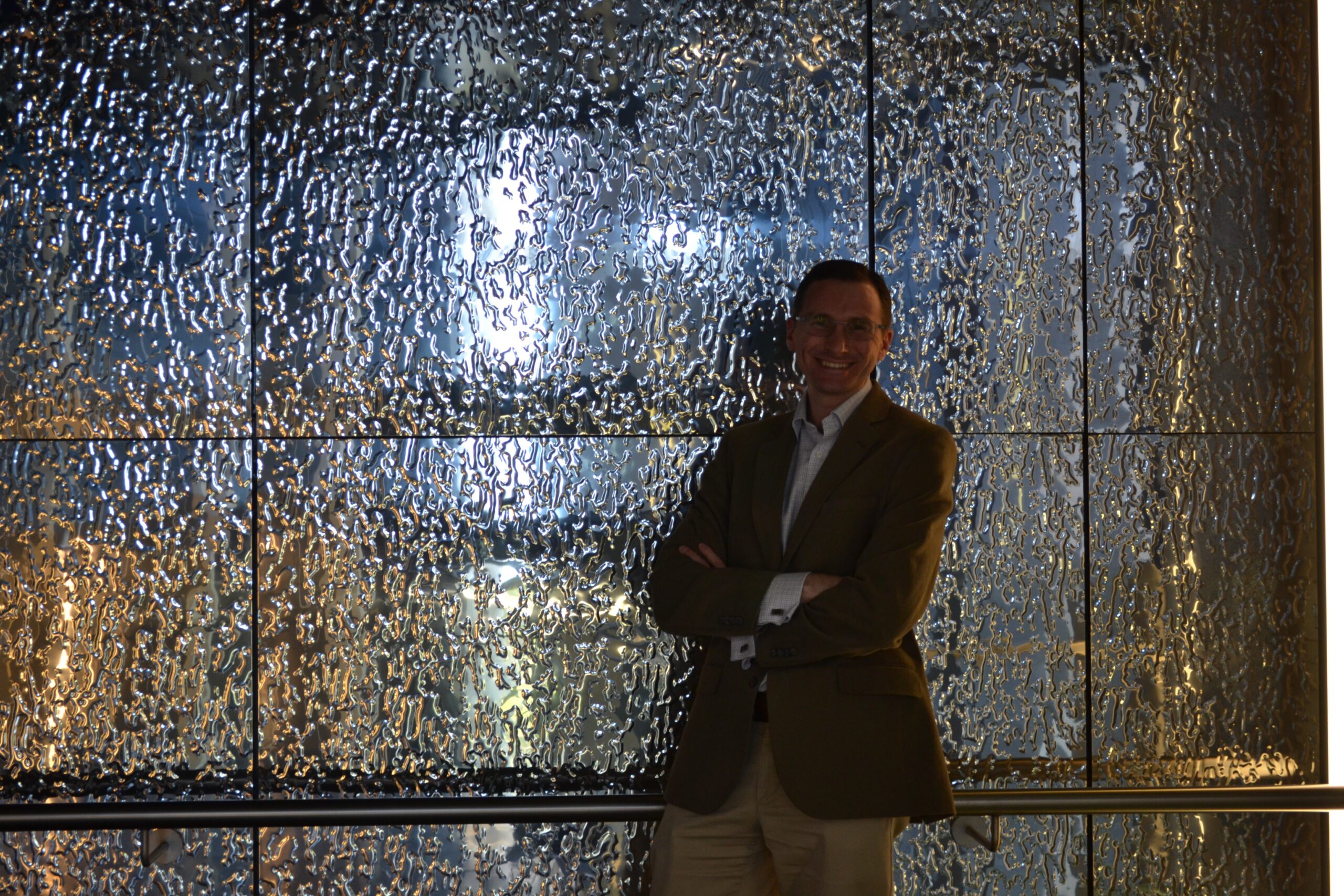
Associate Professor of French and Francophone Studies at Monash University, Melbourne, Australia, Christopher Watkin is the author of French Philosophy Today (2016), Michel Serres:...
View profile >Keep up with the latest from Cambridge University Press on our social media accounts.



Latest Comments
Have your say!