
Products and services

In the classic film Casablanca, the Frenchwoman Yvonne, one of the regulars of Rick’s Café, joins the other refugees assembled there to sing the Marseillaise, boldly defying the Nazi officers present. She concludes her national anthem with a shouted “Vive la France!”, tears streaming down her face. We now know that the tears were not acted; they expressed the genuine plight and emotion of the actress, Madeleine Lebeau, who escaped with her Jewish husband from Nazi-occupied France to end up in Hollywood. The image encapsulates the power of the nation to rouse our spirit and command our loyalty. Yvonne’s/Lebeau’s arousal as one of the Marseillaise’s “enfants de la patrie” is at the same time intensely personal and vehemently political. What motivates it is a moral force that has come to dominate politics in the last century: Charisma.
Around 1918, Max Weber identified charisma as a newly important type of political authority: the power not just to coerce, but to inspire and mobilize public adulation. Charismatic leaders do so by channelling the nation: the collectivity of the people as symbolized by its flags, symbols, memories and culture. In the nation-state, the nation provides charisma and legitimizes the state’s entitlement to sovereignty, self-determination and coercive power.

Over the last 150 years, states (or leaders) have justified their policies by declaring these to be “in the national interest”. But as a contemporary of Weber, Emile Durkheim, already noted, this invocation of “the national interest” to justify the expediency of the state – often at the expense of other countries’ interests, of international treaties and of international law – could be a slippery slope towards willful unilateralism. Those invoking the national interest could slide from charisma into narcissism, authoritarianism, and a personality-cult celebrating self-serving willpower as a legitimate driving force in international relations. Durkheim defined this condition as “anomie”, lawlessness, where Might (or Will) replaces Right. The type Durkheim had in mind was the German emperor Wilhelm I; readers will easily find contemporary analogies.
Nowadays, nationalism is once again the most important political ideology in the world, inspiring leaders as diverse and far-flung as Donald Trump, Vladimir Putin, Viktor Orbán, Benjamin Netanyahu and Narendra Modi. How nationalism survived into the present century is a fascinating riddle, and part of the answer can be found in the tears on Madeleine Lebeau’s face. Culture – anthems like the Marseillaise, movies like Casablanca – is the feeding ground and “unpolitical” sanctuary which vouchsafes the ongoing availability and appeal of he nation’s charisma regardless of circumstances. Nationalism is, among political ideologies, the ultimate shape-shifter. It can oscillate between salience and latency, state policy and personal feeling; between resisting tyranny and becoming an excuse for it; between feel-good camaraderie and hateful xenophobia.
More than just a response to the conditions of a given moment, nationalism is an ingrained, adaptable and easily weaponized repertoire of cultural and political gestures and symbols invoking and celebrating a shared identity. And as such, the historian can trace its development, its complex mutations and its ongoing emotional and political appeal, over the last two centuries. The task is as urgent now as it was in the days of Durkheim and Weber.
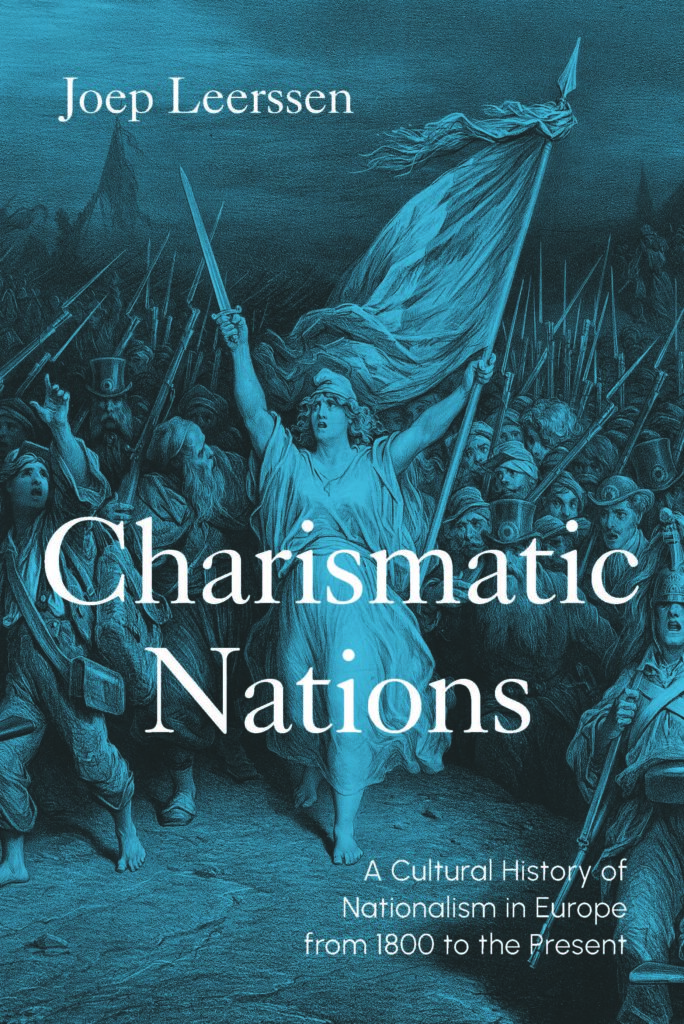

Joep Leerssen was educated in the Netherlands, Germany, Ireland and Canada and held the chair of European Studies at the University of Amsterdam until 2022. His award-winning work ...
View profile >Keep up with the latest from Cambridge University Press on our social media accounts.



Latest Comments
Have your say!