

Products and services

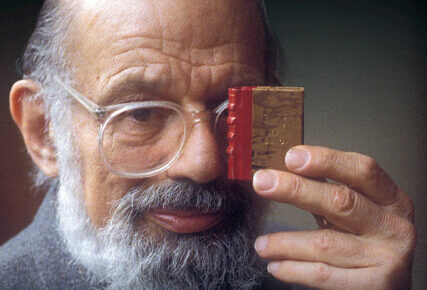
When someone says the name “Allen Ginsberg”, any number of things immediately come to mind. Ginsberg was a celebrated US poet, and his work “Howl” is world famous. But he was also a noted activist. Not only did Ginsberg vehemently decry the war in Vietnam, but he was at the forefront of the battle against drug criminalization and fought hard for gay rights. He was Jewish, but against Zionism, and later in life became a Buddhist interested in ecological concerns. Ginsberg traveled the world, visiting over sixty countries and never failing to engage local culture and people. And not only did he write poetry, but he was an accomplished photographer with several exhibits to his credit as well as a songwriter who collaborated with noted musicians like Bob Dylan, The Beatles and The Clash. So which Ginsberg is someone talking about when they mention his name?
One can explore them all in the volume Allen Ginsberg in Context. While complete coverage of every aspect of such a multifaceted personality is impossible in a single volume, this book strives to provide the context necessary for understanding and appreciating not just Ginsberg’s central position in 20th century US poetics, but his outsized influence in American and indeed international culture more broadly.
This book is timely, not just because 2026 is the centenary of Ginsberg’s birth, but because Ginsberg, his poetry, and his activism are more important than ever. Ginsberg is still solidly canonical, and most surveys of American Literature are going to cover at least his essential poem “Howl”. But it is easy to forget that this poet kept producing-a “Kaddish” for his mother who suffered from mental health issues; short pieces like “Fourth Floor, Dawn, Up All Night Writing Letters“ that offer humorously insightful takes on everyday life; “Plutonian Ode” which explores ecology in the nuclear era; and late work like “Sphincter” where the poet examines in candid detail the difficulties of growing old. In today’s volatile world where we are experiencing significant changes in the social and economic fabric, Ginsberg offers models for questioning what is going on around us and how to respond to it. Readers might not always agree with his positions, but Ginsberg is someone who has thought deeply about a variety of issues and, perhaps more importantly, has spent considerable time theorizing how to best stage an intervention.
What Ginsberg ultimately offers is a premier example of someone doing their level best to make sense of the world around them. Ginsberg was not without controversy, and his work and utterances still manage to rankle three decades after his death-a testament, I would argue, to his continuing relevance. The world is richer for this singular figure, and he repays closer attention handsomely. There is still a lot to discover in Ginsberg, and Allen Ginsberg in Context is a fine place to start.
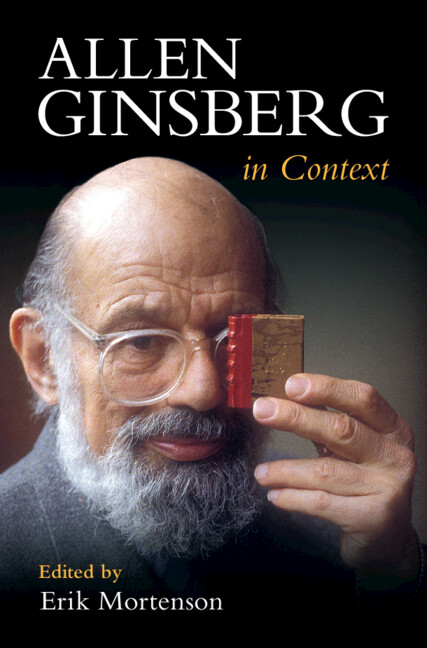
Allen Ginsberg in Context edited by Erik Mortenson

Erik Mortenson is a Faculty Member in English at Lake Michigan College in Benton Harbor, Michigan. He is the author of Capturing the Beat Moment: Cultural Politics and the Poetics ...
View profile >Keep up with the latest from Cambridge University Press on our social media accounts.


Latest Comments
Have your say!