

Products and services

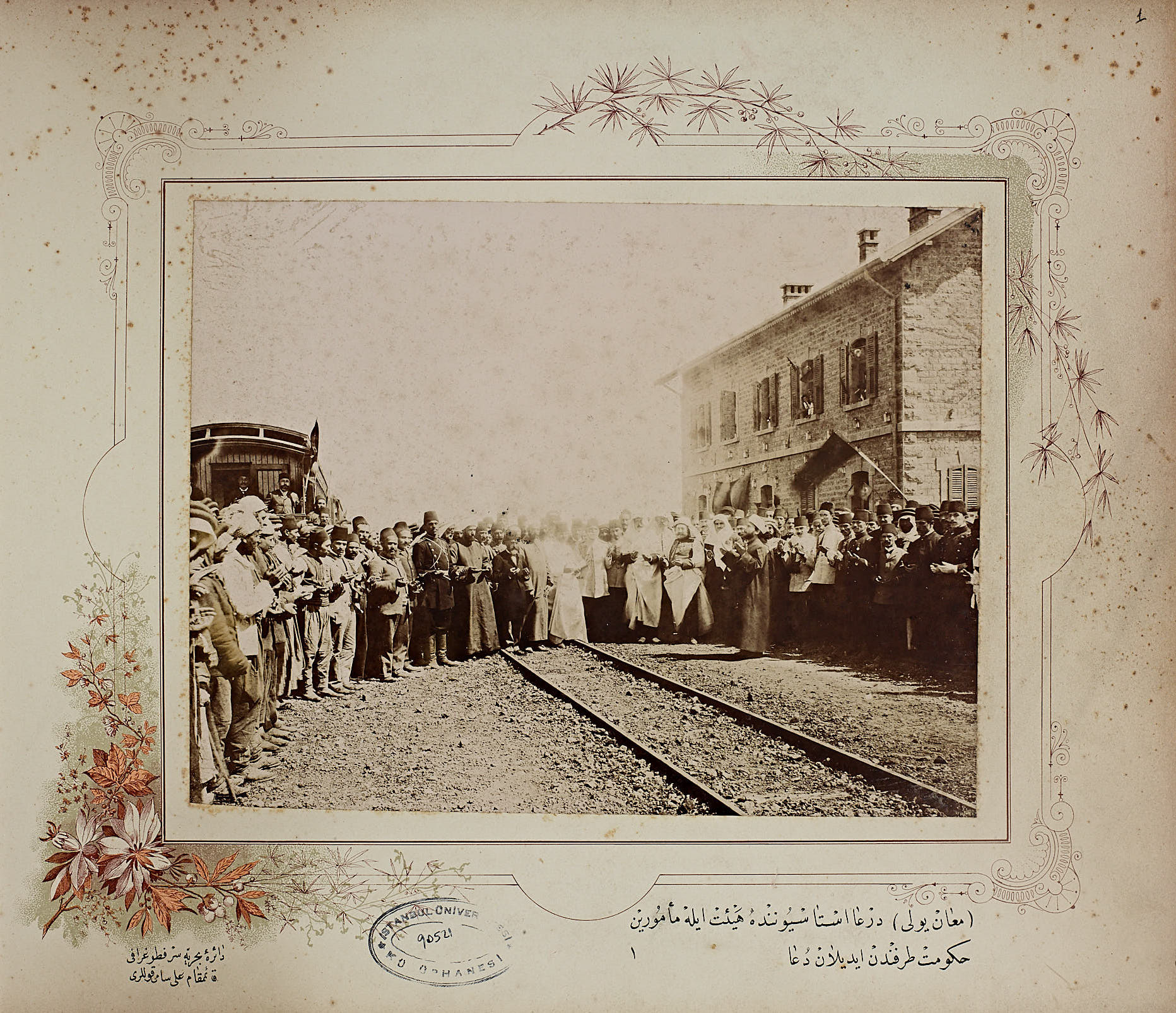
Ottoman officials praying at Daraa Station.
Source: Istanbul University, Rare Books Library, Sultan Abdülhamid II Photo Albums. NEKYA 90521/1.
In 1886, the second edition of the yearbook of the Ottoman province of the Hejaz was printed at the governmental printing house in Mecca. Even before mentioning the names of Ottoman sultans and giving information about the Hejaz, the yearbook opens with a lengthy list of significant developments in world history. More than 170 events appear in chronological order, stretching from the creation of the Prophet Adam to the opening of the Ottoman Museum in 1880. What makes this list especially revealing is not its breadth but its emphasis. For that century, the yearbook highlights a set of technological milestones, including the invention of the telegraph, the lithography press, the steamship, and the railway, as well as the opening of the Suez Canal, the establishment of a tramway in Istanbul, the opening of Galata Tunnel, and the construction of the railway in Anatolia.
Why would Ottoman officials list such technological feats in official yearbooks as the most consequential events of the century? The simple answer is that they were widely understood as landmarks of a new age. That question, and the implications of its answer, captures the viewpoint of Challenging the Caliphate.
When I began researching Ottoman centre-periphery relations through the intertwined cases of the Caliphate, Wahhabism, and Mahdism, I encountered a puzzle. Ottoman ideological and political reactions to the Wahhabi movement intensified after the 1860s, even though the Wahhabis had, by then, lost much of their earlier power base. Why did writers in Istanbul begin to discuss Wahhabism more extensively only after the 1860s? And why did the state take more sustained measures against Wahhabi influence across the empire’s territories in the same period, rather than earlier, when Wahhabi forces had occupied Mecca and Medina for years in the first quarter of the nineteenth century?
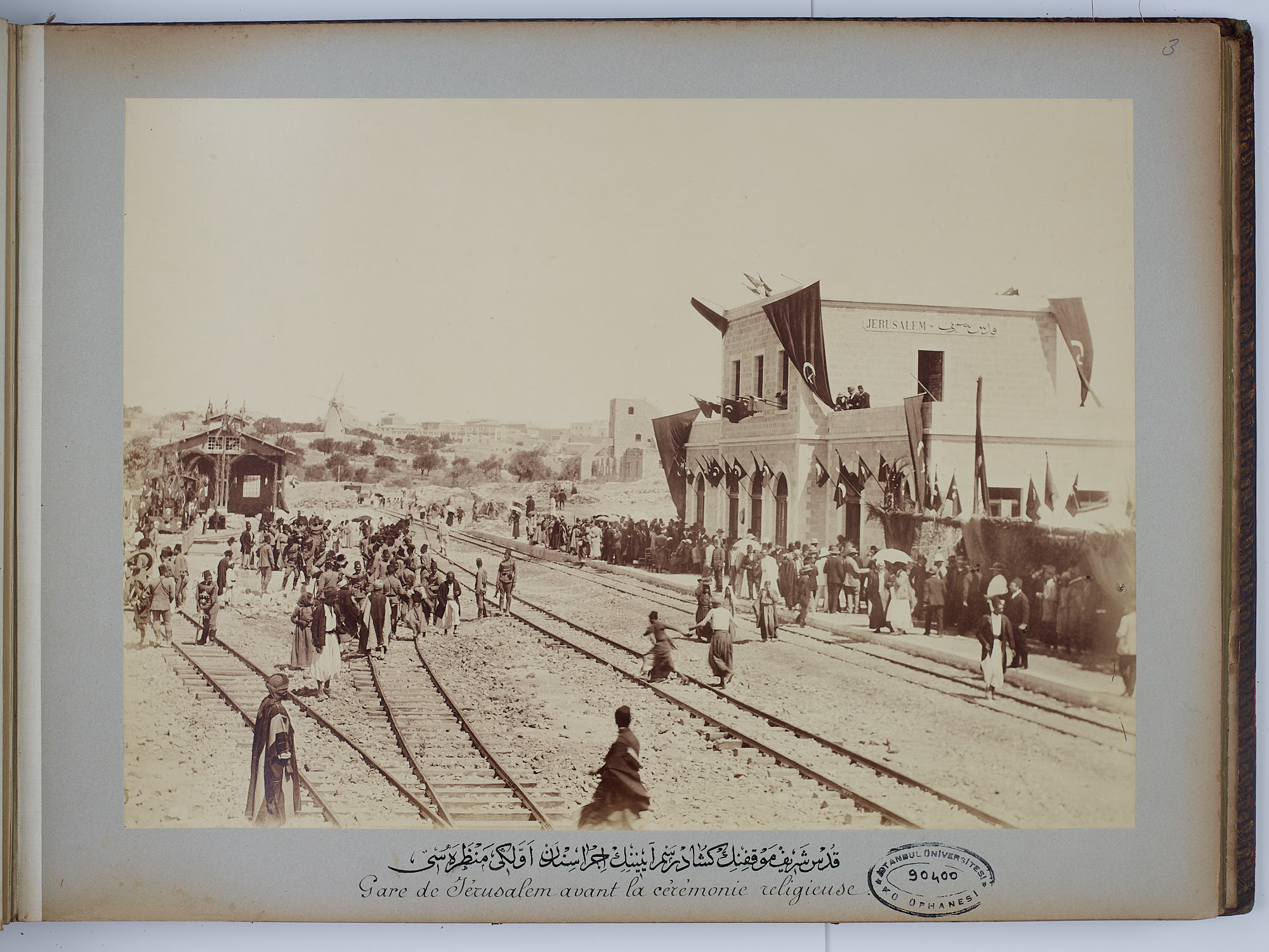
The opening ceremony of the Jerusalem Station building.
Source: Istanbul University, Rare Books Library, Sultan Abdülhamid II Photo Albums. NEKYA 90400/3
A parallel development sharpened this question further. In the same decades, Ottoman vigilance toward a Mahdi proclamation in Sudan also intensified. The convergence of these shifts suggested that the growing interest in the periphery was not simply a matter of individual administrators’ political inclinations or preferences. It was about an increased and accelerated awareness about distant lands in the globalizing world made possible by the revolution in communications and transportation.
Challenging the Caliphate argues that the age of steam and print—more specifically, increased access to the steamship, railway, printing press, and telegraph—played a crucial role in the extended dynamic challenges of the ideas of the Caliphate, Wahhabism and Mahdism vis-à-vis each other. The book illustrates how these three concepts took on global dimensions by spilling over Ottoman borders and how this new scale of circulation altered the empire’s ideological and political responses.
These were not new ideas. The Caliphate, Wahhabism, and Mahdism had long histories within Islamic thought and practice. Yet their spheres of influence had remained limited to a certain area and timeframe, not attaining a global scope until the advent of the new age. The centuries-old Islamic concept of the Caliphate assumed a new global dimension under the banner of Pan-Islamism, and the Ottoman Caliphate claimed spiritual sovereignty over all of the Muslim communities that lived under the control of various authorities, including the British, Dutch, Russian, and French empires. Wahhabism, as the ideology of a doctrine-oriented movement that came into being in the previous century but had remained local, spread all around the world in this new era. Likewise, the Mahdi creed had existed throughout Islamic history, but it became a widespread ideology in the case of the Sudanese Mahdi movement, garnering attention in distant lands and drawing in many Muslims in a short period of time.
At the same time, Challenging the Caliphate does not claim that the technological developments were the only factors in the changing relations regarding the three ideas. Naturally, besides new political and economic dynamics, there was also the issue of the importance of what exactly the opposing ideas were arguing for, as their content appealed to people across the Muslim world. The reasons people chose loyalty to the Ottoman Caliph, embraced the Mahdi, or admired Wahhabism could vary widely across regions and individuals. Taking seriously people’s subjectivity, the book does not argue that the steamship, railway, printing press or telegraph alone made it possible for those ideas to spread around the world; rather, it shows how actors on all sides successfully used new technologies to pursue their missions.
Ömer Koçyiğit is an assistant professor in the Institute of Middle East and Islamic Countries Studies at Marmara University, and a guest researcher at Leiden University. Previou...
View profile >Keep up with the latest from Cambridge University Press on our social media accounts.


Latest Comments
Have your say!