

Products and services


On March 4, Mexico took a remarkable step backward: Congress approved a new electoral reform that will, once again, ban consecutive reelection for all elected officials starting in 2030, with the stated goal of “preventing political entrenchment and nepotism.” After only a few election cycles with reelection, with the original ban on consecutive reelection just being lifted in 2014, the country is returning to its old norm. This naturally raises the question: why did Mexico’s reelection experiment last so little?
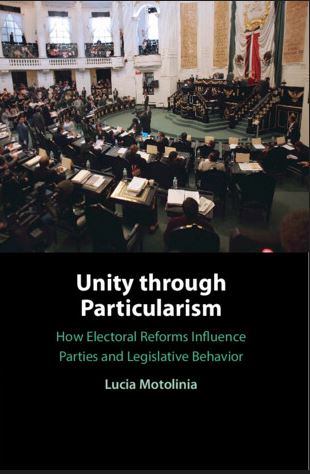
My forthcoming book, Unity Through Particularism: How Parties Can Respond to Electoral Reforms, provides an important part of the answer. Mexico introduced reelection with the expectation—common in many democracies—that legislators who must face voters again will become more accountable, responsive, and independent from party elites. But what actually happened inside state congresses looked very different.
Drawing on more than 500,000 legislative speeches, thousands of roll-call votes, detailed committee records, annual reports, newspaper archives, and dozens of interviews with politicians across 21 states, the book shows that reelection did not weaken party control. It strengthened it. Legislators eligible for reelection behaved as expected: they invested more in constituency service and particularistic benefits to cultivate a personal vote. Yet, because party leaders still controlled the resources needed to deliver these benefits—and controlled renomination—reelection incentives made legislators more, not less, dependent on their parties. To build the personal reputation they now needed, legislators relied heavily on committee appointments, budgetary tools, and political backing that only party leaders could provide.
This created a contradiction: reelection empowered local party leaders, who used legislators’ desire for reelection as leverage to demand tighter discipline and unity. Instead of loosening centralized control, reelection heightened internal power struggles, especially between national party leadership and state-level power brokers. Seen through this lens, the March 4 reversal is less surprising. Reelection created incentives that strengthened the hand of local party elites. For national party leaders wary of rising local autonomy, eliminating reelection is a direct way to reassert control.
One important caveat: the new ban also applies to municipal presidents, whose behavior the book does not study and whose incentives differ significantly from those of legislators. But for state legislatures—the heart of Unity Through Particularism—the findings offer a clear explanation for why reelection unfolded differently than expected, and why the reform was ultimately abandoned. Mexico’s brief experiment with legislative reelection reminds us that electoral reforms do not automatically reshape political behavior. Sometimes, reforms designed to empower voters end up empowering parties instead.

Lucia Motolinia is an Assistant Professor in the Department of Political Science at Washington University in St. Louis. Her research focuses on the intricate dynamics of electoral ...
View profile >Keep up with the latest from Cambridge University Press on our social media accounts.




Latest Comments
Have your say!