

Products and services

When the intellectual historian István Hont (1947-2013) defected to the United Kingdom in 1975, he knew that he would likely never see his native country or much of his family ever again. He also knew, however, that communism, which had frustrated his hopes of an academic career in Hungary, was a failed political experiment, one that would eventually collapse under the weight of its own contradictions. The dream of a society beyond the state, of a society liberated from all those material and political constraints that could be construed as oppressive, had been revealed as a mirage on the political horizon, and the vision of the world that was now emerging was instead one resembling that of the eighteenth century, he believed, with old uncertainties coming to the fore and with modern political ideologies falling short of providing meaningful answers. Marx obviously had to be abandoned, but to replace Marxism with other ideologies such as Liberalism or Republicanism would be a profound mistake, a misjudgement of the depth of the politico-theoretical crisis that revealed itself by the end of the twentieth century. To avoid turning a retreat from Marx into a ‘retrograde journey’, Hont was convinced that the Marxian ambition of combining politics and economics into a comprehensive historical and theoretical vision had to be retained, albeit with a different configuration of its constituent parts, modelled on the Political Essays of David Hume rather than on Das Kapital.
If Marx had to be abandoned, however, a fundamental reinterpretation of Marx was also a necessary first step towards regaining our intellectual bearing and returning in a proper way to eighteenth-century political economy. Learning from Marx’s mistakes (as well as unlearning many of his misinterpretations of the past) was the only way political theory could move forwards. In order to make proper progress, political theory had to first retrace its steps.
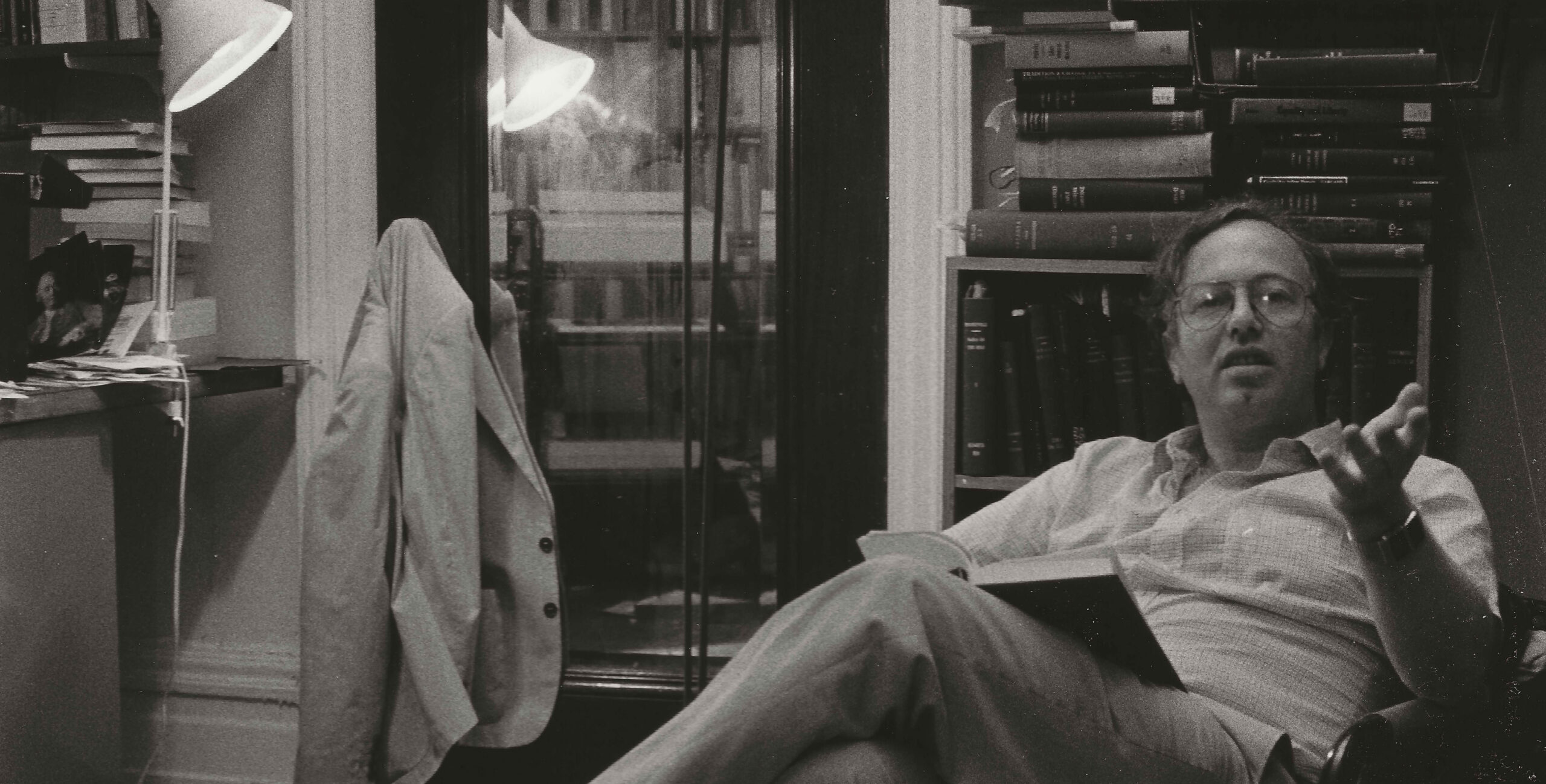
István Hont in New York in 1987
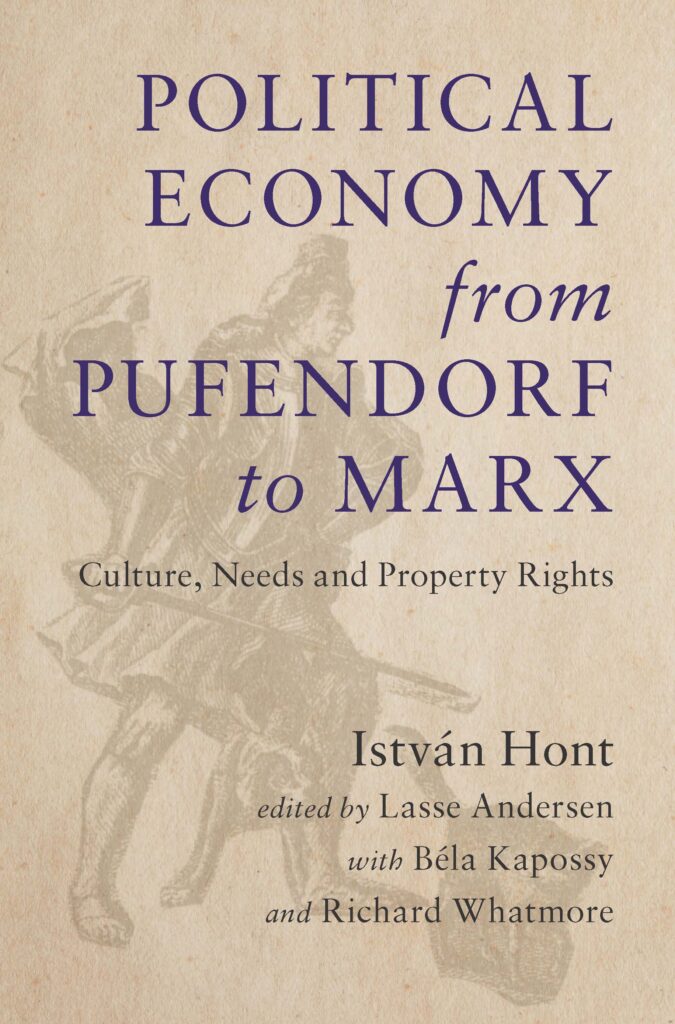
While Hont’s work on Hume and eighteenth-century political economy is well-known, being the subject some of his most celebrated essays, Hont’s work on Marx has hitherto remained largely hidden from view. In fact, asidefrom a few suggestive remarks scattered across his essays, Hont’s entirepublished oeuvre reveals remarkably little of his continued struggle tocome to terms with Marx and Marxism. From his arrival in Britain and throughout the 1980s, however, Hont waswriting and gathering material for an ambitious book project, one that he worked on alongside his role as the leading organiser of some famous seminars at King’s College, Cambridge, which produced the edited volume Wealth and Virtue: The Shaping of Political Economy in the Scottish Enlightenment (CUP, 1983). In contrast to the largely Scottish focus of this volume, Hont envisioned his own personal project as a study of the development of Western political thoughtfrom Samuel Pufendorf to Karl Marx, uncovering along the way the shared concerns and hidden conceptual linkages between natural law, political economy and Marxism. Hont named this project Culture, Needs and Property Rights, a title signalling his aim to subordinate the discussion of property rights to the underlying theories of human sociability and needs embedded in all three of these modern discourses. Although this project never came to fruition as a book, the papers that Hont left unpublished at his death in 2013 revealed that its central ideas had been fully worked out, mostly during his early career in Budapest, Oxford and Cambridge, but culminating in a series of lectures he gave in New York and Chicago, only months before the fall of the Berlin Wall. These years of exile were the years in which Hont became the historian that he was, an act of self-creation that was deeply marked by his complicated relationship with Marx, involving both acts of exorcism and emulation as he made Britain his home and found a new intellectual homeland in eighteenth-century Scotland. With the publication of Political Economy from Pufendorf to Marx: Culture, Needs and Property Rights, readers both familiar and unfamiliar with Hont’s work are now able to retrace Hont’s own steps and understand why going beyond Marx meant going back to the future with David Hume, Adam Smith, and eighteenth-century political economy more generally.

Lasse S. Andersen is Associate Director of the Institute of Intellectual History at the University of St Andrews. He has published articles on the history of political thought and ...
View profile >Keep up with the latest from Cambridge University Press on our social media accounts.



Latest Comments
Have your say!