

Products and services


This book tells the story of mass incarceration through the eyes of the writers who lived through it. Long before Michelle Alexander characterized mass incarceration as the new Jim Crow in America, Dr. Martin Luther King, Jr. was in jail protesting Jim Crow in America. King did not live long enough to see the dramatic expansion of the prisons, but his Letter from Birmingham Jail prefigured the root causes of it in racism. Malcolm X died in 1965 months before his autobiography was published, but his memoir of struggle in segregated America and his awakening in prison through Islam had powerful impact on the writers who came after him.
Malcolm’s dictum was to secure justice by “any means necessary,” which the Black Panther Party put into practice, under the leadership of Huey P. Newton, Bobby Seale, and Eldridge Cleaver. Their memoirs and essays from prison elaborate the links between police brutality and the prisons, as well as the radical potential of Black power. When George Jackson joined the Panthers from prison, he began radicalizing others to resist the intersecting forces of racism, capitalism, imperialism, and fascism in prisons and in America. For trying to help him, Angela Davis, a member of the Communist Party USA, was, herself, imprisoned. When she got out, she became a leading voice for prison abolition.
Revolutionaries like these did not just want to abolish prisons but the societal forces that sustained them. When Assata Shakur, a member of the Black Liberation Army, was framed for the murder of a police officer by the FBI, she released a powerful radio speech, To My People, encouraging revolutionary love, which ended, “We have nothing to lose but our chains.” Leonard Peltier, who was a part of the American Indian Movement, and Mumia Abu-Jamal, a journalist and a member of the Panthers, were also accused of killing law enforcement officers in trials that were widely panned as shams. Peltier survived prison by reclaiming his Native American spirituality. Abu-Jamal began reporting from death row, where he sat for years, before widening his lens to cover what he called the prison industrial complex. Peltier got out after nearly 50 years. After 42 years, Abu-Jamal is still in prison.
When revolutionary movements retrenched in the 1980s, American prison writers began witnessing and seeking self-determination from these increasingly cavernous warehouses. Albert Woodfox was held in solitary confinement for 42 years for allegedly killing a correctional officer. He saw his Black Panther Party disassemble from solitary as he endured setback after setback in the courts before he was freed. Jack Henry Abbott and Kenneth Hartman approach the long-term impact of prison from their perspective of having been “state-raised” in juvenile detention centers and prisons. Abbott was so warped by the experience that he ended up killing again when he was freed. Hartman, who did 37 years for murder, fared better by atoning for his actions in prison and being pardoned by the governor.
As prisons began ensnaring more people throughout the late 20th century, they created more problems, which were well documented by prison journalists such as Wilbert Rideau and Dannie Martin, who reported on prison rape, the AIDS epidemic, untreated mental health, hospice for dying prisoners, the abuse of psychotropic drugs by staff on prisoners, and the death penalty. Many women wrote, as well, circulating their news, poems, encouragement, and support in unpublished zines, often anonymously and with support from activists on the outside. Poets such as Jimmy Santiago Baca, Etheridge Knight, and Reginald Dwayne Betts also used their voices and the uniqe reach of poetry to reclaim their humanity from the inhumanity of the system.
By the end of the 20th century, the prison population had gone from 300K to over two million, and mass incarceration had become a terrible “solution” to social problems Americans were unable or unwilling to face in society: poverty, racism, drug addiction, sexual assault, and other forms of trauma that can lead to crime but which are often undertreated by a lack of affordable health care. Memoir became the preferred genre at this time for writers like Susan Burton and Shaka Senghor who were trying to heal from traumatic life experiences and from the trauma of prison itself. American prison writing became, in this new phase of the story, a tool for personal survival.
This book tells a compelling story of resistance to mass incarceration. Revolutionaries teach us how to diagnose the underlying structural causes of injustice in American prisons and imagine bold moves to fix them. Witnesses carry the light into the darkest cells to bring back the testimony of people persevering to determine their own fates. And survivors show us how people in prison can heal from the trauma in their pasts while resisting the perpetuation of it in present.
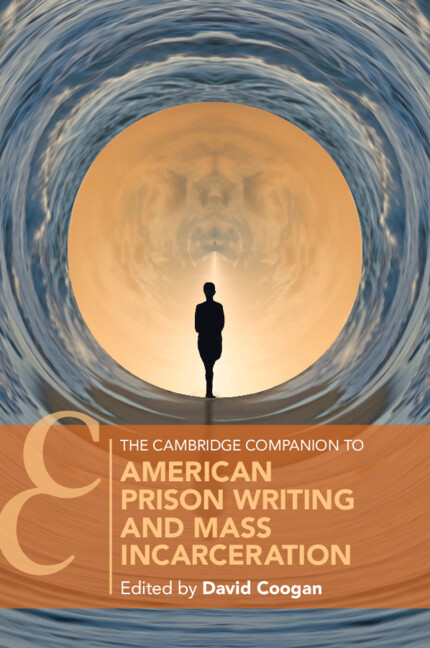
The Cambridge Companion
to American Prison Writing
and Mass Incarceration by
David Coogan
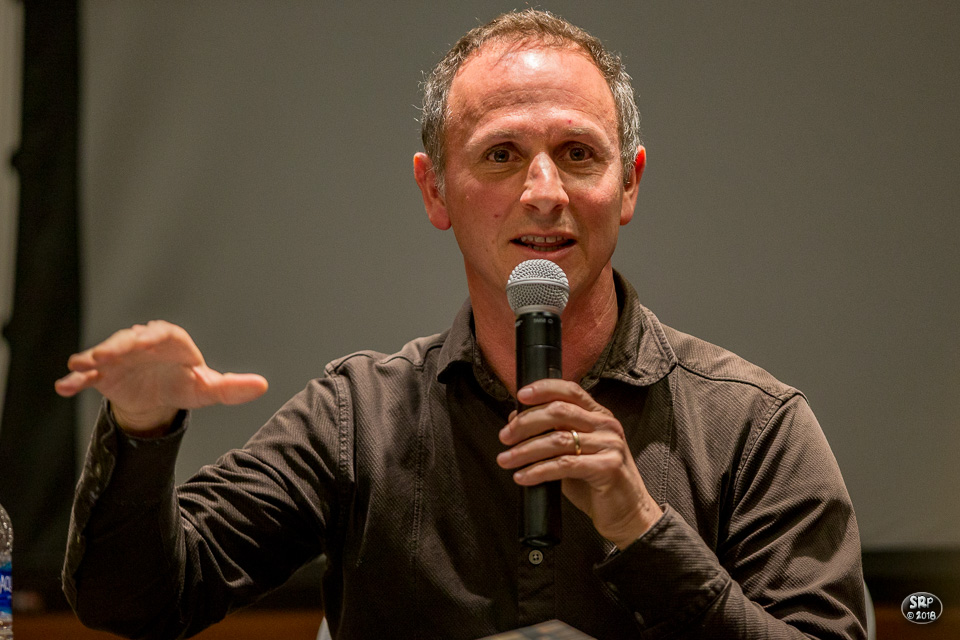
David Coogan is a professor of English at Virginia Commonwealth University, the founder of Open Minds, a college program in the Richmond City Jail, the author of Writing Our Way Ou...
View profile >Keep up with the latest from Cambridge University Press on our social media accounts.




Latest Comments
Have your say!