
Products and services


When you mix prized home-crafted beer brewed by a professor of law with long-suffering colleagues prepared to regularly be used as a tasting panel for new types of beer, you may get a lot of creative ideas and may even end up with a book entitled ‘Beer Law’.
This book, Beer Law, is believed to be the first of its kind and should appeal to beer lovers everywhere who are interested in reading about the broader legal, economic, and social dynamics that connect beer and the law.
We even brewed a special beer using ingredients from the countries of origin of the authors. The recipe is at the end of the book.
Can we speak of ‘Beer Law’ as a distinct field?
Absolutely. Beer has been regulated throughout history in more ways than we might realise. While we are all familiar with the infamous US prohibition and Iceland’s beer ban (only lifted in 1989), every country in the world has laws affecting beer.
There are historical legal traditions specific to beer, such as the German Reinheitsgebot of 1516, beer-related clauses in the Magna Carta, and ancient laws like Hammurabi’s Code. More recent legal developments have been driven by beer-related issues in areas like public health, competition, and intellectual property.
Most of us enjoy a beer without thinking about the laws behind the drink. Let us introduce you to a few.
Starting with a definition of beer
The definition of a beer comes from the law but differs between countries, and sometimes also within countries. The German Reinheitsgebot describes beer as a drink made using only barley, malt, hops, water and yeast. The Swedish Alkohollag defines beer by reference to the fermentation of dried or roasted malt that has an alcohol content of at least 2.5%. Below that, it is not technically a beer. In contrast, the Czech law is far more detailed and refers to both alcohol and fermentation without specifying the quantity of alcohol. All of this is relevant, not just to decisions about what we drink but to other areas of law, such as tax law. Most beer is subject to a tax of some kind, provided, of course, the drink meets the relevant country’s definition of a beer.
Does the law consider beer to be healthy?
It depends! Beer was once endorsed as a source of nutrition for builders of the Egyptian pyramids and workers during the Industrial Revolution. Today, we have plenty of non- or low-alcoholic beers for the health-conscious. However, recognising the effects of alcohol on health and behaviour, laws still prohibit underage drinking and limit where beer may be consumed – at home or on legally licensed premises.
Beer traditions – unwritten laws or conventions
One of the most well-known traditions that occurs annually in licensed premises is the Oktoberfest. This is a German tradition that has spread internationally, as have some other traditions, such as the “Going for One” in the Czech Republic (a call to friends or colleagues to go for a friendly beer after work), or “buying a round” in Britain (since pubs were so small, only one person per table was sent to the bar to buy a round and each person would take turns). These traditions are unwritten laws or conventions. One example where beer cultures have been recognised by law is Belgium. The Belgian beer culture, which is defined by traditionally broad varieties of beers, specific social institutions such as Trappist monasteries, and the ways beer is used in cooking and cheese-making, has been registered by UNESCO as a beer-related intangible asset. Who knew?
Beer and IP – the earliest trademarks and patents
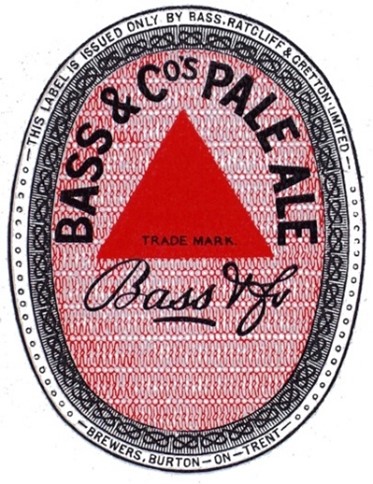
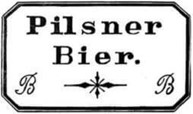
While Belgium may have beaten the Germans and others to have its beer culture recognised first, there is debate over who registered the earliest trademark relating to beer. Britain claims the Bass red triangle (the distinctive sign of a pale ale) was the first trademark registered under the Trade Marks Registration Act 1875. The Czechs claim that they filed their Pilsner trademark on 23.4.1859,[1] while the Belgians claim their Stella Artois was the first unregistered trademark.
Another area of law that has helped the beer industry thrive is the registration of the many patents resulting from innovations in every aspect of brewing, from fermentation to packaging. Since 1838, more than 22,000 patents have been filed worldwide relating to beer. One of the earliest and most impactful patents was registered by the famous Louis Pasteur when he registered the pasteurisation process. This process resulted in a better and more consistent quality of beer that could more easily be transported.
But are consumers protected?
Of course! Brewers must be careful with their labelling. Laws detail the information that must appear on labels, including the type of beer, alcohol content, list of ingredients and best-before date. Likewise, innkeepers must be careful with their pouring. It may be classed as false and misleading conduct to, for example, not fill the glass to the calibration mark. EU Directive 2004/22/EC specifically requires the volume to be provided where drinks are served for immediate consumption.
What about craft brewers?
For craft brewers, it is not just about the beer. They also need to be aware of many aspects of contract law. Since it is difficult to brew on a profitable small scale, and relying on a handshake with a friend or mutual admiration is not reliable, many brewers enter into ‘collab’ agreements. Properly drafted collab agreements result in increased knowledge of recipes, equipment, and the industry.
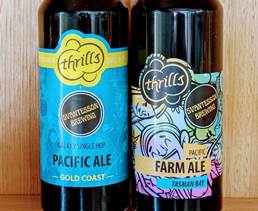
As an example: Collab between Pivovar Thrills Brewing and Svantesson Brewing
The economic influences of beer
Beer, in all its forms and elegance, is an important commodity that is traded internationally. While today, most beer is locally brewed under license, this has not always been the case. The Hanseatic League dominated trade in Northern Europe from the 13th to the 15th centuries, with significant beer sales. The Netherlands rose to power as a major trading empire in the 14th century, and the English took over in the 18th century. The common denominator was beer. Many of these countries relied, at least indirectly, on beer to secure their power.
Two factors helped ensure this growth in power. One was the use of hops, and the other was taxation. Hops were easily available, more consistent in their flavour and allowed beer to stay fresh for longer. Since beer was readily available and consumed by so many, it was the perfect product for taxation. It would raise the most amount of money and was therefore a reliable source of income – something needed to fund armies to ensure governments remained in power in those early days. The success of the Dutch Revolt in 1574 is an excellent example where beer taxes helped fund their well-trained army, enabling them to defeat the much larger Spanish army.
Today, taxation has taken a back seat as high-quality, low-alcohol beers are developed. Instead, beer taxes continue to be tweaked to strike a balance between health and welfare, revenue-raising and a free market.
Conclusion
The beer industry will always face challenges due to health, environmental, or religious reasons, but beer remains a resilient product that has stood the test of time. Beer has been a favourite drink throughout the ages and will continue to be so deep into the future, despite the many laws regulating it.
This book delves into all the topics mentioned and more. We sincerely hope it provides value for as many readers as possible, from brewers with no legal background and beer drinkers more widely, to legal scholars and lawyers practising specifically in beer law.
[1] https://znakitowarowe-blog.pl/old-uploads/2017/12/Najstarsze-zarejestrowane-znaki-na-%C5%9Bwiecie-czeski-PILZNER.pdf )
[2] See Mikołaj Lech, ‘The Oldest Registered Trademarks in the World’, Kancelaria Patentowa “LECH” (Web Page) <https://znakitowarowe-blog.pl/the-oldest-registered-trademarks-in-the-world/>.
[3] https://www.stellaartois.com/en_gb/heritage/


Dan Jerker B. Svantesson is Professor at the Faculty of Law, Bond University. He has written extensively on international aspects of Internet law and data privacy. He is also an aw...
View profile >William Van Caenegem is Professor of Law at the Faculty of Law, Bond University, QLD Australia and an Honorary Visiting Professor at the University of Gothenburg, Sweden. He holds ...
View profile >Anthea Jane Gerrard is an assistant professor at the Faculty of Law, Bond University. She studied commerce, law and accounting in South Africa, the United Kingdom and Australia; is...
View profile >Radim Polčák is Professor at the Institute of Law and Technology, Faculty of Law, Masaryk University. He founded the Institute of Law and Technology at Faculty of Law, Masaryk Un...
View profile >Alain Strowel is a professor at Université Catholique de Louvain where he teaches courses in intellectual property, IT and media law. He is also an attorney at the Brussels bar. H...
View profile >Andreas Wiebe is Chair for Civil Law, Intellectual Property and Unfair Competition Law, Media and Information Law at the Faculty of Law, University of Göttingen, Germany. He has S...
View profile >Keep up with the latest from Cambridge University Press on our social media accounts.





Latest Comments
Have your say!