

Products and services

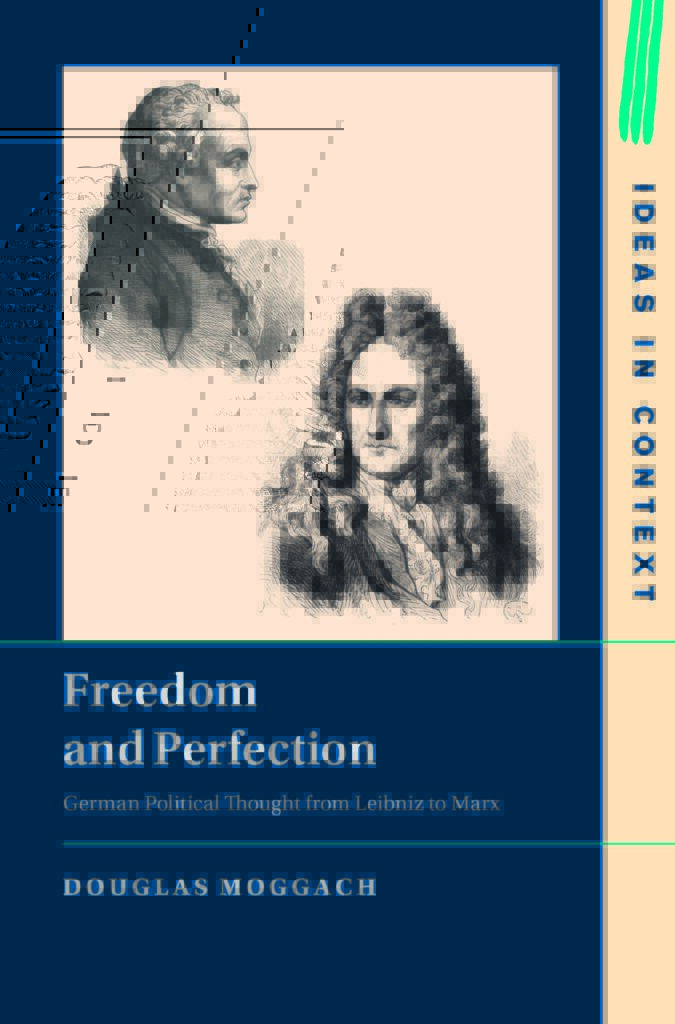
G.W. Leibniz (1646-1716) is renowned for his groundbreaking work in mathematics, but among his many accomplishments he was also a mining engineer, an inventor, and a pioneer of historical linguistics. His innovations as a political theorist are less widely recognised, but are of great historical significance. His work establishes the basic concepts of subsequent German political thinking, inspiring not only thinkers in the German Enlightenment like Christian Wolff (1679-1754) and early Romantics like J.G. Herder (1744-1803), but also Immanuel Kant (1724-1804) and the post-Kantian tradition that includes Friedrich Schiller (1759-1805), J.G. Fichte (1762-1814), G.W.F. Hegel (1770-1831), and even Karl Marx (1818-1883). Freedom and Perfection traces these various receptions of Leibniz, and shows how his basic concepts are rethought through the experience of the French Revolution and its aftermath.
Leibniz develops his own political theory through his encounter as an undergraduate at Leipzig with Roman law and with the mechanistic philosophy of Thomas Hobbes. From Roman law he derives the basic juridical principles of freedom, distributive justice, and perfection or progress. Evaluating Hobbesian mechanism provides him with an initial definition of freedom. Mechanistic principles apply to relations among things in the external world but cannot give an adequate account of our activity in changing those things. Hobbes had reduced human action to the pushes and pulls that external things exert on us, but Leibniz wants to restore something akin to teleology as envisaged by ancient philosophy, or action motivated by rational reflection on a good end. These considerations lead Leibniz to define freedom as spontaneity, not in the sense of unreflective action, but as the capacity of subjects to be the self-initiating cause of change in themselves and in the external world. Such active subjects are not merely determined by external causes, as Hobbes and Enlightenment materialism hold. Instead, they integrate these causes in their actions in their own creative ways. From this starting point, justice can be redefined as the enabling conditions for such free activity, and perfection as continuous progress in extending and consolidating these conditions.
Freedom and Perfection demonstrates that it is Kant who recognises the transformative potential of Leibnizian ideas, rather than Leibniz’s immediate successors like Christian Wolff. Wolff had described the proper ethical end as eudaimonia or thriving, the full development of physical and intellectual capacities under the aegis of an Enlightened absolutist state. Kant rejects these earlier perfectionist ethics because they illicitly propose happiness rather than autonomy as the definitive moral end, and they paternalistically reduce rational citizens to immature tutelary subjects, inconsistent with the idea of persons as self-determining agents. Kant redefines spontaneity as negative freedom, the ability of agents to abstract from external causes and to assess their rational admissibility as grounds for action, rather than being directly necessitated by them. His specific appropriations of Leibniz lead to a new political-ethical current of post-Kantian perfectionism, offering distinctive and valuable perspectives on freedom and progress as the goal of legitimate political power, and providing resources for current thinking about the state, economy, and rights.
The new post-Kantian perfectionist approach, originating among Kant’s followers like Schiller and Fichte after the publication of Kant’s Groundwork of the Metaphysics of Morals in 1785, retains Kant’s stress on self-determination and spontaneity. Happiness is not of course inconsequential, but its pursuit must be circumscribed by rightful relations among subjects and by an appropriate institutional order that fosters this interaction, without authoritatively imposing conceptions of the good life. This approach retains and elaborates Leibniz’s link of freedom and distributive justice. Perfection now lies not in fulfilling the demands of a fixed human nature through state solicitude, but in achieving harmony among diverse interests through conscious and concerted effort, co-ordinating independent acts in ways that minimize unnecessary disturbances and that universalize the capacity for free activity and eliminate obstacles to it. Post-Kantian perfectionism demands new justifications for political intervention, as enhancing the capacities of citizens for independent action, not as paternalistically dispensing welfare. It does not necessarily prescribe a minimalist state, though it does so for Wilhelm von Humboldt (1767-1835), but Fichte offers a decisive riposte (if problematic in new ways) to this more restrictive reading of Kantian principles. Post-Kantian perfectionism also supplies an interpretative key to Hegel’s concepts of the universality of the will, the modern subject and the modern state, and history as the process of rational freedom. Karl Marx too defines alienated labour as the systematic blockage of spontaneous activity, and requires the transformation of economic relations to make autonomy concrete.
Freedom and Perfection is both a thematic-conceptual exploration and a historical study, and a retrieval of valuable resources for understanding modern subjectivity and its world. The concepts of spontaneous freedom that it develops, and the political consequences that flow from them, are critical alternatives both to modern liberal utilitarianism or possessive individualism, and to conservative restorations of traditional social solidarities. Post-Kantian perfectionism delineates the programme of autonomy and emancipation at the heart of German idealism.
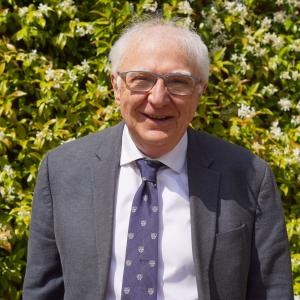
Douglas Moggach is Distinguished University Professor in Political Studies and Philosophy at the University of Ottawa, and Honorary Professor, School of Philosophical and Historica...
View profile >Keep up with the latest from Cambridge University Press on our social media accounts.


Latest Comments
Have your say!