

Products and services

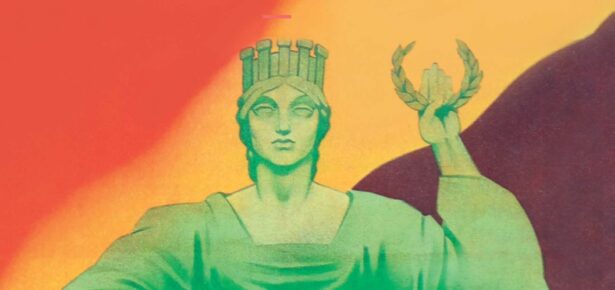
Historians of war often pride themselves on telling ‘forgotten stories’ on the basis of ‘lost voices’ from the past, and rightly so. Those dedicated to the International Brigades would, however, have a hard time getting these buzz words into the subtitles of their own books, even though they have – for as long as they have existed – been based on the first-hand testimonies of the very soldiers concerned. After all, for almost ninety years and counting, a combination of antifascist activists, professional historians, popular writers and amateur podcasters have ensured that this group of 35,000 individuals from around sixty different states has not simply been remembered, but come to be regarded as the quintessential ‘foreign fighting’ unit. Not for nothing has the International Legion in the Russo-Ukrainian War been compared to the International Brigades. Far from being forgotten, the voices, experiences and attitudes of its members are the subject of intense interest and, indeed, admiration the world over.
The same thing which motivates modern-day memory makers to erect plaques and write blogs about the International Brigades has also ensured that they have been so successful in reaching large public audiences. Its members, they remind readers in Madrid, listeners in Melbourne and passersby in Manchester, were not merely participants in a domestic squabble between Spaniards (that is, its civil war of 1936 to 1939) but warriors in a global struggle against fascism. The story has a moral, too – the moral that the International Brigades’ history is your history, their antifascist effort your democratic gain, their farsighted fight then your progressive fight now, no matter where you are from or when you were born. The geographical limits of Spain cannot contain this antifascist epic, they suggest; nor can the chronological bookmarks of its civil war.
In remembering this overarching, universal and epic story of the International Brigades so successfully we have nonetheless risked forgetting some of its finer details. Intentionally or not, commentators have tended to reduce Spain itself to the unenviable status of a more-or-less incidental backdrop to the volunteers’ far more global struggle for freedom, whilst relegating their encounters with its people, places and politics to the similarly unfortunate status of a side show to their heroic frontline drama. My book not only seeks to recover a rich array of cross-cultural contacts from the unintended condescension of antifascist posterity, but show that they were – in fact – at the very heart of the volunteers’ military service. Each of its chapters aims to do so by turning its attention to a different form of contact with Spain.
The first of those chapters shows that when we remember the International Brigades as crucial shock troops for the embattled Republic, we often forget that the unit’s leaders saw their fundamental mission as acting as a model for the emerging Popular Army at large. They sought to define, and actively shape, the loyalist war effort in their own image, claiming that – in so doing – they were representing the will of the ‘Spanish People’ against hapless anarchists and meddling politicians.
When we remember the International Brigades as an international fighting force, we similarly forget that the majority of its members were Spaniards. Historians are certainly aware of the existence of those Spaniards, yet seldom has their attention towards them corresponded to their sheer presence within the ranks. They matter not only because they kept the International Brigades at fighting strength, but because their foreign leaders placed them at the heart of their new mission of transforming the unit into an enormous training school for both antifascist citizens and capable soldiers.
When we remember the International Brigades as ‘fighting fascism’, we forget to ask what they understood by the contentious concept as well as what fighting it actually consisted of. In defining the Nationalist war effort as a fascist war effort, the volunteers created the preconditions for engaging in violence against its shock troops, regardless of how they themselves may have identified. Fighting an ideology is, however, not the same thing as fighting flesh-and-blood soldiers. Their use of lethal force provoked surprisingly mixed responses and emotions, even if many of them ultimately regarded it as just and necessary to defeat the existential fascist threat.
When we remember the International Brigades as frontline fighters who had little prior knowledge of Spain, we forget that the rearguard was a major presence in their lives. Furthermore, their superiors actively sought to bring them into contact with civilians by holding fiestas and helping with the harvest. They regarded these initiatives as crucial for winning over hearts and minds in a total war which left no room for civilian indifference; for the rank-and-file, meanwhile, they transformed a transcendental struggle for freedom on behalf of an abstract community into a national war of survival on behalf of real life Spaniards.
When we remember the International Brigades as a unit consisting entirely of armed men, we forget that women were protagonists in their story. Pen portraits of workers in rearguard factories and letters from mothers extolling continued frontline sacrifice appeared in the volunteers’ trench press, conveying a sense of mutual antifascist responsibility. Civilian women who lived in rearguard villages, the nurses who cured their wounds in hospitals and the prostitutes who provided sexual services in brothels not only engaged in particularly direct forms of contact with the volunteers but provided them with a clear sense of who they were as antifascists, as soldiers, and above all as men.
Finally, when we remember the International Brigades as straightforward soldiers, we forget that they themselves identified as ‘military men of feeling’ who ought to protect the children of the rearguard as passionately as they fought the fascists at the front. As I point out in both the book and a previous article, the volunteers of the International Brigades invested huge amounts of time and money into holding fiestas, setting up homes and arranging visits with needy children. For their part, those same children engaged creatively with the volunteers’ vision of a just war of national independence and antifascist renewal, including through letters and drawings. Here is particularly clear evidence of the impact the volunteers had on Spain’s domestic wartime culture.
Together, these cross-cultural contacts show that the volunteers’ relationship with Spain was – as I write in the conclusion to my book – ‘a great deal closer, a great deal more complicated and […] a great deal more interesting than most historians, journalists, activists and politicians both within Spain and far beyond it have tended to suggest’. In an age when foreign fighters are clearly going nowhere – or, to be more literal about it, seem to be going to more places than ever before – it is important to consider the ways in which such encounters are not only a deep and varied part of the war experience, but an important and consequential one, too. In Spain, they fed into identities, influenced actions, shaped emotions, provided legitimacy and created a sense of underlying motivation. They were far from marginal to the ‘main business’ of frontline fighting in a transcendental struggle for liberty; instead, they were at the very heart of making antifascist war.
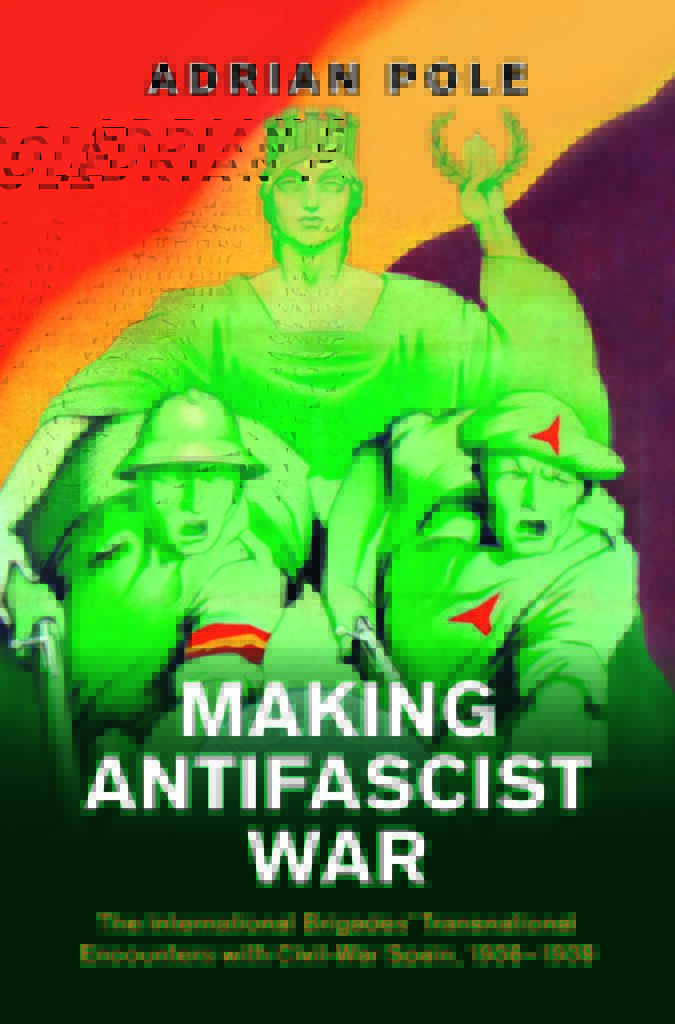

Adrian Pole has a Ph.D. from the University of Edinburgh, and is a historian of Spain researching its modern history in a transnational context....
View profile >Keep up with the latest from Cambridge University Press on our social media accounts.



Latest Comments
Have your say!