Tag Archives: Linguistics
Number of articles per page:
-
Mikko Laitinen, Paula Rautionaho
English linguistics is in the middle of a transformation. That’s nothing new. This field has always been quick to adapt, but the current shift may be different in scale. It mirrors the broader digitalization that is shaping science, education, and everyday life. It’s driven not only by new AI‑based tools that have changed how we […]
Read More
-
Asya M. Pereltsvaig
We all use language every day: not only to communicate thoughts and ideas to other people, but also for our internal monologue and, some might argue, for organizing thought. But what are the inner workings of human language and what makes it different from animal communication? Professional linguists study these questions in their finest detail, […]
Read More
-
Barbara Lust, Suzanne Flynn, Claire Foley
How is it that any child, anywhere, can acquire any of the world’s estimated 6,000 languages, in a matter of only a few years? This mystery has long intrigued scholars as well as those who take care of young children. Each of these thousands of languages varies from each of the others in many ways—for […]
Read More
-
Raymond Hickey
The New Cambridge History of the English Language represents a second edition of the original Cambridge history published in the 1990s. Much has happened in English historical linguistics in the last three decades and so it was felt that a new history should reflect these shifts in research evident in current historical studies. Specifically, the […]
Read More
-
Julianne House, Dániel Z. Kádár
2: How the Chinese Greet One Another? The title of this entry may sound like the title of a beginner’s Chinese language course featuring the expression ni hao 你好 as a simple greeting. However, we will show that that greeting one another in Chinese is far more complex than what meets the eye, and appropriately […]
Read More
-
Dániel Z. Kádár, Julianne House
1: Overview In this blog series, we will provide an overview of the representative features of Chinese politeness in daily interaction. Instead of discussing conventional topics, such as the use of honorifics in business meetings, the famous concept of ‘face’ and other phenomena typically mentioned regarding Chinese politeness, we intend to draw attention to seemingly […]
Read More
-
Emanuel J. Drechsel
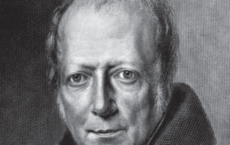
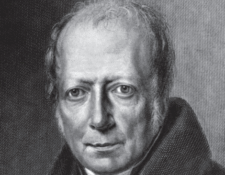
My book, Wilhelm von Humboldt and Early American Linguistics, addresses an audience of interested scholars and potential readers with the following concentrations: My book may also be of interest to a broader audience wishing to learn about the intricacies of nineteenth-century comparative studies in linguistics, the social sciences, and other disciplines, foremost natural history. In […]
Read More
-
Lívia Körtvélyessy
A new book that reveals the sound-painted secrets of 124 languages. Boom… plop! Woof! Vroom! Sound familiar? Like something out of a comic book, baby talk, or a cartoon? Not quite! These “funny little noises” are actually a serious linguistic topic – and they have a lot to tell us about how languages work, how […]
Read More
-
Mikko Laitinen, Paula Rautionaho
English linguistics is in the middle of a transformation. That’s nothing new. This field has always been quick to adapt, but the current shift may be different in scale. It mirrors the broader digitalization that is shaping science, education, and everyday life. It’s driven not only by new AI‑based tools that have changed how we […]
Read More
-
Asya M. Pereltsvaig
We all use language every day: not only to communicate thoughts and ideas to other people, but also for our internal monologue and, some might argue, for organizing thought. But what are the inner workings of human language and what makes it different from animal communication? Professional linguists study these questions in their finest detail, […]
Read More
-
Barbara Lust, Suzanne Flynn, Claire Foley
How is it that any child, anywhere, can acquire any of the world’s estimated 6,000 languages, in a matter of only a few years? This mystery has long intrigued scholars as well as those who take care of young children. Each of these thousands of languages varies from each of the others in many ways—for […]
Read More
-
Raymond Hickey
The New Cambridge History of the English Language represents a second edition of the original Cambridge history published in the 1990s. Much has happened in English historical linguistics in the last three decades and so it was felt that a new history should reflect these shifts in research evident in current historical studies. Specifically, the […]
Read More
-
Julianne House, Dániel Z. Kádár
2: How the Chinese Greet One Another? The title of this entry may sound like the title of a beginner’s Chinese language course featuring the expression ni hao 你好 as a simple greeting. However, we will show that that greeting one another in Chinese is far more complex than what meets the eye, and appropriately […]
Read More
-
Dániel Z. Kádár, Julianne House
1: Overview In this blog series, we will provide an overview of the representative features of Chinese politeness in daily interaction. Instead of discussing conventional topics, such as the use of honorifics in business meetings, the famous concept of ‘face’ and other phenomena typically mentioned regarding Chinese politeness, we intend to draw attention to seemingly […]
Read More
-
Emanuel J. Drechsel
My book, Wilhelm von Humboldt and Early American Linguistics, addresses an audience of interested scholars and potential readers with the following concentrations: My book may also be of interest to a broader audience wishing to learn about the intricacies of nineteenth-century comparative studies in linguistics, the social sciences, and other disciplines, foremost natural history. In […]
Read More
-
Lívia Körtvélyessy
A new book that reveals the sound-painted secrets of 124 languages. Boom… plop! Woof! Vroom! Sound familiar? Like something out of a comic book, baby talk, or a cartoon? Not quite! These “funny little noises” are actually a serious linguistic topic – and they have a lot to tell us about how languages work, how […]
Read More
Number of articles per page: