Products and services

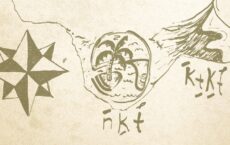
Esperanto, Klingon, Na’vi … these are examples of invented or constructed languages (conlangs for short). Unlike ‘natural’ languages such as English, Swahili, or Navajo, which arise and change organically, conlangs are consciously created; Esperanto by Ludwik L. Zamenhof, Klingon by Marc Okrand, Na’vi by Paul Frommer. Like natural languages, many conlangs boast rich vocabularies in […]
Read More
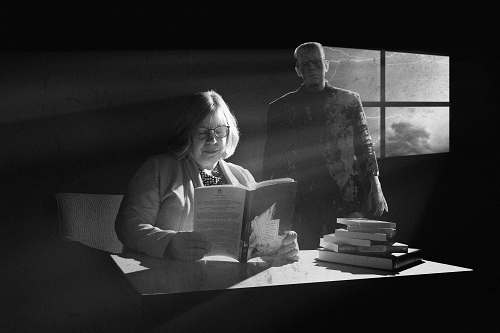
Reading by her window, “cross-legged, like a Turk,” Jane Eyre transports herself to “Lapland, Siberia, Spitzbergen, Nova Zembla, Iceland, Greenland.” Anywhere but Gateshead, where her life has been one of continual oppression. But the book she reads bears a surprising title: “Bewick’s ‘History of British Birds.’” What is supposedly national turns out to be immediately […]
Read More
For anyone interested in the crucial role of money in American literature, it cannot seem anything other than eminently fitting that at the very “navel” of the vessel at the centre of the greatest of all Great American Novels sits a gold coin. Or that this totemic monetary object should speak resoundingly to questions – […]
Read More
Why do people so often approach nature with the same kinds of rapt aesthetic and spiritual attention that they bring to works of art? Why do they seek in nature both their most unique (or “true”) personal self and at the same time a defining source of collective identity, such as the spirit of a […]
Read More
When we think about lyric poetry and song traditions in the Roman Empire, the association is hardly new. Horace’s refined lyric experiments are well known, and Nero’s dramatic (and infamous) performance during the Great Fire of Rome in 64 CE—singing while the city burned—has become part of popular legend. But what about the Greek East, […]
Read More
At the time of writing, I am lucky enough to be working as a visiting fellow at the Arts and Humanities Institute of Maynooth University in Kildare. The university houses the archives of Teresa Deevy, a remarkable Irish playwright whose work had been largely overlooked by critics after her death in 1963 until some recovery […]
Read More
When the idea of setting up a Modern Languages school (which was intended to include the study of English) was being debated at the University of Oxford in the late 1880s, E.A. Freeman, Regius Professor of Modern History, witheringly dismissed the study of literature as ‘mere chatter about Shelley’. Freeman was impressed with his coinage, […]
Read More
Can editing an encyclopedia of stage directors be anything but an impossible task? Simon Williams (UC Santa Barbara) and I were invited to consider such an undertaking just under a decade ago; Simon had just published an encyclopedia of stage actors and acting, and this felt like a sensible next stage. We soon realised, however, […]
Read MoreKeep up with the latest from Cambridge University Press on our social media accounts.