The afterlife as envisioned by medieval Europeans was both a strange and familiar place. For us, hell conjures images of fiery rivers and demons, while heaven calls to mind shining white figures in repose. The same things appear in medieval descriptions. Yet these same texts, which were frequently based on the supposed reports of the […]
Read MoreThe New Irish Studies powerfully demonstrates how thoughtful close readings and diverse critical approaches enhance our understanding of twenty-first-century Irish writing. Across recent decades, the Republic and Northern Ireland have experienced monumental cultural, economic, and political transformations. Amid these, Irish literature has flourished, drawing international audiences and accolades for a wide array of writers publishing […]
Read MoreWhen I started to dream up my book Paper in Medieval England: from Pulp to Fictions, I wanted to find out why medieval people were interested in paper and how paper became a success story in pre-modern times. It was a project of discovery as well as deep frustration. Paper seemed to have quite a […]
Read MoreThe first thing to say for any reader who is not familiar with scholarly editions like this of Hardy’s fiction, is that it is different from all others and really significant. It gives, if you combine the text with the footnotes on the same page, the whole history of Hardy’s imaginative involvement with each work, […]
Read MoreMy love affair with The Woodlanders began many years ago when I covered much of the groundwork for a scholarly edition while doing my MA —entitled “Materials for an edition of Thomas Hardy’s The Woodlanders”. Much of the enjoyment for me as a textual editor is to see the development of a work and in […]
Read MoreMy daughter is taking an undergraduate course in Shakespearean theatre this semester, and one of her foundation readings is Elinor Fuchs’s influential short essay, ‘E.F.’s Visit to a Small Planet: Some Questions to Ask a Play’. Having spent long periods over several years on a small planet of my own, Thomas Hardy’s Egdon Heath, this […]
Read MoreIn some ways producing a scholarly edition of Desperate Remedies is easier than editing other Hardy novels, first of all because there is no extant manuscript. The story is that after he completed the text Hardy was moving lodgings, and when he discovered that the MS wouldn’t fit in his portmanteau, he destroyed it rather […]
Read More“To steal a Hint was never known, But what he writ was all his own.” – Verses on the Death of Dr Swift, D.S.P.D. Part way through his most famous self-elegy, Jonathan Swift delivers one of the greatest one-line gags in poetry: ‘what he writ was all his own’. The ostensibly proprietorial phrase was brazenly […]
Read MoreThe afterlife as envisioned by medieval Europeans was both a strange and familiar place. For us, hell conjures images of fiery rivers and demons, while heaven calls to mind shining white figures in repose. The same things appear in medieval descriptions. Yet these same texts, which were frequently based on the supposed reports of the […]
Read MoreThe New Irish Studies powerfully demonstrates how thoughtful close readings and diverse critical approaches enhance our understanding of twenty-first-century Irish writing. Across recent decades, the Republic and Northern Ireland have experienced monumental cultural, economic, and political transformations. Amid these, Irish literature has flourished, drawing international audiences and accolades for a wide array of writers publishing […]
Read MoreWhen I started to dream up my book Paper in Medieval England: from Pulp to Fictions, I wanted to find out why medieval people were interested in paper and how paper became a success story in pre-modern times. It was a project of discovery as well as deep frustration. Paper seemed to have quite a […]
Read MoreThe first thing to say for any reader who is not familiar with scholarly editions like this of Hardy’s fiction, is that it is different from all others and really significant. It gives, if you combine the text with the footnotes on the same page, the whole history of Hardy’s imaginative involvement with each work, […]
Read MoreMy love affair with The Woodlanders began many years ago when I covered much of the groundwork for a scholarly edition while doing my MA —entitled “Materials for an edition of Thomas Hardy’s The Woodlanders”. Much of the enjoyment for me as a textual editor is to see the development of a work and in […]
Read MoreMy daughter is taking an undergraduate course in Shakespearean theatre this semester, and one of her foundation readings is Elinor Fuchs’s influential short essay, ‘E.F.’s Visit to a Small Planet: Some Questions to Ask a Play’. Having spent long periods over several years on a small planet of my own, Thomas Hardy’s Egdon Heath, this […]
Read MoreIn some ways producing a scholarly edition of Desperate Remedies is easier than editing other Hardy novels, first of all because there is no extant manuscript. The story is that after he completed the text Hardy was moving lodgings, and when he discovered that the MS wouldn’t fit in his portmanteau, he destroyed it rather […]
Read More“To steal a Hint was never known, But what he writ was all his own.” – Verses on the Death of Dr Swift, D.S.P.D. Part way through his most famous self-elegy, Jonathan Swift delivers one of the greatest one-line gags in poetry: ‘what he writ was all his own’. The ostensibly proprietorial phrase was brazenly […]
Read MoreKeep up with the latest from Cambridge University Press on our social media accounts.
Johan Adam Warodell is the author of the monograph Conrad’s Decentered Fiction (Cambridge University Press 2022) and numerous articles on Joseph Conrad. He is a Trustee of the Joseph Conrad Society of America and a Research Associate at the University of Sussex.

Montclair State University, New Jersey
Heather Hirschfeld is a Professor of English at the University of Tennessee.
Alice Tranah grew up in Cambridge and, after studying history at University, fell delightely into life as a bookseller, first in London and then here for Cambridge University Press Bookshop.
University of Bristol
Canterbury Christ Church University, Kent
Associate Professor in English and Creative Writing, University of Reading
University of Pennsylvania
Staff Scientist, Brigham and Women’s Hospital, Department of Neurology with affiliation to The Broad Institute of Harvard and MIT.
Speaking Shakespeare Today
Helen Wilcox, Professor of English at Bangor University
Playing Hesiod
Shakespeare’s Possible Worlds
The Cambridge Companion to American Civil Rights Literature
Yeats and European Drama
Nineteenth-Century American Literature and the Long Civil War
Grief and Women Writers in the English Renaissance
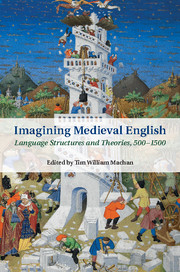
Imagining Medieval English
The Cambridge Companion to French Literature
The Cambridge Introduction to Theatre and Literature of the Absurd
Paul Salzman is Emeritus Professor of English at La Trobe University, Australia.
Sarah C. E. Ross is Senior Lecturer in the English Programme, at Victoria University of Wellington.
Stuart Sillars is Professor of English at the University of Bergen, Norway.
The Cambridge Introduction to William Wordsworth
The Poetry of War
Doubt and Skepticism in Antiquity and the Renaissance
Marketing associate
You Know what I Mean?
Samuel Johnson, the Ossian Fraud, and the Celtic Revival in Great Britain and Ireland
The Cambridge Companion to Bob Dylan
Japan Rising
The Cambridge Companion to Baseball
Library marketing associate
College Marketing Associate
The Cambridge Companion to Baseball
Publicist
London: A Social and Cultural History, 1550–1750
The American 1930s
The Places of Wit in Early Modern English Comedy
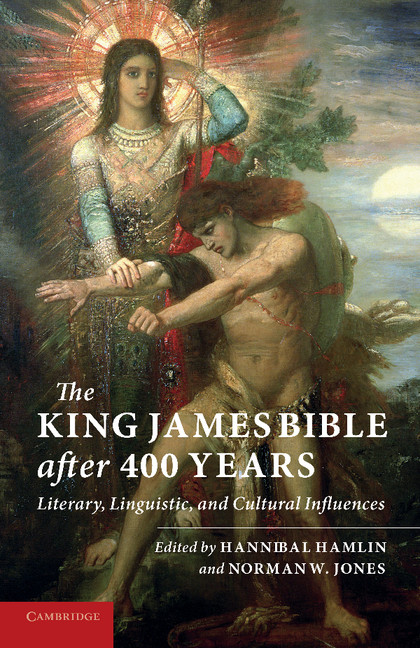
The King James Bible after Four Hundred Years
The Cambridge Companion to Creative Writing
London: A Social and Cultural History, 1550-1750
The Cambridge Introduction to Charles Dickens
Publicist
Associate director of sales and marketing
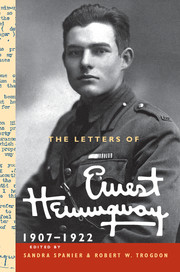
The Letters of Ernest Hemingway, Volume 1
Assistant sales manager
Senior Inbound Marketing Executive
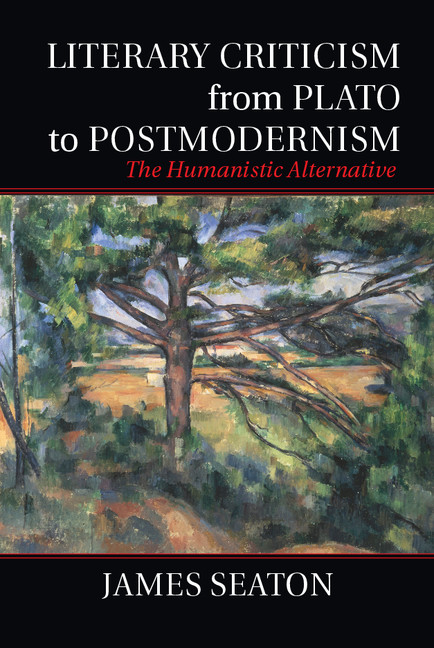
Literary Criticism from Plato to Postmodernism
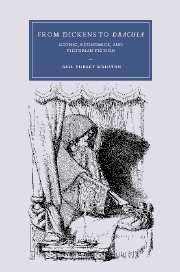
From Dickens To Dracula
A Reference Grammar of French
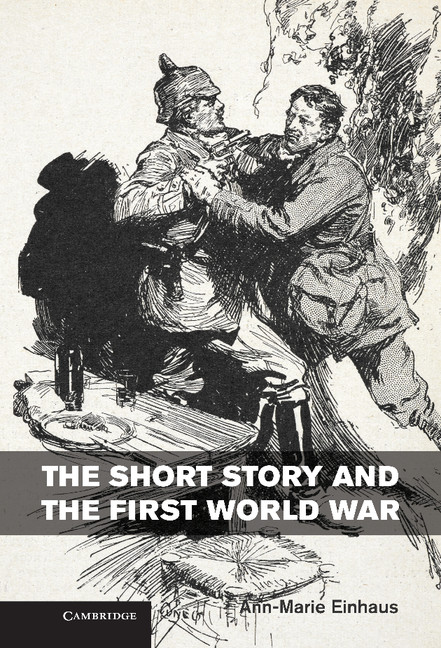
The Short Story and the First World War
Mrs Dalloway
Gender and Race in Antebellum Popular Culture
The Cambridge Companion to Modernist Culture
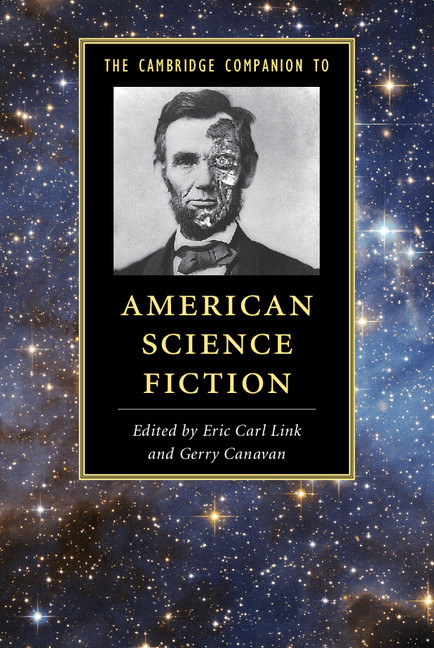
The Cambridge Companion to American Science Fiction
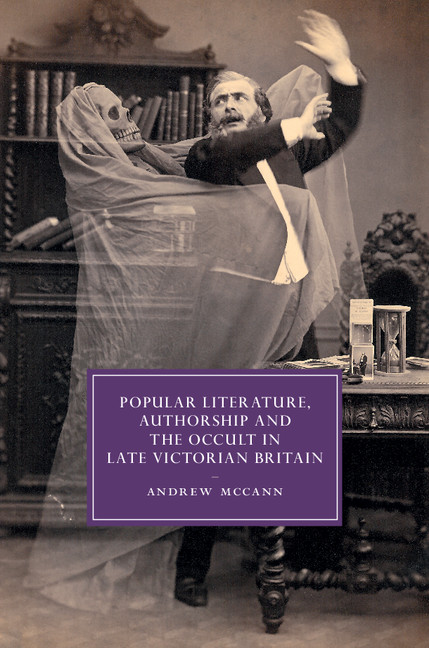
Popular Literature, Authorship, and the Occult in Late Victorian Britain
Paradise Lost and the Cosmological Revolution
Ovid and Hesiod
Reading and Writing during the Dissolution
Cambridge Companion to Popular Fiction
Publisher
The Cambridge Companion to \'Pride and Prejudice\'
The Cambridge Companion to Football
Failure and the American Writer
Eating and Ethics in Shakespeare\\\\\\\'s England
To receive updates on Literature news from Cambridge University Press and Fifteen Eighty Four, please join our email list below. We will not disclose your email address to any third party