Why, in 1882, did Harper’s Weekly publish a cartoon by Thomas Nast depicting Oscar Wilde as a mushroom? The question is one that marks the crucial influence of British decadence on the shape of modern ecological thought. The spores of this story appear as early as 1871, when critic Thomas Maitland (aka Robert Buchanan) turned […]
Read MoreSince at least the 1980’s, any university student who wanted to learn about Freud or psychoanalysis would not be directed to departments of psychology, nor to psychiatry, but would instead be ushered to the English department. The irony of this circumstance is, of course, that such guidance returns the student to the origins of psychoanalysis. […]
Read MoreArguably, Daniel Defoe’s Tour thro’ the Whole Island of Great Britain (1724-26) is the single most comprehensive, detailed and insightful guide we have to the state of the nation as it moved into the modern era. Does that claim look over the top? If so, let’s see how the argument runs. For starters, we shouldn’t […]
Read MoreThere’s a movement to diversify the British literary canon and a crucial step may be right in front of us. Allow me to explain. The British Romantic period—broadly conceived as the 1780s through the early 1830s—was once admired for its religious aspects. Some credited the literature of the period with inspiring an Anglo-Catholic revival in […]
Read MoreIf you look at the title page of my new book, Shakespeare’s ‘Lady Editors’: A New History of the Shakespearean Text, you might notice that there’s something missing – the space beneath my name is blank, an empty void where, usually, you would see an author’s institutional affiliation. In the three years since I submitted […]
Read MoreHope, at least the word, seems to be everywhere, at least in the United States. On lawns where one once found Christmas “Joy,” “Hope” signs more often reign, and in 2021 some have remained on display throughout the seasons. Hope’s Christian context is decisive, but the word also has a political aura. Martin Luther King’s […]
Read MoreSection V of Salman Rushdie’s Satanic Verses, titled “A City Visible but Unseen,” is not about an imaginary city but a migrant ghetto wilfully disavowed. The unseen citizenry are undocumented migrants in London who, because of the Thatcher government’s austerity cuts, cannot find affordable accommodation in the public or private sectors, and who live in […]
Read MoreIn 2020, I was struggling to negotiate my academic work (teaching remotely online and finishing the production process for a new book) while homeschooling three children and mourning the loss of a dear friend. Lockdown was challenging but I recognised my position as one of real privilege – I still had a job, my kids […]
Read MoreWhy, in 1882, did Harper’s Weekly publish a cartoon by Thomas Nast depicting Oscar Wilde as a mushroom? The question is one that marks the crucial influence of British decadence on the shape of modern ecological thought. The spores of this story appear as early as 1871, when critic Thomas Maitland (aka Robert Buchanan) turned […]
Read MoreSince at least the 1980’s, any university student who wanted to learn about Freud or psychoanalysis would not be directed to departments of psychology, nor to psychiatry, but would instead be ushered to the English department. The irony of this circumstance is, of course, that such guidance returns the student to the origins of psychoanalysis. […]
Read MoreArguably, Daniel Defoe’s Tour thro’ the Whole Island of Great Britain (1724-26) is the single most comprehensive, detailed and insightful guide we have to the state of the nation as it moved into the modern era. Does that claim look over the top? If so, let’s see how the argument runs. For starters, we shouldn’t […]
Read MoreThere’s a movement to diversify the British literary canon and a crucial step may be right in front of us. Allow me to explain. The British Romantic period—broadly conceived as the 1780s through the early 1830s—was once admired for its religious aspects. Some credited the literature of the period with inspiring an Anglo-Catholic revival in […]
Read MoreIf you look at the title page of my new book, Shakespeare’s ‘Lady Editors’: A New History of the Shakespearean Text, you might notice that there’s something missing – the space beneath my name is blank, an empty void where, usually, you would see an author’s institutional affiliation. In the three years since I submitted […]
Read MoreHope, at least the word, seems to be everywhere, at least in the United States. On lawns where one once found Christmas “Joy,” “Hope” signs more often reign, and in 2021 some have remained on display throughout the seasons. Hope’s Christian context is decisive, but the word also has a political aura. Martin Luther King’s […]
Read MoreSection V of Salman Rushdie’s Satanic Verses, titled “A City Visible but Unseen,” is not about an imaginary city but a migrant ghetto wilfully disavowed. The unseen citizenry are undocumented migrants in London who, because of the Thatcher government’s austerity cuts, cannot find affordable accommodation in the public or private sectors, and who live in […]
Read MoreIn 2020, I was struggling to negotiate my academic work (teaching remotely online and finishing the production process for a new book) while homeschooling three children and mourning the loss of a dear friend. Lockdown was challenging but I recognised my position as one of real privilege – I still had a job, my kids […]
Read MoreKeep up with the latest from Cambridge University Press on our social media accounts.
Johan Adam Warodell is the author of the monograph Conrad’s Decentered Fiction (Cambridge University Press 2022) and numerous articles on Joseph Conrad. He is a Trustee of the Joseph Conrad Society of America and a Research Associate at the University of Sussex.

Montclair State University, New Jersey
Heather Hirschfeld is a Professor of English at the University of Tennessee.
Alice Tranah grew up in Cambridge and, after studying history at University, fell delightely into life as a bookseller, first in London and then here for Cambridge University Press Bookshop.
University of Bristol
Canterbury Christ Church University, Kent
Associate Professor in English and Creative Writing, University of Reading
University of Pennsylvania
Staff Scientist, Brigham and Women’s Hospital, Department of Neurology with affiliation to The Broad Institute of Harvard and MIT.
Speaking Shakespeare Today
Helen Wilcox, Professor of English at Bangor University
Playing Hesiod
Shakespeare’s Possible Worlds
The Cambridge Companion to American Civil Rights Literature
Yeats and European Drama
Nineteenth-Century American Literature and the Long Civil War
Grief and Women Writers in the English Renaissance
Imagining Medieval English
The Cambridge Companion to French Literature
The Cambridge Introduction to Theatre and Literature of the Absurd
Paul Salzman is Emeritus Professor of English at La Trobe University, Australia.
Sarah C. E. Ross is Senior Lecturer in the English Programme, at Victoria University of Wellington.
Stuart Sillars is Professor of English at the University of Bergen, Norway.
The Cambridge Introduction to William Wordsworth
The Poetry of War
Doubt and Skepticism in Antiquity and the Renaissance
Marketing associate
You Know what I Mean?
Samuel Johnson, the Ossian Fraud, and the Celtic Revival in Great Britain and Ireland
The Cambridge Companion to Bob Dylan
Japan Rising
The Cambridge Companion to Baseball
Library marketing associate
College Marketing Associate
The Cambridge Companion to Baseball
Publicist
London: A Social and Cultural History, 1550–1750
The American 1930s
The Places of Wit in Early Modern English Comedy
The King James Bible after Four Hundred Years
The Cambridge Companion to Creative Writing
London: A Social and Cultural History, 1550-1750
The Cambridge Introduction to Charles Dickens
Publicist
Associate director of sales and marketing
The Letters of Ernest Hemingway, Volume 1
Assistant sales manager
Senior Inbound Marketing Executive
Literary Criticism from Plato to Postmodernism
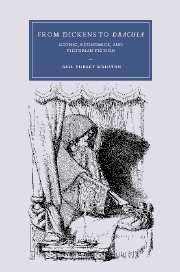
From Dickens To Dracula
A Reference Grammar of French
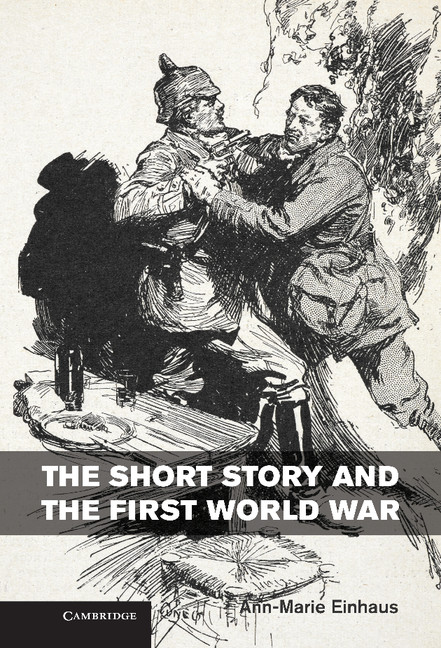
The Short Story and the First World War
Mrs Dalloway
Gender and Race in Antebellum Popular Culture
The Cambridge Companion to Modernist Culture
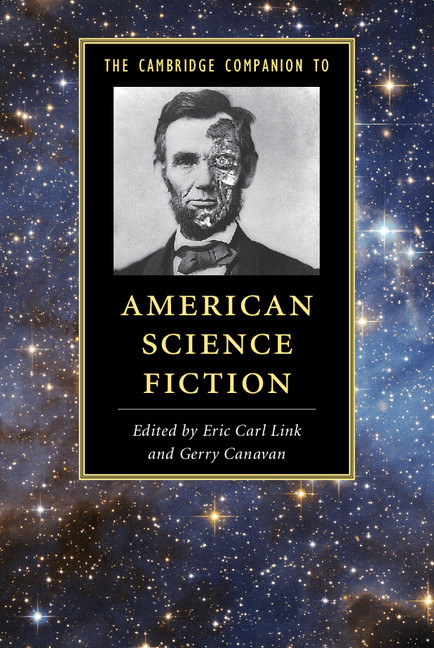
The Cambridge Companion to American Science Fiction
Popular Literature, Authorship, and the Occult in Late Victorian Britain
Paradise Lost and the Cosmological Revolution
Ovid and Hesiod
Reading and Writing during the Dissolution
Cambridge Companion to Popular Fiction
Publisher
The Cambridge Companion to \'Pride and Prejudice\'
The Cambridge Companion to Football
Failure and the American Writer
Eating and Ethics in Shakespeare\\\\\\\'s England
To receive updates on Literature news from Cambridge University Press and Fifteen Eighty Four, please join our email list below. We will not disclose your email address to any third party