Products and services

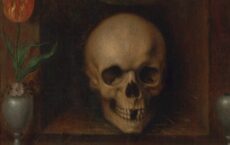
Performing Ethics in English Revenge Drama: Wild Play seeks to demonstrate that the overwhelming popularity of revenge drama in the English Renaissance is best understood in the context of the unique ethical effects it generates in its intended audience during a putative performance. Adapting Francis Bacon’s notion of revenge as a ‘kind of wild justice’, […]
Read More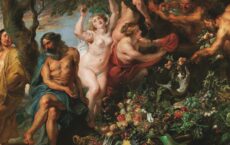
‘Diet’ is derived from the Greek diaita, meaning ‘way of life’, so that what we eat is intimately connected with who we perceive ourselves to be. Historically, those who chose to abstain from the eating of animal flesh were outsiders, frequently viewed with suspicion; today, vegetarianism and veganism are part of identity politics. There is […]
Read More
This illustration appeared at the start of the serialisation of Thomas Hardy’s “A Few Crusted Characters” (then called “Wessex Folk”); afterwards collected into the volume of Life’s Little Ironies. It shows a main street in Dorchester (Hardy’s Casterbridge) and gives an impression of the life of its people. Using words, Hardy does something similar, but […]
Read MoreThe Middle Ages is a story modernity tells about itself. Ideas of rebirth, or of an “enlightened” modern age, or of a supposed rejection of primitive superstition in favor of rational thinking, often depend on the idea of a cruder past that a more glorious present can be contrasted against—and often overstate the achievements of […]
Read More
What comes to mind if you think about the use of Shakespeare during wartime? Perhaps it is Laurence Olivier’s famous 1944 cinematic adaptation of Henry V, prominently dedicated to the troops of Great Britain. But what is often overlooked is just how embedded Shakespeare has been in wartime culture, in Britain and globally, since at […]
Read MoreIn the summer of 1968 at the age of eighteen, I received my undergraduate first year reading list from my tutor at Lincoln College. Johnson’s Lives of the Poets, the little two-volume hardback World’s Classics edition now out of print, instantly drew my eye. My Cheshire town had no bookshop, but a branch of W.H. […]
Read MoreThe story goes that when Napoleon met Staël, he told her he didn’t like women talking politics. And she replied that in a period when women are beheaded, it is natural for them to want to know why. Daughter of Necker, prime minister of France as the Bastille fell, friend of Jefferson and Tsar Alexander, […]
Read MoreThe wait is over! We are very excited to announce the publication of the latest edited volume in the Cambridge University Press Shakespeare on Screen series, focusing on Romeo and Juliet! (Previous volumes in the series include Shakespeare on Screen: Othello; Shakespeare on Screen: The Tempest and Late Romances; and Shakespeare on Screen: King Lear.) […]
Read MoreKeep up with the latest from Cambridge University Press on our social media accounts.