We mark Black History Month with a series of blog articles recalling some of the important people and events in African American history.
Read MoreAll this month fifteeneightyfour is celebrating Black History Month with a series of articles exploring the lives of some of the most important people in African-American history.
Read MoreHow will history record the actions and claims of contemporary political parties? One of those parties might eventually be described as: “The movement that arose in response to an influx of migrants, and promised to “purify” American politics by limiting or ending the influence of immigrants, thus reflecting nativist and anti-Moslem sentiment. It was empowered […]
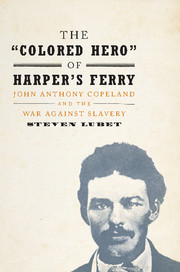
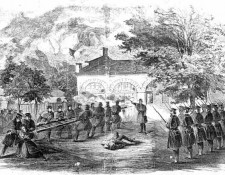
Read MoreJohn Anthony Copeland, Jr. was a heroic figure at the center of John Brown's fight against slavery and his raid on Harper's Ferry, but he is just a footnote in most accounts of the momentous raid. Steven Lubet, the author of The "Colored Hero" of Harper's Ferry, talks about what his decision to bring Copeland's narrative to light and the surprising discoveries he made along the way.
Read MoreTake a peek inside The "Colored Hero" of Harper's Ferry, the story of John Anthony Copeland, Jr. and his role in the fight for U.S. emancipation.
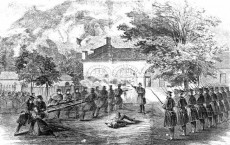
Read MoreSteven Lubet’s The “Colored Hero” of Harper’s Ferry reveals the incredible untold story of a 25-year-old black man, born free in North Carolina and committed to the abolitionist cause, who was at the center of John Brown’s raid on Harper’s Ferry and, inevitably, the national fight for emancipation. He fought bravely at Harper’s Ferry, only to be captured […]
Read MoreThis week will mark the 70th anniversary of the atomic bombings of Hiroshima and Nagasaki. The American bombings effectively ended the Second World War, killed over 100,000 people, and raised complicated questions about nuclear weapons and the limits of war. In an excerpt from his book The Most Controversial Decision, Wilson D. Miscamble explores the complicated legacy of those events.
Read MoreWe mark Black History Month with a series of blog articles recalling some of the important people an...
Read MoreAll this month fifteeneightyfour is celebrating Black History Month with a series of articles explor...
Read MoreHow will history record the actions and claims of contemporary political parties? One of those parties might eventually be described as: “The movement that arose in response to an influx of migrants, and promised to “purify” American politics by limiting or ending the influence of immigrants, thus reflecting nativist and anti-Moslem sentiment. It was empowered […]
Read MoreJohn Anthony Copeland, Jr. was a heroic figure at the center of John Brown's fight against slavery a...
Read MoreSteven Lubet’s The “Colored Hero” of Harper’s Ferry reveals the incredible untold story of a 25-year-old black man, born free in North Carolina and committed to the abolitionist cause, who was at the center of John Brown’s raid on Harper’s Ferry and, inevitably, the national fight for emancipation. He fought bravely at Harper’s Ferry, only to be captured […]
Read MoreThis week will mark the 70th anniversary of the atomic bombings of Hiroshima and Nagasaki. The Ameri...
Read MoreKeep up with the latest from Cambridge University Press on our social media accounts.
Salim Yaqub is Professor of History at the University of California, Santa Barbara and author of Winds of Hope, Storms of Discord (2022).
The Cambridge Guide to African American History
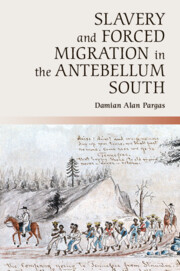
Slavery and Forced Migration in the Antebellum South
\\\'The Colored Hero\\\' of Harper\\\'s Ferry
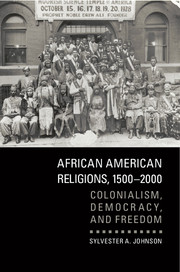
African American Religions, 1500–2000
Independent Politics
The Cambridge Companion to American Civil Rights Literature
American Hippies
The Most Controversial Decision
Nineteenth-Century American Literature and the Long Civil War
National Security and Core Values in American History
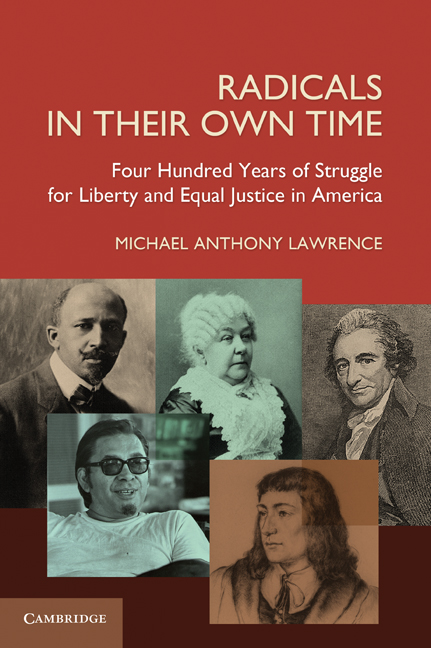
Radicals in Their Own Time
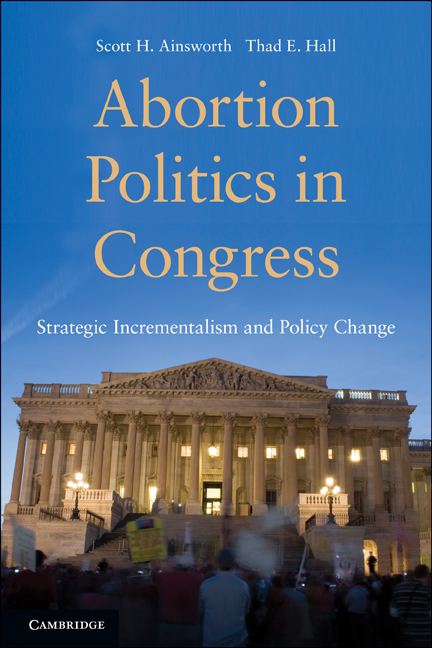
Abortion Politics in Congress
Antisemitism and the American Far Left
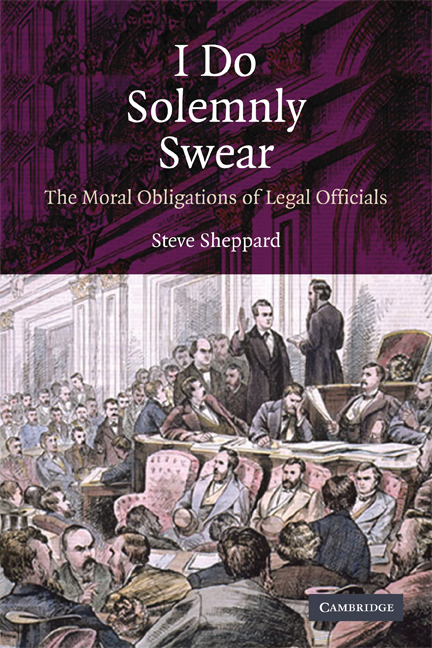
I Do Solemnly Swear
After Bush
After Bush
Marketing associate
A Government Out of Sight
Making a New Deal
Political Moderation in America\\\'s First Two Centuries
Japan Rising
Publicist
The American 1930s
Seduced by Secrets
The End of Straight Supremacy
The American Mission and the \\\\\\\'Evil Empire\\\\\\\'
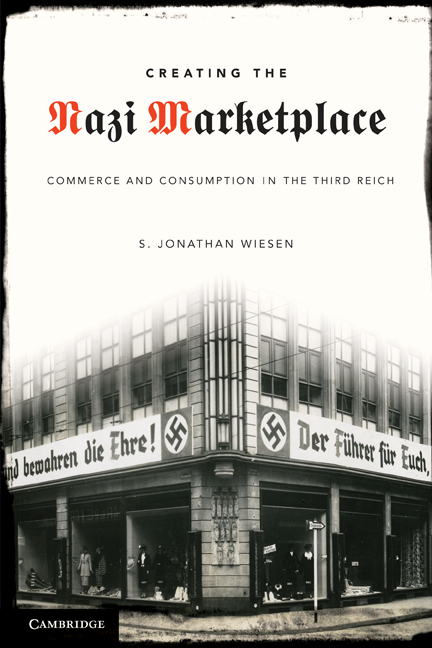
Creating the Nazi Marketplace
The Treason Trial of Aaron Burr
Tested by Zion
Stephen A. Douglas and Antebellum Democracy
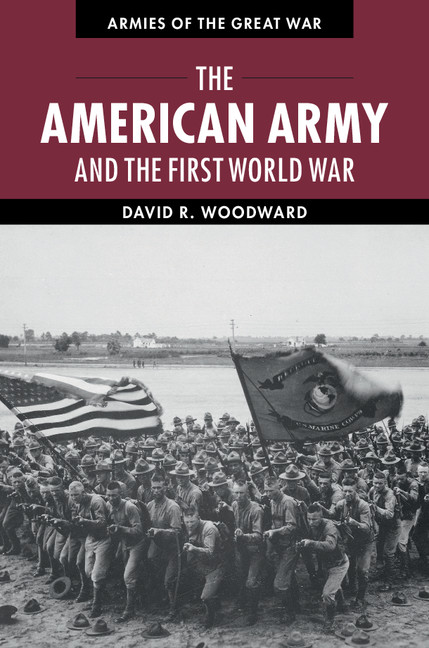
The American Army and the First World War
Gender and Race in Antebellum Popular Culture
The Founders and the Idea of a National University
Romantic Reformers and the Antislavery Struggle in the Civil War Era
Slavery, Race, and Conquest in the Tropics
Laura F. Edwards, Duke University, North Carolina Laura F. Edwards is the Peabody Family Professor of History at Duke University. Her book The People and Their Peace: Legal Culture and the Transformation of Inequality in the Post-Revolutionary South was awarded the American Historical Association\\\\\\\'s 2009 Littleton–Griswold Prize for the best book in law and society and the Southern Historical Association\\\\\\\'s Charles Sydnor Prize for the best book in Southern history.
1919, The Year of Racial Violence
Chiefdoms, Collapse and Coalescence in the Early American South
Declaring War
A Concise History of the United States of America
Marketing intern
German Immigrants, Race, and Citizenship in the Civil War Era
On Dissent
On Dissent
The Many Panics of 1837
To receive updates on US History news from Cambridge University Press and Fifteen Eighty Four, please join our email list below. We will not disclose your email address to any third party