A few things seem clear from Sunday’s shocking massacre in Orlando carried out by Omar Mateen, a self-professed follower of the Islamic State. The shooter was apparently a self-recruiter responding to ISIS’s many calls to carry out such attacks, which emphasizes how the threat of Jihadist terrorism may now be outpacing even the most sophisticated […]
Read MoreIn part two of a four-part series, Kunal M. Parker, author of Making Foreigners (2015), reflects on immigration and the 2016 US Presidential Election.
Read MoreWith immigration at the forefront of this year’s US Presidential Election, and a decision from the Supreme Court on United States v. Texas expected at the end of June, we asked some of our authors to reflect on the ongoing debates over the future of immigration law and policy in the United States. This is […]
Read MorePaul Gowder gives a comprehensive new theory of the political and legal ideal known as “the rule of law”: what it means and why it matters.
Read MoreThe recent shootings of unarmed blacks have been labeled by some as “21st -century lynchings.” Karlos K. Hill examines the meaning behind this characterization, whether it’s inflammatory, and why the discussion matters. Hill is author of the forthcoming Beyond the Rope: The Impact of Lynching on Black Culture and Memory.
Read MoreThe major motion picture Lincoln, which focused on the political struggle to pass the Thirteenth Amendment, recently exposed popular audiences to the problem of emancipation. There is a lot to like about the film. It exhibited historical authenticity, compelling performances, and persuasive dialogue that award-winning director Steven Spielberg beautifully crafted into an enjoyable two-and-a-half hour […]
Read MoreSylvester A. Johnson, the author of African American Religions, 1500-2000: Colonialism, Democracy, and Freedom (2015), explores what Black history reveals about the larger state of national security and American Islam.
Read MoreWe mark Black History Month with a series of blog articles recalling some of the important people and events in African American history.
Read MoreA few things seem clear from Sunday’s shocking massacre in Orlando carried out by Omar Mateen, a self-professed follower of the Islamic State. The shooter was apparently a self-recruiter responding to ISIS’s many calls to carry out such attacks, which emphasizes how the threat of Jihadist terrorism may now be outpacing even the most sophisticated […]
Read MoreIn part two of a four-part series, Kunal M. Parker, author of
Read MoreWith immigration at the forefront of this year’s US Presidential Election, and a decision from the Supreme Court on United States v. Texas expected at the end of June, we asked some of our authors to reflect on the ongoing debates over the future of immigration law and policy in the United States. This is […]
Read MorePaul Gowder gives a comprehensive new theory of the political and legal ideal known as “the rule o...
Read MoreThe recent shootings of unarmed blacks have been labeled by some as “21st -century lynchings.”...
Read MoreThe major motion picture Lincoln, which focused on the political struggle to pass the Thirteenth Amendment, recently exposed popular audiences to the problem of emancipation. There is a lot to like about the film. It exhibited historical authenticity, compelling performances, and persuasive dialogue that award-winning director Steven Spielberg beautifully crafted into an enjoyable two-and-a-half hour […]
Read MoreSylvester A. Johnson, the author of African American ...
Read MoreWe mark Black History Month with a series of blog articles recalling some of the important people an...
Read MoreKeep up with the latest from Cambridge University Press on our social media accounts.
Salim Yaqub is Professor of History at the University of California, Santa Barbara and author of Winds of Hope, Storms of Discord (2022).
The Cambridge Guide to African American History
Slavery and Forced Migration in the Antebellum South
\\\'The Colored Hero\\\' of Harper\\\'s Ferry
African American Religions, 1500–2000
Independent Politics
The Cambridge Companion to American Civil Rights Literature
American Hippies
The Most Controversial Decision
Nineteenth-Century American Literature and the Long Civil War
National Security and Core Values in American History
Radicals in Their Own Time
Abortion Politics in Congress
Antisemitism and the American Far Left
I Do Solemnly Swear
After Bush
After Bush
Marketing associate
A Government Out of Sight
Making a New Deal
Political Moderation in America\\\'s First Two Centuries
Japan Rising
Publicist
The American 1930s
Seduced by Secrets
The End of Straight Supremacy
The American Mission and the \\\\\\\'Evil Empire\\\\\\\'
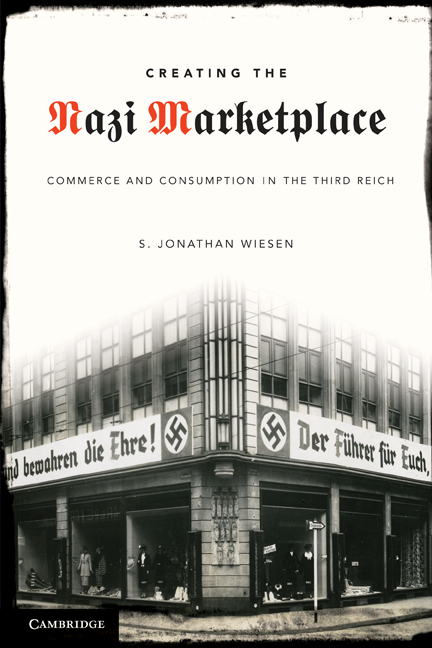
Creating the Nazi Marketplace
The Treason Trial of Aaron Burr
Tested by Zion
Stephen A. Douglas and Antebellum Democracy
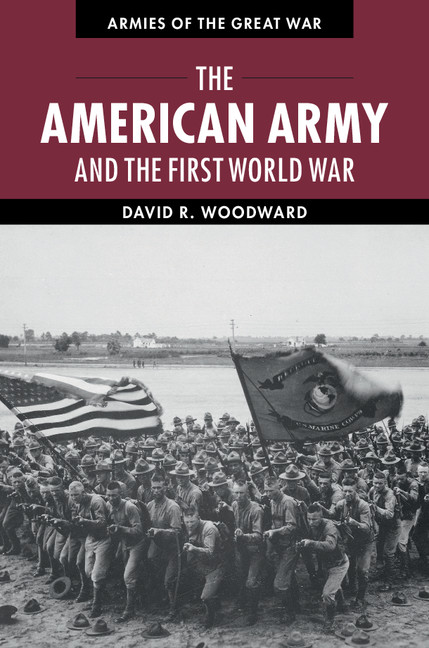
The American Army and the First World War
Gender and Race in Antebellum Popular Culture
The Founders and the Idea of a National University
Romantic Reformers and the Antislavery Struggle in the Civil War Era
Slavery, Race, and Conquest in the Tropics
Laura F. Edwards, Duke University, North Carolina Laura F. Edwards is the Peabody Family Professor of History at Duke University. Her book The People and Their Peace: Legal Culture and the Transformation of Inequality in the Post-Revolutionary South was awarded the American Historical Association\\\\\\\'s 2009 Littleton–Griswold Prize for the best book in law and society and the Southern Historical Association\\\\\\\'s Charles Sydnor Prize for the best book in Southern history.
1919, The Year of Racial Violence
Chiefdoms, Collapse and Coalescence in the Early American South
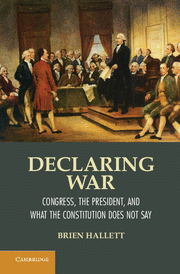
Declaring War
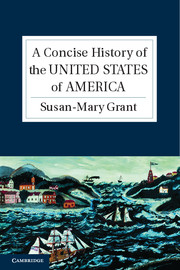
A Concise History of the United States of America
Marketing intern
German Immigrants, Race, and Citizenship in the Civil War Era
On Dissent
On Dissent
The Many Panics of 1837
To receive updates on US History news from Cambridge University Press and Fifteen Eighty Four, please join our email list below. We will not disclose your email address to any third party