Products and services


America’s hasty extrication from its war in Afghanistan was anything but smooth, and now the world’s leading superpower’s two-decade misadventure there has ended with a shocking, humiliating defeat. Even as the world contemplates the implications of this seemingly improbable outcome, the post-mortem proceeds in earnest. What went wrong? After two decades of nation building, a […]
Read More
In every bookshop in the English-speaking world, works on military history occupy at least half of the shelves devoted to ‘History’. I helped to create two of...
Read More
So said former CIA Director R. James Woolsey to the House Armed Services Committee in 1999, channeling what had become a consensus about Iraq in the U.S. foreign policy establishment by the end of the 1990s: that Saddam Hussein could no longer be contained because he was fixated on shedding sanctions and inspections, rebuilding his […]
Read More
We asked author Richard Hammond the questions you wanted to know about his new book Strangling the Axis! Here are his answers: Was the @RoyalAirForce level of effort in the Mediterranean appropriate or should it have done more? Good question! As the book demonstrates, aircraft (RAF, Fleet Air Arm and later USAAF assets) played an […]
Read More
‘My illness has a name: convoys’ was the gloomy remark from the fascist Italian dictator Benito Mussolini in 1943, as the Axis powers’ war in North Africa neared its disastrous conclusion. It is hardly surprising that he reached such a verdict: over the near three-year course of the war in North Africa, 1,350 merchant ships […]
Read More
British intelligence, the IRA and the Northern Ireland Peace Process After 29 years and over 3,700 deaths, the Good Friday Agreement ended the Northern Ireland conflict in 1998. Commentators and academics initially concluded a stalemate situation explained why peace emerged. Revelations of senior Irish Republican Army (IRA) informers by 2005 encouraged various authors to revise […]
Read More
"War and Childhood in the Era of the Two World Wars" takes a global look at how modern societies imagined childhood as a space of sheltered existence, while at the same time mobilizing their children to help fight their wars and turning them into both victims and actors in the twentieth century's greatest conflicts.
Read More
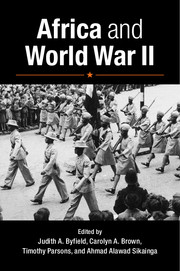
While accessing oral histories and autobiographical writings about Indigenous participation in the Second World War, I had a strange epiphany: very few firsthand accounts ever explicitly explained why they got involved in the war effort. There were some hints here and there about the economy or tradition, but many Indigenous men and women who enlisted […]
Read MoreKeep up with the latest from Cambridge University Press on our social media accounts.









.jpg)