Products and services


Anyone who travels through the adjacent countries of Belgium and the Netherlands today immediately sees the contrast: Belgium is full of resplendent, lavishly decorated Catholic churches, while its neighbor to the immediate north is home to sober, whitewashed Protestant houses of worship. Two very divergent religious cultures are at work here. The two countries’ close […]
Read More
In recent years, the combined influence of global history and decolonial movements has reinforced the demand that historians must reflect upon their positionality, including, of course, their relationship with the histories of those they study. But what if there is no clear relationship to reflect on, at least initially? What if, as a German historian, […]
Read More
This book is about survival, resilience, and community building; it tells the story of rural communities on the islands of Lemnos and Thasos in the Northern Aegean and narrates their experiences in dealing with political and economic crises, enemy threats, and the Black Death in the Late Byzantine period (13th -15th century). There are many […]
Read More
For all its other-worldly reputation, philosophy has always been very good at PR. Already in ancient Greece, philosophers sold their teaching as a way of life that would supposedly make you a better, happier person. One member of the Epicurean sect erected a giant billboard in Oenoanda (South-West Turkey), telling its citizens that adherence to […]
Read More

By 1200 kingship had become the natural from of government across most of western Europe. A royal title denoted antiquity, legitimacy, and the exemplary adherence to shared norms. It conferred distinction upon the individual or family holding it and marked out as distinctive the community over which they presided. The appeal of kingship reflected – […]
Read More
This book originated in a conversation over coffee between the two editors. The result was a decision to ask Cambridge University Press whether they would be willing to publish a book whose theme was inspired by the career and life of Elisabeth van Houts. In assembling the group of scholars who have written these essays, […]
Read More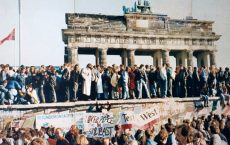
When the Berlin Wall famously fell on November 9, 1989, crowds from East and West Germany gathered along the border to celebrate the end of the Cold War in Europe. The Berlin Wall was a simple and powerful shorthand for the oppressiveness of communism not only in East Germany but Soviet-controlled eastern Europe more broadly. […]
Read MoreKeep up with the latest from Cambridge University Press on our social media accounts.