Originally posted on Tact Technology In commercials for AXE deodorant, popular with adolescent boys, its qualities are always advertised in roughly the same way: by showing that a man – however unattractive – becomes irresistible to women when he smells of AXE. This modern variation on the love potion illustrates the kind of fantasy of control […]
Read MoreBert Spector, author of Discourse on Leadership, examines macho culture and leadership in his recent blog post, originally posted on The Conversation.
Read MoreThe Selected Letters of John Kenneth Galbraith includes numerous letters between the famed economist and some of the most influential politicians of our time. Among those, of course, is President John F. Kennedy. On the 100th anniversary of JFK’s birthday, read on for a letter from 1961 in which Galbraith advises the future President on […]

Read MoreMy previous blog summarised the orthodox argument why adverse selection in insurance is a bad thing. This present blog gives the counter-argument from my book Loss Coverage: Why Insurance Works Better with Some Adverse Selection. In essence, the counter-argument relies only on simple arithmetic, and can be illustrated by a toy example. Think of a […]
Read MoreGuy Thomas explores why adverse selection in insurance is usually seen as a bad thing in the first of two blog posts based on his new book Loss Coverage.
Read MoreMy recent book, Rulers, Religion, and Riches: Why the West Got Rich and the Middle East Did Not, addresses one of the big questions in economics and economic history: why did the modern economy emerge when and where it did? Specifically, why did the modern economy emerge in northwestern Europe at some point in the […]
Read MoreOriginally posted on Sandyhershcovis.org Lately I’ve become interested in workplace ostracism as a form of workplace aggression. Most research lumps ostracism with other forms of mistreatment (incivility, bullying, etc.), but a recent chapter by Sandra Robinson and Kira Schabram (in press), has convinced me that it is in fact quite different, and possibly much more painful […]
Read MorePaul Verkuil, author of Valuing Bureaucracy The Case for Professional Government (2017), on the recent Comey firing and the perils of running a government like a business.
Read MoreOriginally posted on Tact Technology In commercials for AXE deodorant, popular with adolescent boys, its qualities are always advertised in roughly the same way: by showing that a man – however unattractive – becomes irresistible to women when he smells of AXE. This modern variation on the love potion illustrates the kind of fantasy of control […]
Read MoreBert Spector, author of Discourse on Leadership, examines macho culture and leadership in his recent...
Read MoreThe Selected Letters of John Kenneth Galbraith includes numerous letters between the famed economist and some of the most influential politicians of our time. Among those, of course, is President John F. Kennedy. On the 100th anniversary of JFK’s birthday, read on for a letter from 1961 in which Galbraith advises the future President on […]
Read MoreMy previous blog summarised the orthodox argument why adverse selection in insurance is a bad thing. This present blog gives the counter-argument from my book Loss Coverage: Why Insurance Works Better with Some Adverse Selection. In essence, the counter-argument relies only on simple arithmetic, and can be illustrated by a toy example. Think of a […]
Read MoreGuy Thomas explores why adverse selection in insurance is usually seen as a bad thing in the first o...
Read MoreMy recent book, Rulers, Religion, and Riches: Why the West Got Rich and the Middle East Did Not, addresses one of the big questions in economics and economic history: why did the modern economy emerge when and where it did? Specifically, why did the modern economy emerge in northwestern Europe at some point in the […]
Read MoreOriginally posted on Sandyhershcovis.org Lately I’ve become interested in workplace ostracism as a form of workplace aggression. Most research lumps ostracism with other forms of mistreatment (incivility, bullying, etc.), but a recent chapter by Sandra Robinson and Kira Schabram (in press), has convinced me that it is in fact quite different, and possibly much more painful […]
Read MorePaul Verkuil, author of
Read MoreKeep up with the latest from Cambridge University Press on our social media accounts.
Associate Professor of Finance at the University of Minnesota, Carlson School of Management
Professor of Finance at the MIT Sloan School of Management
Martha L. Maznevski is Professor of Organizational Behavior and Faculty Co-Director for Executive Education at Ivey Business School, University of Western Ontario.

Kanina Blanchard has extensive experience working in international business, the public service, non-profit and consulting.
A History of Macroeconomics from Keynes to Lucas and Beyond
Accounting for Carbon
The Reader\\\\\\\\\\\\\\\'s Brain
Mindfulness in Organizations
Innovations in Sustainability
The Business Environment of Europe
Challenging Boardroom Homogeneity
King William\\\'s Tontine
Constructive Controversy
Anthropologies of Class
Corporate Social Entrepreneurship
The Long Process of Development
The Euro Experiment
Climate Change, Capitalism and Corporations
The Price of Oil
The Price of Oil
Climate Change, Capitalism and Corporations
The Psychology of Innovation in Organizations
Free Trade and Faithful Globalization
Mission and Money
Smart Solutions to Climate Change
Mission and Money
Financial Market Bubbles and Crashes
Big-time Sports in American Universities
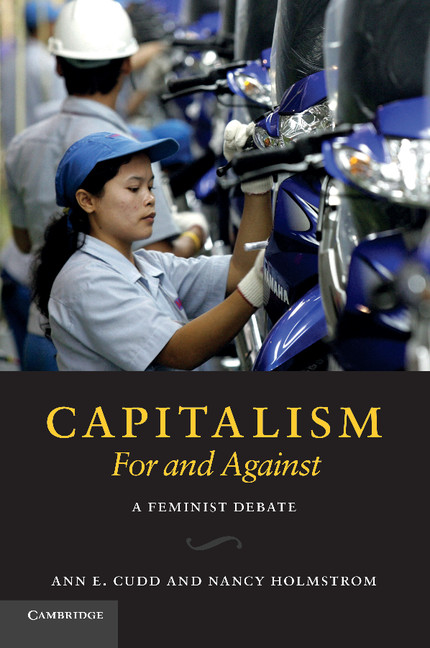
Capitalism, For and Against
Scarcity and Frontiers
Obama\\\'s Bank
Health Care for Us All
After Bush
After Bush
Mission and Money
Global Brands
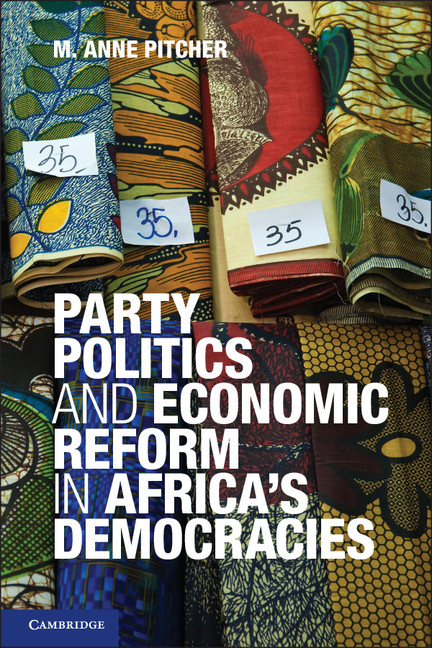
Party Politics and Economic Reform in Africa\\\'s Democracies
Cotton
The Romantic Economist
Factions and Finance in China
Making a New Deal
Japan Rising
The Israeli Economy from the Foundation of the State through the 21st Century
Teaching Management
Wall Street Values
Wall Street Values
Teaching Management
The Myth of the Ethical Consumer
Against Intellectual Monopoly
The Myth of the Ethical Consumer
The New Global Trading Order
The Future of Financial Regulation
Marketing associate
Developing Countries in the GATT Legal System
A Practitioner’s Guide to Stochastic Frontier Analysis Using STATA<
Creating Global Opportunities
A Practitioner’s Guide to Stochastic Frontier Analysis Using STATA
Globalization and Mass Politics
Regulating Business for Peace
Trade Cooperation
Ethical Challenges in the Behavioral and Brain Sciences
Building Technology Transfer within Research Universities
Intellectual Shamans
An Economic Theory of Greed, Love, Groups, and Networks
Leveraging Corporate Responsibility
Out of Poverty: Sweatshops in the Global Economy
Fixed Ideas of Money
Behavioural Public Policy
Decoding Organization: Bletchley Park, Codebreaking and Organization Studies
The Many Panics of 1837
Creating New Markets in the Digital Economy
Global Turning Points
To receive updates on Business & Economics news from Cambridge University Press and Fifteen Eighty Four, please join our email list below. We will not disclose your email address to any third party