The Indian economy traversed a rising growth trajectory for three decades since the turn of the 1970s. It has been observed that growth came mostly from the service sector. The question that haunted economists is: can the service sector of an underdeveloped country maintain such momentum when manufacturing fails to get charged up in spite […]
Read MoreA viral pandemic is spidering across the globe, and so too is an emotional one. Fears and anxieties spread and mutate in whispered late-night conversations and flashing updates, working their own damage on bodies and minds. There is deep fear of the virus itself, of course, and fear as well of its economic impact. The current crisis has rendered the economic laws that govern […]
Read MoreIn the early stages of Prime Minister Boris Johnson’s strategy to tackle the coronavirus pandemic, much was made of, and much criticism was directed at, the advisory input from behavioural scientists. However, less notice was taken of the fact that some of the advice offered by behavioural scientists (or seemingly, just one behavioural scientist – […]
Read MoreHow we understand and respond to failure is one of the most defining features of how our lives pan out. Some people refuse to fail. Some people expect to fail. Some people always hide from their own failings (most of these currently seem to be in politics). Others always look for failings in themselves, or […]
Read MoreThe World Trade Organization has always had more critics than champions. These days, the charges that are made against the WTO include that it has overstepped its authority, that it impedes the ability of members to set their own trade policies, and, paradoxically, that it has been unable to deal effectively with China. The recent […]
Read MoreNo state can do without taxation. States need to pay for bureaucrats, soldiers, policemen, infrastructure, and the more ambitious ones also pay for schools, hospitals and social security programs. Fiscal capacity forms the backbone of the state, and both sovereign and colonial regimes confront the revenue imperative. But how, in the case of colonial rule, […]
Read MoreIn the ten years since I wrote the first edition of A Textbook of Cultural Economics, the cultural sector – the arts, heritage and cultural industries, jointly known as the creative industries – has been revolutionised by digitization and, as with other revolutions, things have changed in unimagined ways. Nowhere has this been more evident […]
Read MoreWe have heard it a thousand times. The world is going downhill and it’s the “system’s” fault. To save the planet, we must change the “system.” But what do we mean by the “system”? Capitalism? Is it “capitalism” that makes nations, corporations, and individuals seek out the best deals – which promotes low-wage labor and […]
Read MoreThe Indian economy traversed a rising growth trajectory for three decades since the turn of the 1970s. It has been observed that growth came mostly from the service sector. The question that haunted economists is: can the service sector of an underdeveloped country maintain such momentum when manufacturing fails to get charged up in spite […]
Read MoreA viral pandemic is spidering across the globe, and so too is an emotional one. Fears and anxieties spread and mutate in whispered late-night conversations and flashing updates, working their own damage on bodies and minds. There is deep fear of the virus itself, of course, and fear as well of its economic impact. The current crisis has rendered the economic laws that govern […]
Read MoreIn the early stages of Prime Minister Boris Johnson’s strategy to tackle the coronavirus pandemic, much was made of, and much criticism was directed at, the advisory input from behavioural scientists. However, less notice was taken of the fact that some of the advice offered by behavioural scientists (or seemingly, just one behavioural scientist – […]
Read MoreHow we understand and respond to failure is one of the most defining features of how our lives pan out. Some people refuse to fail. Some people expect to fail. Some people always hide from their own failings (most of these currently seem to be in politics). Others always look for failings in themselves, or […]
Read MoreThe World Trade Organization has always had more critics than champions. These days, the charges that are made against the WTO include that it has overstepped its authority, that it impedes the ability of members to set their own trade policies, and, paradoxically, that it has been unable to deal effectively with China. The recent […]
Read MoreNo state can do without taxation. States need to pay for bureaucrats, soldiers, policemen, infrastructure, and the more ambitious ones also pay for schools, hospitals and social security programs. Fiscal capacity forms the backbone of the state, and both sovereign and colonial regimes confront the revenue imperative. But how, in the case of colonial rule, […]
Read MoreIn the ten years since I wrote the first edition of A Textbook of Cultural Economics, the cultural sector – the arts, heritage and cultural industries, jointly known as the creative industries – has been revolutionised by digitization and, as with other revolutions, things have changed in unimagined ways. Nowhere has this been more evident […]
Read MoreWe have heard it a thousand times. The world is going downhill and it’s the “system’s” fault. To save the planet, we must change the “system.” But what do we mean by the “system”? Capitalism? Is it “capitalism” that makes nations, corporations, and individuals seek out the best deals – which promotes low-wage labor and […]
Read MoreKeep up with the latest from Cambridge University Press on our social media accounts.
A History of Macroeconomics from Keynes to Lucas and Beyond
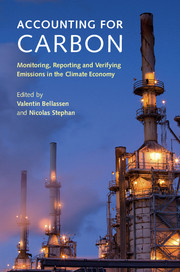
Accounting for Carbon
The Reader\\\\\\\\\\\\\\\'s Brain
King William\\\'s Tontine
Anthropologies of Class
The Long Process of Development
The Euro Experiment
The Price of Oil
The Price of Oil
Arab Water Security
Free Trade and Faithful Globalization
Adam Smith\'s Wealth of Nations
Mission and Money
Smart Solutions to Climate Change
Mission and Money
Financial Market Bubbles and Crashes
Big-time Sports in American Universities
Capitalism, For and Against
Scarcity and Frontiers
Obama\\\'s Bank
Health Care for Us All
After Bush
After Bush
Mission and Money
Global Brands
Party Politics and Economic Reform in Africa\\\'s Democracies
Cotton
The Romantic Economist
Factions and Finance in China
Making a New Deal
Japan Rising
The Israeli Economy from the Foundation of the State through the 21st Century
Teaching Management
Wall Street Values
Wall Street Values
Teaching Management
The Myth of the Ethical Consumer
Against Intellectual Monopoly
The Myth of the Ethical Consumer
The New Global Trading Order
The Future of Financial Regulation
Marketing associate
Developing Countries in the GATT Legal System
Creating Global Opportunities
Globalization and Mass Politics
Regulating Business for Peace
Trade Cooperation
Ethical Challenges in the Behavioral and Brain Sciences
Building Technology Transfer within Research Universities
Intellectual Shamans
An Economic Theory of Greed, Love, Groups, and Networks
Out of Poverty: Sweatshops in the Global Economy
Fixed Ideas of Money
Behavioural Public Policy
Decoding Organization: Bletchley Park, Codebreaking and Organization Studies
The Many Panics of 1837
Creating New Markets in the Digital Economy
Global Turning Points
To receive updates on Economics news from Cambridge University Press and Fifteen Eighty Four, please join our email list below. We will not disclose your email address to any third party