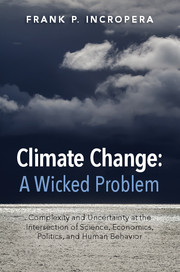
Global environmental issues were identified as a crisis in the 1960’s (1). The alarmist rhetoric caught the public’s attention, but stimulated a pessimistic attitude (2) that human beings were destabilizing an otherwise harmonious, “steady state” world. The focus on the environment accomplished much. It raised public awareness of issues from species extinctions to air and […]
Read MoreAs you’ll hopefully discover, rewilding pushes the boundaries of our comfort zone by forcing us to recognize the dynamic nature of biological systems, and factor in change instead of fearing it. Ultimately, the rise of the rewilding concept is a sign that new approaches are urgently needed to conserve biodiversity and maintain ecosystem services under increasingly unpredictable global conditions, as traditional approaches on their own are demonstrably unfit for the challenges ahead.
Read MoreAnne Innis Dagg was the first person to study giraffes in the wild in Africa in the 1950’s and is now considered the world’s first ‘giraffologist’.
Read MoreUntil recently one of the most intensively managed bird species in the world, having been reduced to around 12 individuals in the 1990s. In 2007 it was the only species globally to be down-listed from Critically Endangered to Endangered; an excellent illustration as to how work on islands is providing positive conservation success stories and lessons for parrot recovery projects internationally.
Read MoreTo explore the issues surrounding energy flow and consumption in the modern day, you must first understand the basic science of energy. Washington Taylor and Robert L. Jaffe are Professors of Physics at MIT, and have written a textbook on the topic.
Read MoreWhy Is Strategic Conservation Important? In an Interview, Robin Murphy, Vice President, Marketing and Communications, The Conservation Fund asks Will Allen & Kent Messer, Authors of The Science of Strategic Conservation, why strategic conservation is so important. What is Strategic Conservation? Strategic Conservation helps communities identify their conservation priorities and goals; recommends high impact, […]
Read MoreJim Kozubek, author of "Modern Prometheus: Editing the Human Genome with Crispr-Cas9" talks about the infamous Mary Shelley's Frankenstein
Read MoreOn 1st June, Professor David Fastovsky, co-author of Dinosaurs, hosted in an exciting Reddit IAmA session. Users had the opportunity to ask palaeontology and dinosaur-related questions in a live Q&A. Here are the best questions and answers...
Read MoreGlobal environmental issues were identified as a crisis in the 1960’s (1). The alarmist rhetoric caught the public’s attention, but stimulated a pessimistic attitude (2) that human beings were destabilizing an otherwise harmonious, “steady state” world. The focus on the environment accomplished much. It raised public awareness of issues from species extinctions to air and […]
Read MoreAs you’ll hopefully discover, rewilding pushes the boundaries of our comfort zone by forcing us to...
Read MoreAnne Innis Dagg was the first person to study giraffes in the wild in Africa in the 1950’s and is ...
Read MoreUntil recently one of the most intensively managed bird species in the world, having been reduced to...
Read MoreTo explore the issues surrounding energy flow and consumption in the modern day, you must first unde...
Read MoreWhy Is Strategic Conservation Important? In an Interview, Robin Murphy, Vice President, Marketing and Communications, The Conservation Fund asks Will Allen & Kent Messer, Authors of The Science of Strategic Conservation, why strategic conservation is so important. What is Strategic Conservation? Strategic Conservation helps communities identify their conservation priorities and goals; recommends high impact, […]
Read MoreJim Kozubek, author of "Modern Prometheus: Editing the Human Genome with Crispr-Cas9" talks about th...
Read MoreOn 1st June, Professor David Fastovsky, co-author of Dinosaurs, hosted in an exciting Reddit IAmA se...
Read MoreKeep up with the latest from Cambridge University Press on our social media accounts.
University of Virginia
Finnish Environment Institute
Wilfrid Laurier University
The Ohio State University
Ministry of Finance, Ghana
University of California, Los Angeles
The Joy of Science
Simon Mitton is a Life Fellow at St Edmund\\\\\\\\\\\\\\\'s College, University of Cambridge. For more than fifty years he has passionately engaged in bringing discoveries in astronomy and cosmology to the general public. He is a Fellow of the Royal Historical Society, a former Vice-President of the Royal Astronomical Society, and a Fellow of the Geological Society. The International Astronomical Union designated asteroid 4027 as Minor Planet Mitton in recognition of his extensive outreach activity and that of Dr Jacqueline Mitton.
Bruce Rocheleau is a Professor Emeritus in the Department of Public Administration, Northern Illinois University.
University of Illinois, Urbana-Champaign
David E. Fastovsky is Professor and Chair of the Department of Geosciences at the University of Rhode Island.
Julian Cribb FRSA FTSE is an Australian author and science communicator.
Mike Berners-Lee consults, thinks, writes and researches on sustainability and responses to 21st century challenges.
Ecology, Evolution and Behaviour of Wild Cattle
The Joy of Science
Staff Scientist, Brigham and Women’s Hospital, Department of Neurology with affiliation to The Broad Institute of Harvard and MIT.

Roger G. Barry, University of Colorado Boulder

Icebergs
Conservation of Freshwater Fishes
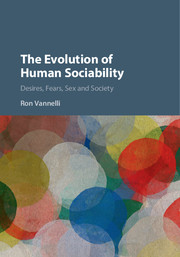
The Evolution of Human Sociability
The Choanoflagellates: Evolution, Biology and Ecology
Climate Change: A Wicked Problem
Climate Change, Capitalism and Corporations
Colours and Colour Vision
Strategically Created Treaty Conflicts and the Politics of International Law
Fred D. Singer Radford University, Virginia
Matt lloyd
Zoology, Evolutionary Biology, Ecology
Geomorphology in the Anthropocene
Climate Change in Practice
The Volcano Adventure Guide
The Philosophy of Human Evolution
Toxic Loopholes: Failures and Future Prospects for Environmental Law
Why We Disagree About Climate Change
The Ecology of Oil
Discoveries of the Census of Marine Life
Evolution, Creationism, and the Battle to Control America\'s Classrooms
Talking About Life: Conversations on Astrobiology
Animal Homosexuality
Evolution, Creationism, and the Battle to Control America\\\\\\\'s Classrooms
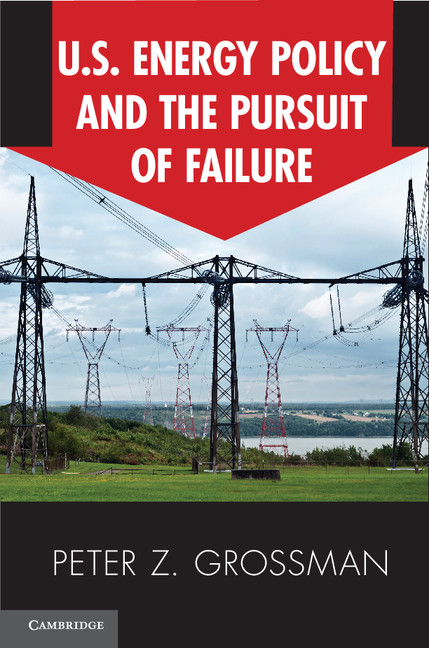
U.S. Energy Policy and the Pursuit of Failure
Too Hot to Touch
The Weather Observer\\\\\\\\\\\\\\\\\\\\\\\\\\\\\\\\\\\\\\\\\\\\\\\\\\\\\\\\\\\\\\\\\\\\\\\\\\\\\\\\\\\\\\\\\\\\\\\\\\\\\\\\\\\\\\\\\\\\\\\\\\\\\\\'s Handbook
Eruptions that Shook the World
Bioethics
Does Your Family Make You Smarter?
Senior Inbound Marketing Executive
Evolution - Selected Letters of Charles Darwin 1860–1870
Giraffe: Biology, Behaviour, and Conservation
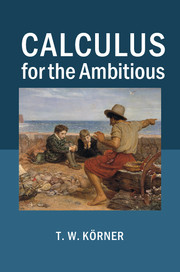
Calculus for the Ambitious
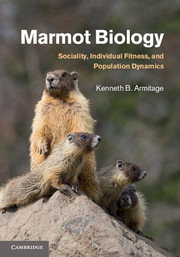
Marmot Biology
Dangerous Neighbors
Life Beyond Earth
Life Beyond Earth
Introduction to Cancer Biology
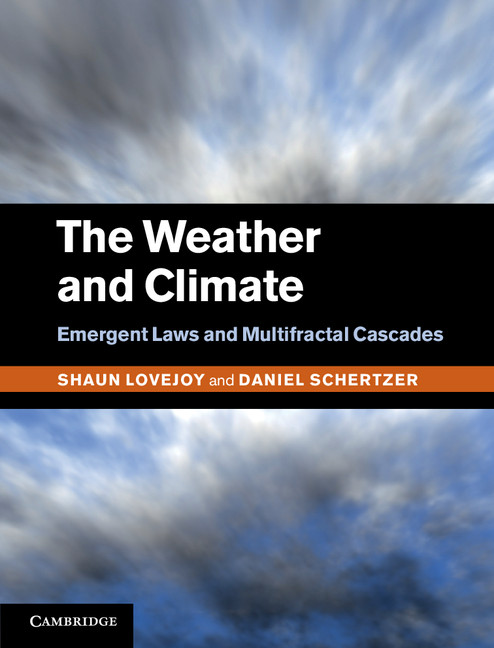
The Weather and Climate: Emergent Laws and Multifractal Cascades
Antarctica - Global Science from a Frozen Continent
The Domestic Cat
Assistant manager (e-products)
The Systems View of Life
Human Evolution
Landslide Ecology
Landslide Ecology
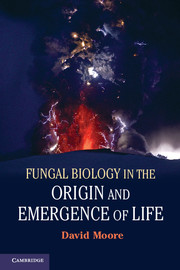
Fungal Biology in the Origin and Emergence of Life
To receive updates on Earth & Life Sciences news from Cambridge University Press and Fifteen Eighty Four, please join our email list below. We will not disclose your email address to any third party