Products and services

Using today’s prime editorial space to endorse the bipartisan backed BUILD Act, the New York Times called the bill – presented last week by Senators Kerry, Hutchinson, and Warner and created under...
Every Friday during the month of March, This Side of the Pond will feature correspondence drawn from Coming of Age With Quantum Information: Notes on a Paulian Idea, a collection of more than 500 letters...
It’s time for the Big Dance. For the next three weeks, March Madness will sweep the nation, and fans nationwide are gearing up for sleepless nights, office bracket pools, and campus-wide rallies—all...
Every Friday during the month of March, This Side of the Pond will feature correspondence drawn from Coming of Age With Quantum Information: Notes on a Paulian Idea, a collection of more than 500 letters...
While political philosophy and feminist theory have rarely examined in detail how capitalism affects the lives of women, the recently published Capitalism, For and Against: A Feminist Debate sees authors...
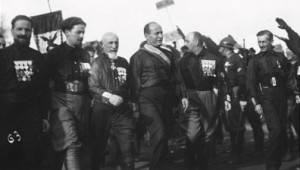
Tony Barber calls Michael Ebner’s Ordinary Violence in Mussolini’s Italy an “excellent study of the Mussolini era” that “gives a convincing account, based on much original...
Every Friday during the month of March, This Side of the Pond will feature correspondence drawn from Coming of Age With Quantum Information: Notes on a Paulian Idea, a collection of more than 500 letters...
Watch The King James Bible author David Norton’s lecture “The English Word,” courtesy of byutv. Read More ?
Dirk Vandewalle, author of A History of Modern Libya, sheds light on the many incarnations of Col. Muammar el-Qaddafi in an NYTimes op-ed. Read More ?
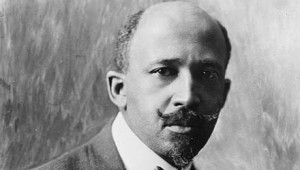
Black radical historian, scholar and agitator-prophet W.E.B. Du Bois (who was born during Andrew Johnson’s administration in 1868 and died shortly before Lyndon Johnson’s presidency in 1963)...
Shelley Baranowski, the author of Nazi Empire, discusses German nationalism and the rise of the Third Reich.
When he created his guidelines for orators, the Roman philosopher Cicero claimed that great speeches should contain three things: technique, substance, and passion. Speakers should use classical techniques that emphasize logic and lyrical rhythm; they should speak with knowledge and moral purpose; and they should be able to project character and emotion when appropriate.
Keep up with the latest from Cambridge University Press on our social media accounts.