Products and services

Failure and the American Writer examines failure as a fundamental and complex human experience, imperative to the US national identity and embedded in our most celebrated literature. Check out an exclusive excerpt from this exciting new study of American classics like Moby Dick and The Adventures of Huckleberry Finn.
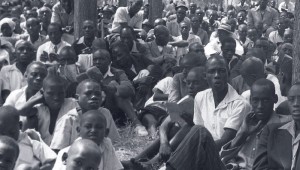
Following on last week's meditation on the emergence of African Studies as an academic field, the author of Ethnic Patriotism and the East African Revival reveals the curious effect that studying African history and culture has on the discipline itself. Catch up with Part One of Dr. Peterson's post here.
Archaeologist Patricia McAnany, the author of Living with the Ancestors, explains why the ancient Maya buried their dead within family homes.
In Eating and Ethics in Shakespeare’s England , a new kind of ethics is at stake—the ethics of the way we eat. Whom we eat with, how we serve, and the way we behave at the table dominates literary history.
Giorgio Riello, the author of Cotton: The Fabric That Made the Modern World, discusses the history of the invaluable fiber, from its origins in India and China to its feverish spread around the globe.
In this two-part post, the author of the award-winning Ethnic Patriotism and the East African Revival reflects on the emergence of the field of African studies and Cambridge University Press' role in advancing the discipline.
Mauro F. Guillén and Emilio Ontiveros, co-authors of Global Turning Points: Meeting the Challenges for Business in the 21st Century (2012), talk about the financial situation and its challenges in 2014.
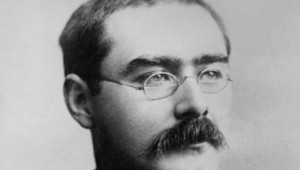
Take a look at one of Rudyard Kipling's verses from the brand new edition of his poetry, 100 Poems.
Clouds come in a bewildering variety of sizes and shapes. While they may all be fractal, some would require 3D shapes such as spheroids or ellipsoids to contain them while others – flat, elongated...
With this forthcoming addition to our astronomy list, the authors take you on a journey to our Sun, revealing the compelling science behind our Nearest Star and what it reveals about our Universe.
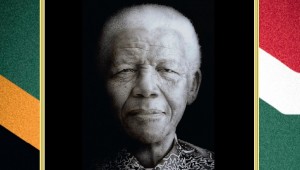
Nelson Mandela committed himself to a compelling political cause, suffered a long prison sentence, and led his violent and divided country to a peaceful democratic transition. Cambridge honors his legacy in our newest Cambridge Companion. Take a sneak peek at the introduction below.
Keep up with the latest from Cambridge University Press on our social media accounts.