
Products and services

1861 This photograph, taken for Confirmation, was probably the first portrait of himself that Nietzsche had ever seen. Fundamentally pleased with it, he nonetheless acknowledged its homelier aspects:...
Despite the increasing popularity of reading biographies psychology, as an academic discipline, remains surprisingly uninterested in analysing the course and direction of individual lives. Although longitudinal...
The awesome responsibility inherent in controlling the United States’ nuclear weapons arsenal has given an increasing number of experienced former officials pause about contemplating a Donald Trump presidency....
'Scientists Making a Difference' is a remarkable collection of new essays by some of the world's greatest behavioral and brain scientists in which they discuss their own groundbreaking ideas. Here, the volume editors talk about some of the book's key themes.
One of the questions I get asked most frequently is why I write about the history of epidemic disease. Why focus on an aspect of human existence that can appear so bleak? It’s true that studying epidemics...
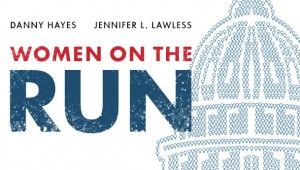
Jennifer L. Lawless and Danny Hayes talk Women on the Run and whether there is a gender bias in U.S. elections.
The most-studied book in the world must be Mr William Shakespeares Comedies, Histories, & Tragedies, a collection of thirty-six plays first published in London in 1623 and now known as the First Folio....
Does research into medieval history serve any useful purpose other than the pursuit of scholarship for its own sake? Labour Education Minister Charles Clarke thought not when in 2003 he declared that the...
Cambridge author Douglas A. Kibbee explores the language of democracy in relation to his new book Language and the Law: Linguistic Inequality in America .
Zimbabwe’s Migrants and South Africa’s Border Farms: The Roots of Impermanence began with my interest in people’s experiences of uprootedness and settlement. At the time, the Zimbabwean-South African...
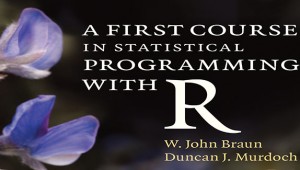
Data science is on the rise and infiltrating almost every field. Properly educated researchers and professionals with an extensive knowledge of how data analysis and statistics are married together will...
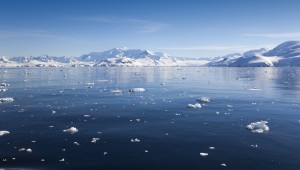
Professor Grant R. Bigg, author of Icebergs has worked with industry on iceberg and sea-ice related topics since 2007, here he talks about climate change in the polar regions and discusses how the the differences in Arctic/Antarctic geography leads to varied responses in the arctic regions.
Keep up with the latest from Cambridge University Press on our social media accounts.