
Products and services

Frank Incropera, author of Climate Change : A Wicked Problem, discusses the agreements put into place after the UN COP21 in December 2015 and considers whether these agreements can still be truly realised.
Join Publishing Director Matt Lloyd in celebrating Earth Day, 'Stay Educated with Cambridge' and help to spread scientific knowledge on issues in ecology, the environment, policy and governance. Join in the discussion with #EarthDay and maybe join a #MarchForScience in your area.
Celebrate National Poetry Month with Cambridge University Press! In this blog post editor and poet Gerry Dawe discusses his forthcoming book The Cambridge Companion to Irish Poets.
Why did I write The Writing on the Wall? I can point to a few moments as prompters. The first was a debate within Israeli human rights organizations in 2000, when the Second Intifada began. Until then,...
Scott D. Slotnick author of Cognitive Neuroscience of Memory discusses the link between Alzheimer's and long term memory.
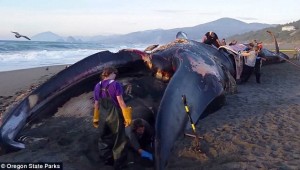
Robert L. Wilby, author of Climate Change in Practice, considers the culture of 'alternative facts' and discusses the legacy of Earth Day, the 'demise' of the Blue Whale and the importance of checking the details.
After another season of bardolatry, in this blog post, Ewan Fernie explains why Shakespeare matters today - and it might not be for the reasons you think...
Ewan Fernie is author of Shakespeare for Freedom.
Mark Connelly discusses the Third Battle of Ypres, or Passchendaele, as it is so regularly called.
It seems only fitting at the start of National Poetry Month to think about what the art form that it celebrates might offer us at this moment in 2017. Two key figures in the last 75 years of American...
In October 2016, a few months after our book appeared, I was at an AMS conference in Denver where Andreas Blass told me of an interesting fact related to the Banach–Tarski Paradox (BTP). I will summarize...
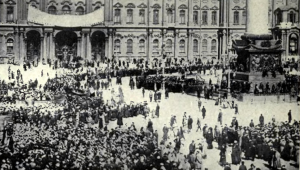
Rex A. Wade discusses the challenges and rewards of writing the third edition of The Russian Revolution, 1917
A brief interview with Barry Mazur and William Stein, authors of 'Prime Numbers and the Riemann Hypothesis,' on the development of this essential book and its standout qualities.
Keep up with the latest from Cambridge University Press on our social media accounts.


![[Photo by Jean-Baptiste Gurliat/ Mairie de Paris]](https://cambridgeblog.org/wp-content/uploads/2017/04/Arc-de-Triomphe-300x170.jpg)