

Products and services


Capitalism is full of success stories from entrepreneurs, and they tend to follow the same script: ‘I saw a space in the market, or created one where none existed. I believed I had what it takes. Through hard work and some luck, I made it.’ Capitalism, or what some call “good capitalism”, is supposed to guarantee a level playing field for every aspiring entrepreneur, so that success depends on talent and effort as much as chance, preserving some degree of social mobility over time. The innovative entrepreneur is, then, reputed to be a key actor in the modern economic process ‒ able to challenge incumbents, introduce meaningful advances in techniques and products, secure a degree of dynamic efficiency, and improve social welfare.
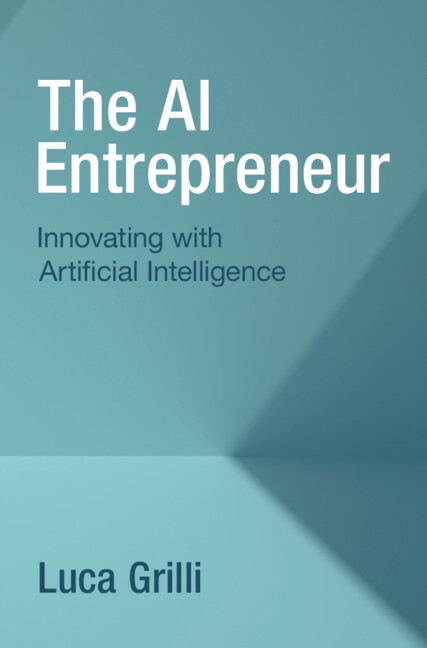
The AI Entrepreneur, the book that kept me busy for the past two years, is essentially an investigation into how far artificial intelligence ‒ in its predictive, generative, and agentic forms ‒ threatens this role.
The book is divided into three parts. In the first, Basics, much like in a genuine investigation, we “profile” the characters: the presumed victim (the entrepreneurial phenomenon) and the presumed culprit (artificial intelligence). In the second, The Encounter, we examine, from a scientific standpoint, whether and how the two interact. Stepping outside the metaphor, our focus is less on whether AI might “kill” the entrepreneurial process outright, and more on how technology, in its various facets and technical dimensions, will reshape some of its stages and distinctive traits. In particular, we examine how artificial intelligence affects the entire process ‒ from the initial creative entrepreneurial idea to its exploitation in the market ‒ and how the typical “capital” drivers of success of innovative entrepreneurship (human capital, social capital, and venture capital) are being reshaped by AI. This part of the book also provides a taxonomy of the different start-ups possible in the AI era. What emerges is that, while AI may assist entrepreneurs (through what we call “AI entrepreneurial buddies”), it may also easily reinforce incumbent advantage derived from data and generate forms of systemic lock-in around large, AI-driven ecosystems ‒ dynamics that risk narrowing the space for genuinely innovative ideas, trapping the AI entrepreneur between these two threats. The final part, Policy Challenges, sets out to identify the risks facing the innovative entrepreneur in the age of AI. It outlines not only the challenges policy makers face if they want to preserve the “beneficial” role of entrepreneurship in capitalist systems, but also some prescriptive measures aimed at safeguarding space for entrepreneurial agency. The goal is to prevent the AI entrepreneur from becoming a postmodern simulacrum, confined within increasingly “fenced” forms of capitalism: formally present, but stripped of the capacity to generate “thick” innovation that is genuinely meaningful, and genuinely beneficial, to society.
Thus, taken together, the three parts tackle a composite question: not only whether AI will change entrepreneurship ‒ it undoubtedly will, and the book analyses how ‒ but also whether it will hollow it out. Returning, for a moment, to the metaphor, and to this very point: the book might be described as a sort of whodunit. I myself, having embarked on this endeavour, did not know where the analysis I was conducting would lead me ‒ only to discover, in the end, that there is not necessarily a culprit, because there is not necessarily a body. Or rather: the book is the analysis itself, as scientific as possible (also corroborated by numerous original analyses it contains), aimed at making sure there is no body. That truly meaningful innovative entrepreneurship survives the rise of artificial intelligence, rather than being quietly reduced to a hollow echo of itself. Better still, that it thrives on it, with AI nurturing the innovative entrepreneurial process ‒ to the full benefit of our societies.

Luca Grilli is Full Professor of Business and Industrial Economics at Politecnico di Milano. He is among the most cited social scientists in innovative entrepreneurship and has adv...
View profile >Keep up with the latest from Cambridge University Press on our social media accounts.




Latest Comments
Have your say!