

Products and services

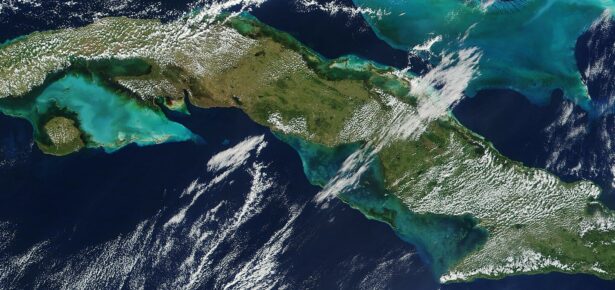
Whenever I mention that I’ve just written a book on slavery and literature in Cuba in the nineteenth century, the conversation almost immediately turns to the present. Do I travel to Cuba? How do Cubans survive? How do they keep food with 40- or 50-hour-long blackouts? The present, however, is never as far from the past as we might like to think. The humanitarian crisis and increase in inequality fueled by the US oil embargo keep disproportionately impacting the descendants of enslaved people.
One of the questions that I examine in the book is how, through their writing, enslaved people forced others to listen to their claims. At times, these claims also included not being reduced to their suffering and oppression. This is also clear in today’s Cuba –or, for that matter, in today’s Gaza, Sudan, and Cancer Alley, Louisiana. These are places where people do not just survive. In fact, it is precisely because their lives have been reduced to basic tasks such as trying to get food or avoid drinking contaminated water that many of them engage in activities that go far beyond the realm of sheer survival – to art, language, and play.
In my work, the question of why we would study the past when there is so much to worry about in the present is deeply entangled with the question of why we would study literature. Both have shaped my research — in particular, my focus on enslaved writers. Literary critics have generally identified six of them, active in Cuba between the 1820s and the 1860s: Juan Francisco Manzano, Juan Antonio Frías, Ambrosio Echemendía, Néstor Cepeda, Manuel Roblejo, and José del Carmen Díaz. Surely there were many more, but accessing the newspapers where they sent their poems becomes harder every year. Collections deteriorate under humidity, use, and a complete lack of funding for preservation.
Scholars of literature often argue that paying too much attention to social context when reading lyric poetry is reductive, and therefore objectionable. Poems, after all, gain new meanings with each reading, and they can bring about new ways of seeing the world. But enslaved writers force us, in unique ways, to reflect on the social entity we call “poetry” as much as on its literariness. Disciplinary patterns generally block this reflection. Historians seldom engage with the formal specificity of literary texts, and literary scholarship often seeks validation by attacking a strawman called historicism. Beneath these disciplinary divergences, however, a similar intellectual and ethical challenge resounds: how to conceptualize the relationship between literature and society in a way that does justice to both, and how to do so, furthermore, without hindering contemporary struggles for justice.
In 1865, the enslaved poet Ambrosio Echemendía published a book that he signed with an anagram of his name, which helped him secure his manumission. He relied on the vanity of his Cuban patrons, on their wish to see their names listed on the right side of history. At the same time, he quarreled with his self-declared enemies. As many of his poems attest, his authorship was disputed. Several explicitly address a skeptical reader who refuses to believe that an enslaved person could have written them. Here is my translation of the first stanza of his sonnet “To a disbeliever of my verses”:
If, harshly, you deny the only worth
My verses have, the fact that they are mine,
Will you calm down your ravings set by doubt,
With this rough sonnet I now improvise?
By addressing this disbeliever, Echemendía’s sonnet refuted the assumption that enslaved Afrodescendants were incapable of authorship, or what was then coded as civilization. At the same time, it demanded to be perceived as a poem: as a work whose immersion in social struggles did not preclude its autonomy, its ability to be something other than the world circumscribing and conscripting it.
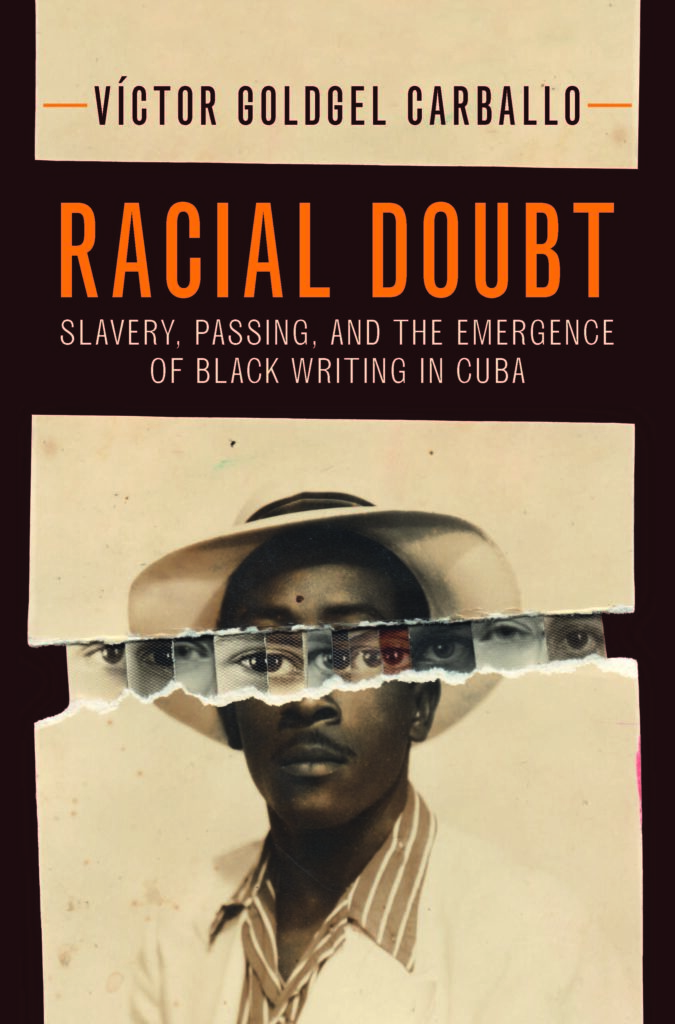
Racial Doubt by Víctor Goldgel Carballo
Keep up with the latest from Cambridge University Press on our social media accounts.


Latest Comments
Have your say!