

Products and services


Every day there is a media story about public opposition to immigration fueling the populist far-right in Europe. Academic public opinion research has a similar slant, with endless studies about why people oppose immigration. This could lead one to believe that Europeans all hate immigration. Especially as there is very little attention to support for immigration, which is presumed to be a superficial dynamic confined to a tiny bubble of disconnected elite urbanites.
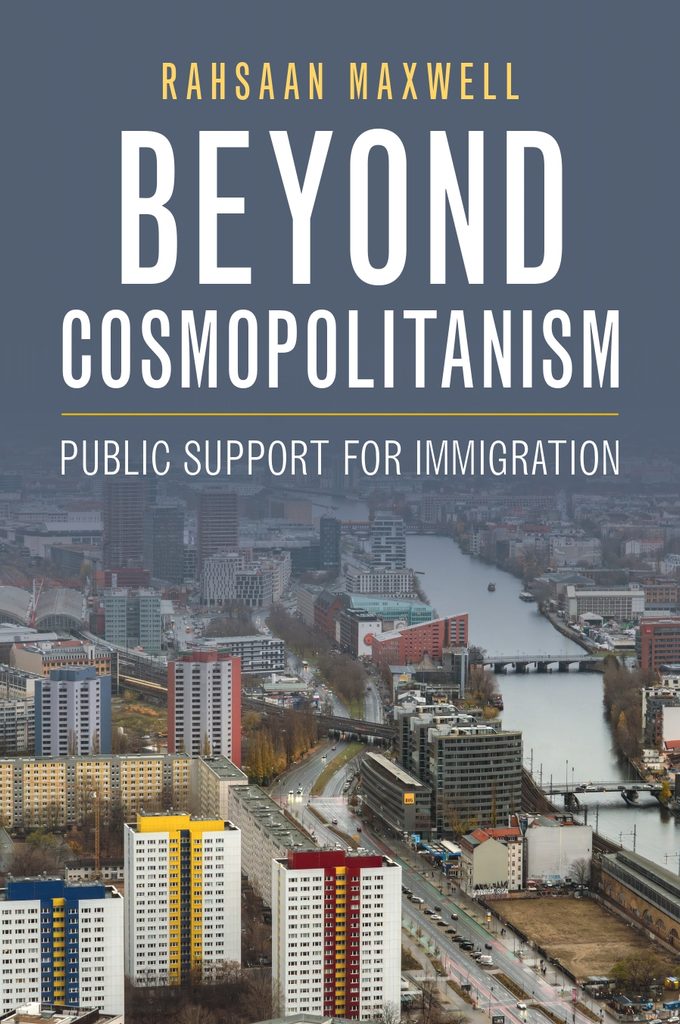
Beyond Cosmopolitanism challenges these assumptions, finding more support for immigration in Europe than many people realize. In fact, there are more Europeans who support immigration than Europeans who oppose immigration. In addition, support for immigration has grown since the early 2000s, while opposition to immigration has remained constant, or declined, depending on the country. Moreover, the demographics of people who support immigration are remarkably diverse, with more pro-immigration Europeans in small towns and villages than in big cities.
These public opinion trends may seem at odds with the political climate depicted in the media, but it is important not to conflate far right electoral gains in fragmented proportional representation systems with broad public support. In recent decades, the xenophobic far right has moved from 10-15% to 15-25% of the vote. This is often enough to enter Parliament, or in some cases even become the largest party controlling the government. These small shifts have important implications, but they should not be interpreted as evidence that the majority of Europeans are xenophobic.
Beyond Cosmopolitanism argues that the slight increase in vote share for far-right parties has largely come from shifting allegiances among people who were already anti-immigration but used to vote for other parties. In other words, the recent success for far-right xenophobic parties should be taken seriously, but their constituents are a minority, and they are outnumbered by Europeans who are pro-immigration.
Yet, public opinion can easily become ‘cheap talk’ if it is not associated with tangible political actions. Therefore, Beyond Cosmopolitanism demonstrates a strong connection between pro-immigration attitudes and multiple forms of committed behavior. People with pro-immigration attitudes are more likely to live in municipalities and neighborhoods with more immigrant residents, more likely to have immigrant friends and spouses, and more likely to be engaged politically on behalf of migrants.
I do find evidence that people with anti-immigration attitudes are more likely than people with pro-immigration attitudes to prioritize immigration policies when they evaluate politicians. This is consistent with the rise of xenophobic far-right parties and no equivalent parties on the pro-immigration side. Moreover, there are many ways in which people balance support for immigration with skepticism about certain aspects of immigration. However, pro-immigration Europeans are more engaged in non-electoral civic activities to promote immigration.
Overall, Beyond Cosmopolitanism offers a new perspective on immigration politics by examining the underappreciated dynamics of support. By showing the diversity and nuances of support for immigration, I go beyond cosmopolitan stereotypes to present a broader framework for understanding immigration politics. Immigration is likely to remain a central political issue across the world and Beyond Cosmopolitanism highlights the possibilities for compromise, as well as charting the fault lines that are likely to remain contentious policy challenges.
Keep up with the latest from Cambridge University Press on our social media accounts.





Latest Comments
Have your say!