

Products and services


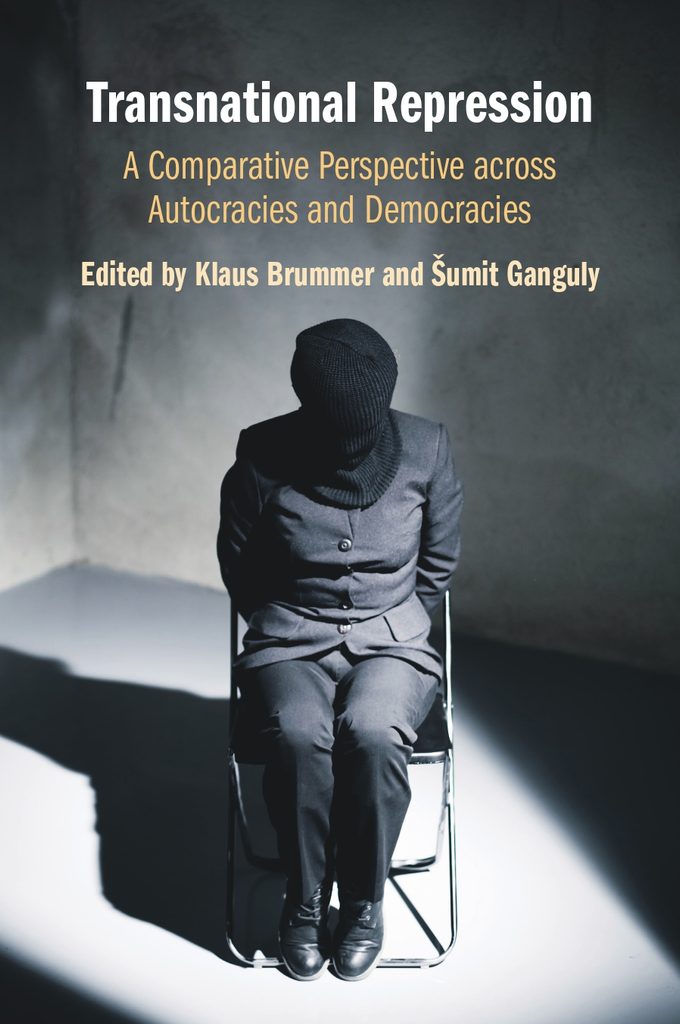
Transnational repression, understood as the extraterritorial repressive actions by states against members of their national community abroad, has become a global phenomenon. One commentator even suggested that “This is the golden age of transnational repression. More states now have more tools to target more exiles and diaspora communities in more countries for fewer resources than ever before” (Schenkkan). Importantly, transnational repression is not exclusively driven by autocracies: Liberal states also contribute to those challenges when they question the legitimacy of international institutions or when they engage in outright acts of transnational repression themselves.
Covering a total of 14 countries from both the Global North and the Global South, our survey explores transnational repression along three dimensions. First, what are the motives for states to engage in transnational repression (the “why”)? Second, what instruments and tactics do states employ when engaging in acts of transnational repression (the “how”)? Third, what are the implications and consequences of transnational repression (the “so what”)? Importantly, those questions are discussed not only for autocracies including North Korea, China, Russia, and Saudi Arabia but also for democracies such as India, Israel, and the United States.
Our survey shows that while there is at least some merit to the explanatory factors discussed in the literature pertaining to the rise and conduct of transnational repression – in the form of security concerns, state capacity, regime type, and host-state characteristics –, none of those factors is by itself sufficient to account for phenomenon. Regarding security concerns, the discussions suggest that there is no clear-cut relationship between the size of national communities abroad and states’ engagement in transnational repression. There is similarly no clear-cut link between the geographical location of national communities abroad (i.e., proximity to home state) and the transnational repression. Turning to state capacity, states with a high capacity have been shown to make extensive use of those capacities towards their nationals abroad. However, transnational repression is by no means confined to states with high capacity since also states that exhibit low levels of state capacity have been able to engage in various types of coercive measures abroad. Concerning regime type, our volume shows that while both autocracies and democracies engage in “authoritarian practices” (Glasius), there are nonetheless systematic differences in actions and, more importantly, in terms of accountability. Finally, regarding host-state characteristics, the surveys suggest that those are not decisive in terms of whether states engage in transnational repression or not. Yet while shared regime types or diplomatic connections through joint membership in regional organizations are not sufficient for transnational repression to emerge, both aspects clearly have an enabling effect on both where and how states engage in transnational repression.
Building on those insights, our work offers various policy recommendations to counter transnational repression. They range from more resolute responses in the digital realm to thwarting of efforts by third states to use international legal provisions concerning refugees, migration, and asylum to deport or extradite certain individuals back to their country of origin to increased support and investment in groups that have been victimized by their home states. Those and other measures appear all the more pertinent since broader global trends pertaining to democratic backsliding and autocratization and ensuing challenges to the liberal international order will further increase the permissiveness of the international system for transnational repression.
Keep up with the latest from Cambridge University Press on our social media accounts.




Latest Comments
Have your say!