

Products and services

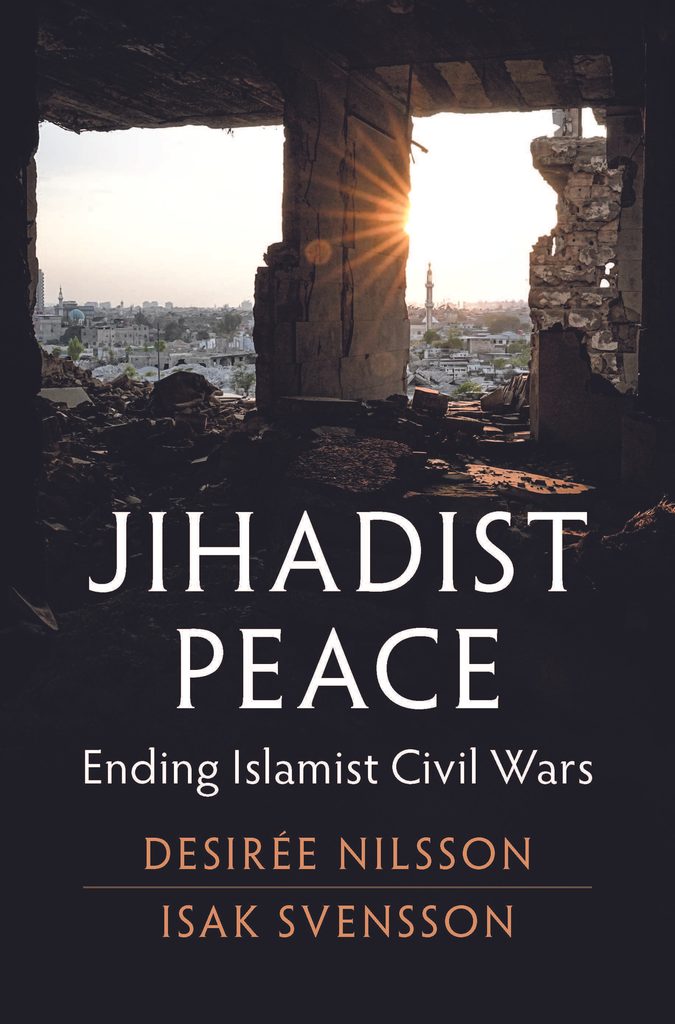
This year marks 25 years since the United States led the military intervention in Afghanistan, following the 9/11 attacks. The war that followed lasted for two decades and was highly internationalized, with external actors and networks supporting the different warring parties. In our new book on how Islamist civil wars end – Jihadist Peace – we study the conditions under which Islamist civil wars can come to an end and be resolved. Based on a global analysis of all civil wars, we demonstrate that Islamist armed conflicts, such as Afghanistan, are more intractable than others and more prone to relapse if they do end.
To illustrate this pattern in depth, we compare and contrast Afghanistan with a case that has received considerably less scholarly and policy attention: Mauritania. We show in our book that Mauritania initially shared several similarities with Afghanistan and very well could have followed a similar trajectory of foreign intervention to fight transnational Islamist groups. However, it did not. In Mauritania, for various reasons described in the book, the government and the rebels never transnationalized their battle. The rebels largely refrained from mobilizing and recruiting foreign fighters, and the government abstained from joining the War on Terror and its international government-to-government coalition against radical Islamist groups. We suggest that this contributed to making the Islamist civil war in Mauritania unusually brief and at a relatively low level of violence.
Islamist civil wars tend to be a subset of civil wars that are particularly prone to intractability: they are more difficult to resolve through negotiations, hard to terminate, and likely to recur if they are brought to an end. The key explanation for this intractability lies in the particular ways that some Islamist conflicts are interconnected to other conflicts, groups, and governments. The key distinction – from a conflict termination and resolution perspective – lies in the global-local divide. Conflicts that remain focused on the local, or that can shift from the transnational to the domestic, stand the best chance of being open to resolution efforts.
We support this argument with empirical evidence by analyzing civil wars worldwide and by including evidence both across and within different Islamist armed groups. In Mali, we compare groups such as JNIM with other groups that are more locally oriented, and in Syria, we trace developments over time in their transnational outlook, focusing on the rebel group HTS, which later came to overthrow the Assad regime in Syria.
This has important implications beyond academic discussions. Understanding that Islamist civil wars have tendencies to become intractable, as well as understanding what can be done to make them open to efforts to resolve and end them, is of great importance also for policymakers. Islamist conflicts continue to be a grave security problem; almost half of the conflicts in the world are fought with at least one group mobilizing explicitly on the basis of Islamist demands. The key lies in keeping them local.

Desirée Nilsson is a Professor in Peace and Conflict Research at Uppsala University. With over 20 years' experience in studying civil war dynamics and resolution, particularly inc...
View profile >Isak Svensson holds the Dag Hammarskjöld Chair at Uppsala University. His extensive publication record includes acclaimed books such as Confronting the Caliphate (Oxford Universit...
View profile >Keep up with the latest from Cambridge University Press on our social media accounts.




Latest Comments
Have your say!