

Products and services

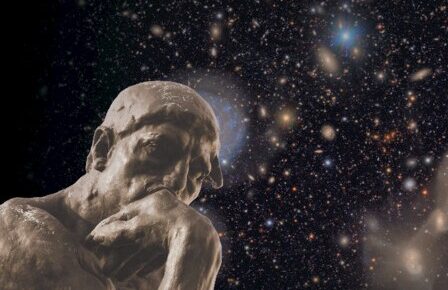
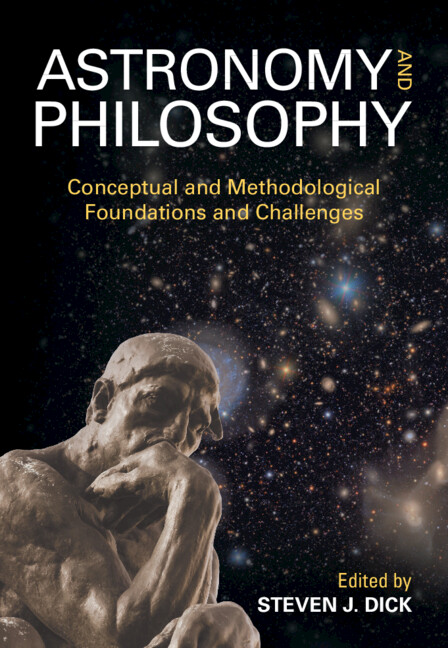
A good question, you might say, and one that some astronomers asked when I presented a paper the subject at a recent meeting of the American Astronomical Society! The philosophy of science and of specific sciences such as physics, chemistry, and biology are well-developed fields with their own books and journals. These studies are important for understanding the foundations of science and any claims it may have to privileged knowledge as opposed to other areas of human knowledge. By comparison the intersection of Astronomy and Philosophy has received little systematic attention. Over the years there has been sporadic individual research on this subject by historians, philosophers, and astronomers, and in recent years even some more coherent works addressing parts of this subject.
That said, there has been no overall volume that deals with the full scope of the philosophy of astronomy, which I define broadly to include not only classical astronomy, astrophysics, and cosmology, but also space science and astrobiology. And there has been no volume that addresses a broader audience as opposed to specialized works aimed at one particular audience such as cosmologists or astrophysicists. Astronomers are thus missing what other sciences have nurtured and found both enlightening and useful. Philosophers and historians are missing foundational discussions about the oldest of the sciences that can illuminate long-standing problems in their field. And even the general public and the media can benefit from knowledge of how science advances, not cleanly and linearly, but infused with methodological and philosophical challenges.
With this in mind, I decided to ask the experts, in the end consisting of 15 historians of science, 10 philosophers of science, and 5 astronomers and cosmologists, to contribute to this edited volume on Astronomy and Philosophy. Together they cover six categories of issues where astronomy intersects with philosophy: 1) the metaphysical foundations of astronomy and how they have evolved; 2) the influence of metaphysical preconceptions and non-scientific worldviews on astronomy, evidenced, for example, in the work of Arthur S. Eddington and many other astronomers; 3) the nature of reasoning, including the roles of observation, theory, simulation, and analogy, as well as the limits of reasoning, starkly evident in the anthropic principle, fine-tuning, and multiverse controversies; 4) the problematic nature of evidence and inference (think canals of Mars but also exoplanets and many other subjects!), especially since the objects of astronomical interest are for the most part beyond experiment and experience; 5) the epistemological status of astronomy and its central concepts, including space, time, and gravity; the process of discovery and classification; and the nature of life and intelligence, and 6) the role of technology in shaping the discipline of astronomy and our view of the universe.
While many of these themes are present throughout the millennia of the history of astronomy dating back to its beginnings, this volume focuses on modern astronomy, defined as the 20th and 21st centuries. The 27 chapters also allow readers to see the deep history of issues in philosophy of astronomy that illuminate more recent astronomy, where philosophical issues have become starker with problematic concepts such as dark matter and dark energy, the anthropic principle and the multiverse; new theories such as modified Newtonian dynamics (MOND); the epistemology of gravitational wave astrophysics; the new metaphysical foundations provided by relativity and quantum mechanics, the nature of intelligence in the universe, and much more.
It turns out philosophical problems fundamentally permeate the theory and practice of astronomy, just as in other sciences. This volume will show you how, and I hope will spur a more robust philosophy of astronomy at the level of other sciences, and worthy of the cosmic importance of the field.
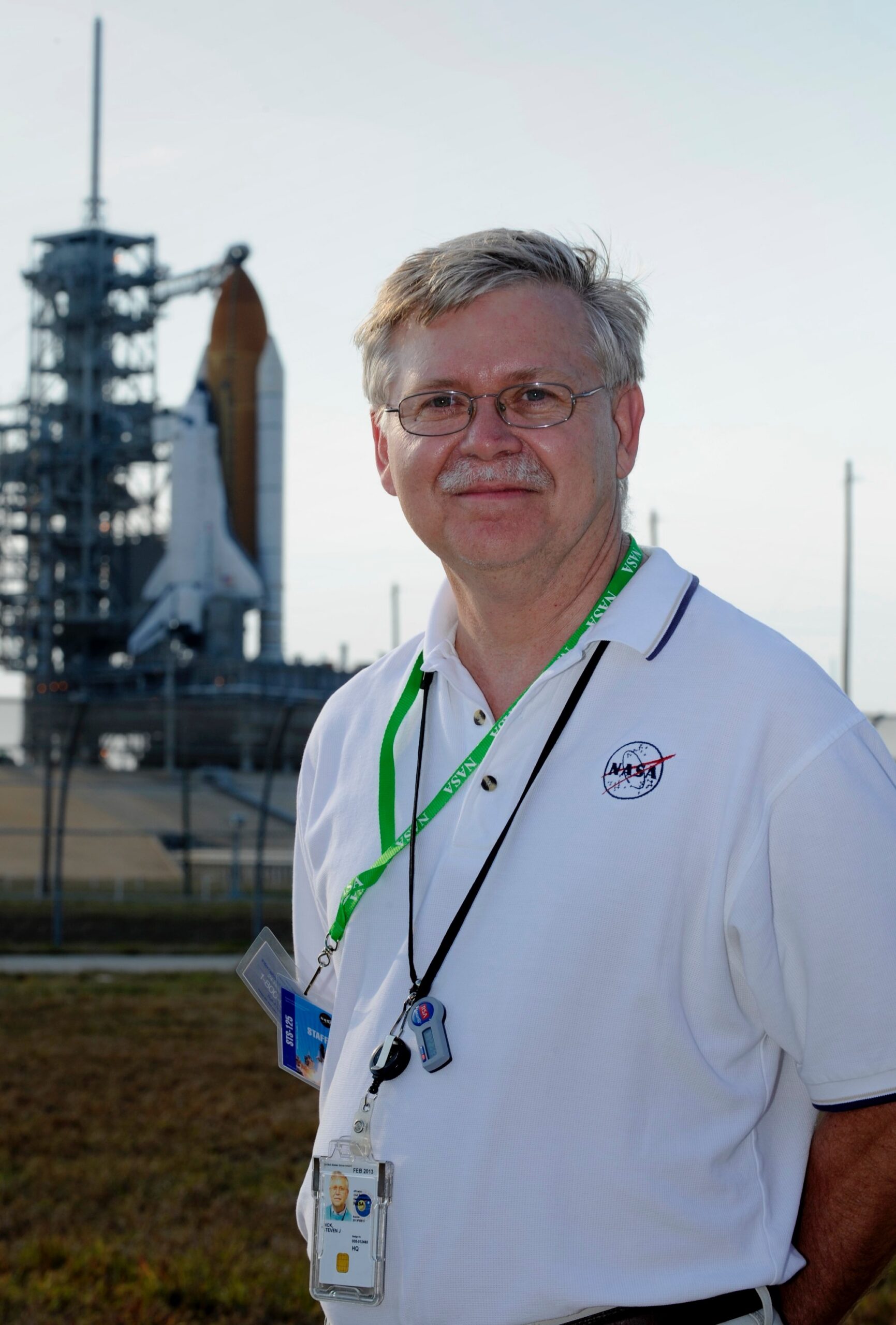
Steven J. Dick is an astronomer and historian of science. He was NASA's Chief Historian and Director of the NASA History Office until 2009. He has also served as an astronomer and ...
View profile >Keep up with the latest from Cambridge University Press on our social media accounts.




Latest Comments
Have your say!