

Products and services

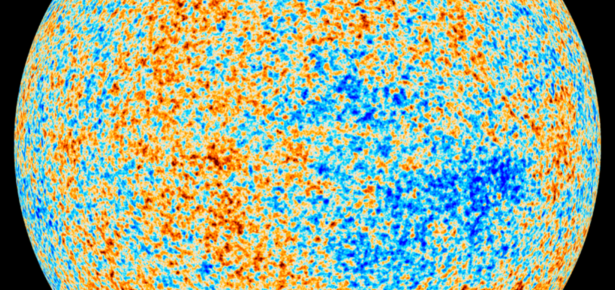
In 1964 Arno Penzias and Robert Wilson of the Bell Telephone Laboratories discovered the almost perfect blackbody microwave glow from the Big Bang. They found this glow to have a nearly uniform temperature of 2.7255 K that did not vary with position in the sky. Since then, as a result of immense effort and ingenuity, the cosmic microwave background (CMB) has been mapped out and characterized with outstanding precision.
According to our present best theoretical understanding, the universe began being nearly homogenous and isotropic but with tiny ripples superimposed. These were likely generated during a very early epoch of inflationary expansion driven by new, but yet undiscovered physics. As a result of gravitational instability, as first pointed out by James Jeans long ago, these initially minuscule ripples grew to become the structure that we see around us today. While on very small scales the universe is far from uniform, as we observe on larger and larger scales, the universe appears increasingly uniform and smooth.
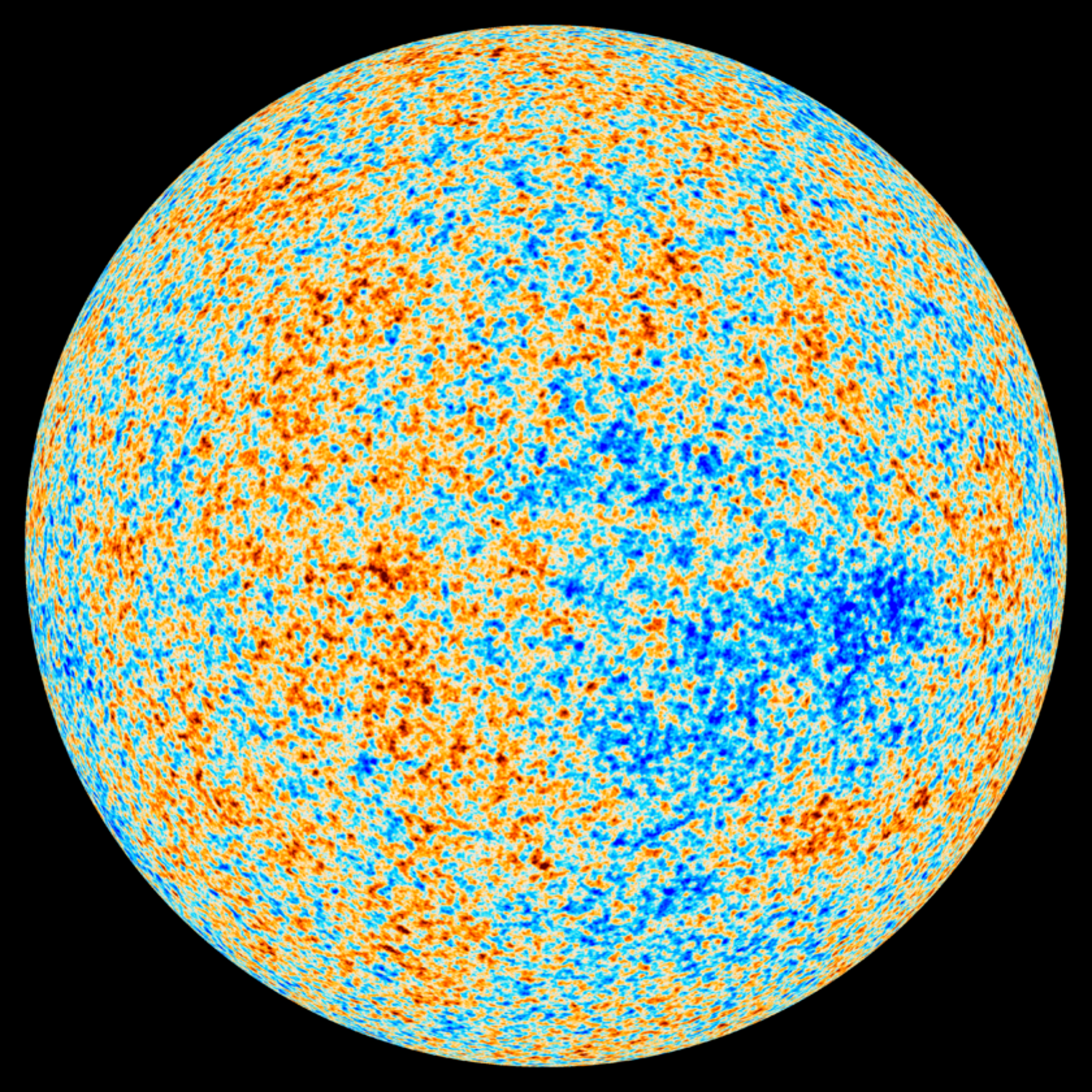
In 1992 the NASA Cosmic Background Explorer (COBE) Differential Microwave Radiometers (DMR) instrument team, led by George Smoot, first discovered the CMB anisotropy, and the COBE Far Infrared Absolute Spectrometer (FIRAS) instrument team, led by John Mather, placed stringent limits on the allowed deviations of the CMB frequency spectrum from that of a perfect blackbody. For this work, Smoot and Mather were awarded the 2006 Physics Nobel Prize.
Since that time follow-up experiments have mapped out the CMB anisotropies at great precision. There have been two follow-up space missions, the NASA WMAP mission, launched in 2001, and the ESA Planck Mission, launched in 2009. Numerous experiments from the ground and from stratospheric balloons have also contributed to this effort, most notably probing smaller angular scales and also perfecting observational techniques.
Thanks to these CMB observations, we have now characterized the initial conditions of the universe at about the few percent level. We know that the initial perturbations were very nearly Gaussian, as predicted by the simplest models of inflationary cosmology. We are also able to use the gravitational lensing of the CMB to measure the inhomogeneities in the distribution of mass at later times. However, this does not mean that there does not remain much still to be understood. The physics of the CMB is simple because it is very nearly linear. But later on, as these initial inhomogeneities grew in amplitude, complicated nonlinear physics came into play, making the evolution extremely challenging if not impossible to model reliably. Comparatively, much less is known about the “Middle Ages” of the Universe, during which the very first stars and quasars came into being. This remains an open frontier.
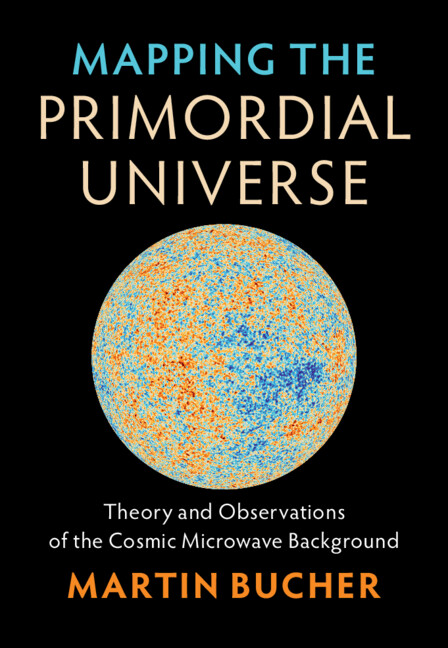
My book offers a comprehensive account of the cosmic microwave background covering both the observational and theoretical aspects of the subject. I begin with a historical introduction and a survey of the basic observational results. Then I carefully develop the theory: the thermal history of the universe; the evolution of linearized cosmological perturbations, both in the framework of Newtonian theory and the general theory of relativity; the calculation of how these perturbations are imprinted as CMB anisotropies, both in temperature and in polarization; and inflationary cosmology. Then instrumentation for CMB measurements is described in detail as well as data analysis techniques, including statistical inference and foreground removal techniques. Other astrophysical foregrounds relevant in the microwave band are also treated in detail, as well as CMB spectral distortions, non-Gaussianities, and gravitational lensing. The book was written to be accessible and of interest to a broad audience, including the novice graduate student as well as the expert.
Martin Bucher is CNRS Directeur de Recherche based at Université Paris Cité. Bucher was part of the ESA Planck Collaboration.
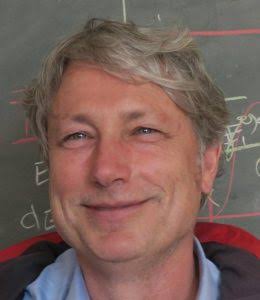
Martin Bucher is CNRS Directeur de Recherche at Université Paris Cité and Fractional Professor at Stellenbosch University. Prior to moving to France, he was SW Hawking Fellow of ...
View profile >Keep up with the latest from Cambridge University Press on our social media accounts.




Latest Comments
Have your say!