

Products and services

“With all the bad news on climate science and climate governance lately, how do you find hope to persevere?” In the past decade, I have been asked this question with increasing frequency in my climate governance lectures. It usually comes from a disillusioned student struggling to process new developments about climate science projections or climate governance failures. It troubles me to hear this angst-laden question from young adults who have their lives and careers in front of them. I want to respond truthfully, yet optimistically, but how can one convey a message of deep concern buoyed by rays of hope and support that will motivate future climate governance ambition?
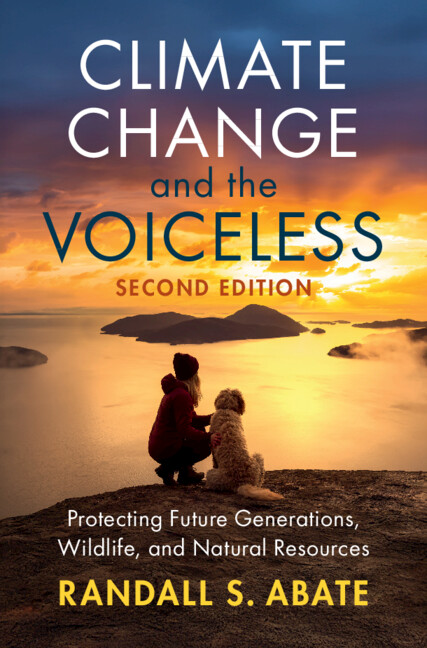
The search for a suitable response to this question was part of my inspiration in 2018 to write the first edition of Climate Change and the Voiceless: Protecting Future Generations, Wildlife, and Natural Resources. Prior to this book project, my work on climate impacts on future generations, wildlife, and natural resources — the voiceless communities addressed in the book — was conducted in silos. These three categories operated in their own lanes under the law with very little crossover between them. Two “light bulb” moments motivated me to seek to break down the barriers across these categories, ultimately leading to new forms of climate governance inspiration and opportunities.
As I was preparing to teach an Animal Law course in 2014, the first “light bulb” moment occurred. I found striking parallels and synergies between animal law and environmental law – ways in which animal law could learn from the evolution of environmental law and opportunities for the two fields to work together for mutual gain. The second moment occurred two years later and stemmed from work on my 2016 book on regional and global governance case studies in climate justice. Though the book focused primarily on protecting vulnerable human communities facing threats from climate change and how the law could reduce their vulnerability, it also addressed the need for the law to reduce the vulnerability of non-human communities (wildlife and natural resources) to adapt to climate change threats.
These two moments inspired me to seek how the law’s treatment of human and non-human vulnerability in the climate change crisis can be integrated. In preparing the first edition, I had three goals. The first goal was to underscore the intractable and worsening gridlock in climate governance efforts at the international and domestic levels, and how more effective governance mechanisms are necessary to protect the most vulnerable human and non-human communities. The second was to place vulnerable human and non-human communities “under one roof” and transition away from the law’s myopic anthropocentric lens by recognizing the shared vulnerability of human and non-human communities in the climate crisis. The third goal was to explore the parallels and synergies across these three communities and offer recommendations on how strategies and mechanisms in one context can be replicated and adapted to secure progress in the other contexts.
Since the publication of the first edition in 2019, remarkable progress has been made in advancing the three goals at the domestic, regional, and international levels in legislatures, administrative bodies, and courts and tribunals around the world. The second edition explores how success in the rights of nature movement can be a valuable platform for advancing the rights of wildlife in two recent cases in Latin American courts, where ecosystems and animal species within the ecosystems secured “win-win” outcomes in the same judicial proceeding. Moreover, it examines how the landmark climate advisory opinion in 2025 from the Inter-American Court of Human Rights recognizes that rights of nature and the human right to a clean and healthy environment – the foundation for many cases recognizing the rights of future generations to more ambitious climate regulation – are complementary and not mutually exclusive.
As of this writing in June 2026, the lack of political will and other legal barriers impeding effective climate governance in the U.S. and around the world has never been greater. Climate Change and the Voiceless, 2nd ed. seeks to offer hope at this pivotal moment in the fight for the future of climate governance. Based on the developments addressed in the second edition, my response to the question from the audience member now would be: “Hope and resilience can prevail, but recent successes in climate governance efforts protecting voiceless communities around the world need to be strategically leveraged to ensure that these human and non-human communities can adapt to the daunting future projections for climate change impacts.”
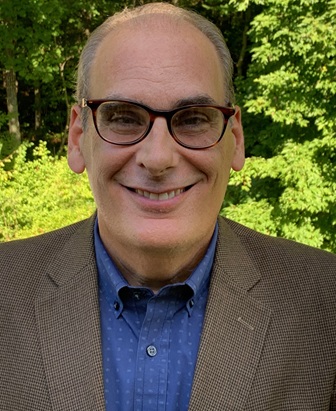
Randall S. Abate has taught domestic and international environmental law courses at six US law schools and one university over the course of three decades. He also has delivered le...
View profile >Keep up with the latest from Cambridge University Press on our social media accounts.




Latest Comments
Have your say!