

Products and services


The conduct of empirical exercises and comparative case studies and the invoking of theoretical analyses are common to almost all economic debates as participants seek to support/undercut different positions. Industrial policy (IP) debates are no exception, although far less examined is the history behind the theoretical analyses that are invoked.
Why? Given the dominance of mainstream/neoclassical economics in the debates dating back to the 1970s, if not before, many assume that that history has been written definitively. Krugman, in a telling example, confessed that for a long while he did not find any need to read, among other works, Ohlin’s Interregional and International Trade, preferring instead ‘to get his Ohlin via Samuelson’. Reading original works to critically re-examine the history of analysis is treated as unimportant, as those efforts would merely reaffirm what has already been recorded.
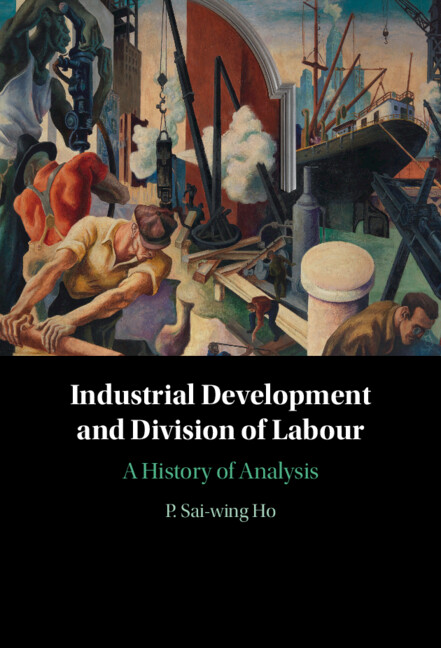
In Industrial Development and Division of Labour: A History of Analysis, I contend that while there is a version of that history that is readily accepted by mainstream economists, there is an alternative and broader one that rivals it. I root both in Smith’s Wealth of Nations, specifically in the two types of division of labour (DoL) that he does not carefully distinguish. I advance the ‘heterodox’ version after re-examining the works of the so-called protectionists and supporters of import-substitution, as well as the literature on innovation systems and technological capabilities. I question the standard representation of the trade policy stance of Mill, Marshall and Ohlin. Even Jevons is revealed as much more complex than the usual portrayal as an early marginalist.
I label one type of division as DoLfg, where the subscripts indicate a focus on final goods production, with the portrayal of technologies drastically simplified so as to establish the benefits of trade. It has received an overwhelming proportion of attention from economists and is the basis of mainstream trade theories. It developed into general equilibrium analysis, where the transformation process constitutes the principal plot in the mainstream version of history of thought. To make room for IP considerations, market failures are allowed. However, to prevent them from doing too much violence to the framework, additional assumptions are made to render them either easy to correct (such as through drastically simplified learning-by-doing) or inconsequential.
I call the other DoLop, where the subscripts highlight its focus on certain important details of production operations and processes, of all goods: final, intermediate and primary. In discussing it, Smith recognises that its scope and the possibility of machine introduction vary across sectors. Consequently, depending on the pattern of the global DoLop, uneven development among countries can readily occur and widening technological gaps increasingly polarise them. Strong doubts arise about whether trade should be left unmanaged by the lagging countries, although managing trade was far from the most important element of any IP consideration. Instead, the lagging countries’ disarticulated systems of production and the associated but interlinked market/institutional deficiencies call for catch-up learning of a much more complex and challenging kind than simple learning-by-doing. Erasing underdevelopment involves urgencies and entails thoughtful coordination that are not part of the neoclassical focus on correcting compartmentalised market failures.
These considerations are not reaffirmations of what is contained in the mainstream version of history of thought. They question it, to state it mildly. They suggest that labelling the IP debate as one that is about free trade versus protection, or export promotion versus import substitution, is highly misleading and unproductive. Yet, it is those labels that have shaped and guided the voluminous empirical exercises conducted to inform the debate.
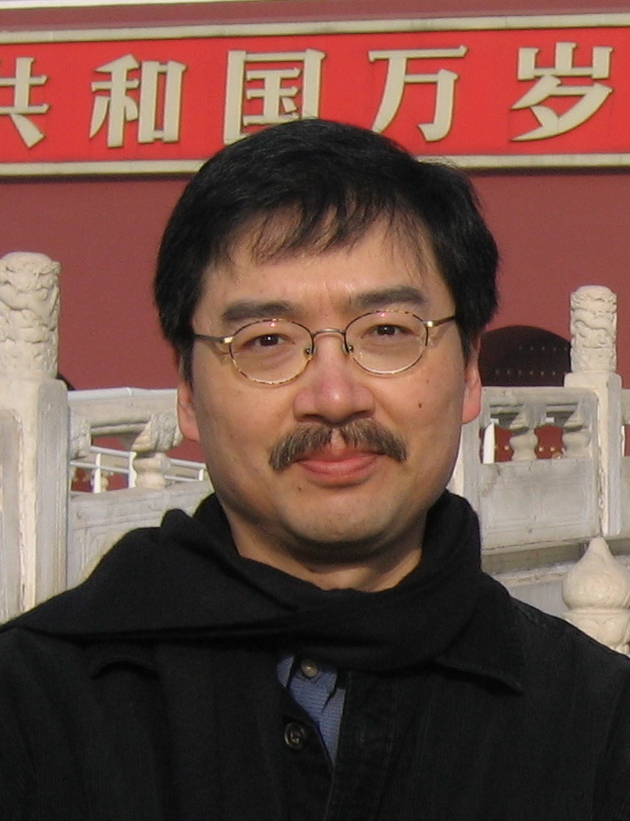
P. Sai-wing Ho is Professor Emeritus in Economics at the University of Denver. His research interest in Development Economics, International Economics and History of Economic Analy...
View profile >Keep up with the latest from Cambridge University Press on our social media accounts.



Latest Comments
Have your say!