

Products and services


English linguistics is in the middle of a transformation. That’s nothing new. This field has always been quick to adapt, but the current shift may be different in scale. It mirrors the broader digitalization that is shaping science, education, and everyday life. It’s driven not only by new AI‑based tools that have changed how we produce text, but also by the wider datafication of society.
For researchers, this means access to unprecedented volumes of language data and digital tools that would have been unimaginable a generation ago. The shift isn’t just about bigger data; it’s about rethinking what it means to study language in a world where communication is constantly recorded, quantified, and algorithmically processed.
For students of English, this opens up exciting opportunities. There is a growing need for graduates who can handle large‑scale textual data and understand the cultural, historical, and social contexts in which that data was produced.
From corpora to computational ecosystems
For decades, English linguists have relied on digital corpora, structured collections of texts, to study real language use. But the digital turn has radically expanded what counts as data and what we can do with our data. We now have billions of words from social media, online forums, video transcripts, and digitized historical archives. We can also study how texts were produced, by whom, and how they form networks of meaning across platforms and communities.
These sources offer “rich data,” full of contextual and social information that traditional corpora often lacked. With them come research possibilities that once seemed out of reach. We can track how new words spread across online communities in real time, or how regional dialects evolve through digital communication. Digital tools and data-intensive methods may also lead to completely new questions, potentially transforming the ways we do research.
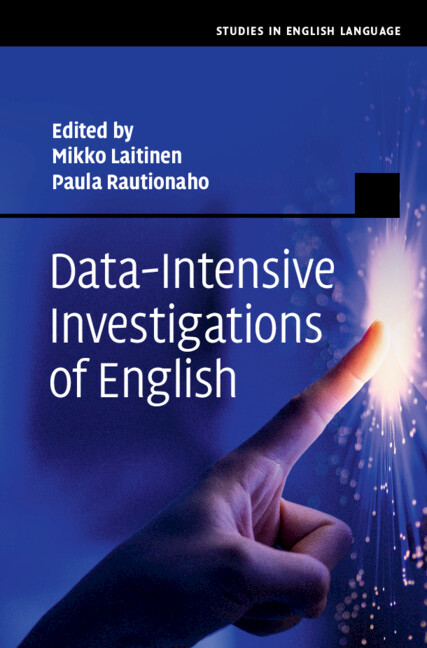
Data-Intensive Investigations of English reflects this shift. The chapters in this edited volume use data‑intensive methods from multiple angles: Some analyze dialect archives with big‑data techniques. Others explore novel methods to study changes in meaning or word formation processes. Several apply advanced machine learning and statistical models to study grammatical variability or complexity. Others tackle the challenge of ensuring replicability in a fast‑moving digital research environment
Although these chapters are grounded in fundamental research, their insights reach far beyond academia. Even if you’re not a linguist, you’re living in a data‑intensive linguistic world. Students encounter English in social media captions, gaming chats, AI‑generated essays, and global online communities. Teachers navigate classrooms where digital literacy and linguistic awareness increasingly overlap.
Data‑intensive linguistics helps us:
But new tools also bring new risks. One of them is digital fetishism: the temptation to adopt computational methods simply because they’re fashionable. A key part of avoiding this trap is recognizing that data are never neutral. Digital tools carry assumptions about language, identity, and social categories, and these assumptions can easily go unnoticed.
This is where English linguistics has something essential to offer: theoretical grounding. Data‑intensive research must remain anchored in solid linguistic theory about English, its structure and history, and its use in context. Without that foundation, even the most sophisticated models can distort the reality they claim to describe.
A more interdisciplinary future
One of the most promising developments in data‑intensive linguistics is the growing collaboration between linguists, computer scientists, statisticians, and digital humanists. English studies may be moving toward a data‑informatics model, where researchers not only use digital tools but help design them. Many pioneers are already working this way, and the trend is likely to accelerate.
This reflects a broader societal shift: digitalization is no longer a technical add‑on but a structural change in how knowledge is produced. English linguistics is becoming a test case for how the humanities can thrive in a data‑driven world, but without losing sight of the human beings behind the data.

Mikko Laitinen is Professor of English at the University of Eastern Finland. He is an elected member of the Finnish Academy of Sciences and Letters and one of the leaders in the na...
View profile >Paula Rautionaho is Senior Researcher at the School of Humanities, University of Eastern Finland. Her research focuses on grammatical alternations in World Englishes and recent Bri...
View profile >Keep up with the latest from Cambridge University Press on our social media accounts.




Latest Comments
Have your say!