Number of articles per page:
-
Tore Rye Andersen
The cover of The Anthropocene and Literature features a photo from an abandoned house in the ghost town of Kolmanskop in Namibia. The former mining town was established in the early twentieth century when Namibia was still a German colony, and it was abandoned only fifty years later, when the diamond mines were depleted. With […]
Read More
-
David Mayers
At a moment when many Americans fear the rise of a zealous, sometimes racist, form of populism, when the “bonds of affection” between citizens have demonstrably frayed, and a version of authoritarianism has emerged in Washington, an unsettling question has arisen: should a reasonable person leave the United States? Interestingly, the question is not a […]
Read More
-
Agnes Mueller
In the wake of the Hamas attacks on October 7, 2023, and the war in Gaza that followed, political conversations in the United States, Germany, and elsewhere have grown more tense and divisive. Accusations of antisemitism circulate with fresh urgency, but often in ways that generate confusion or anger. At the same time, we’re moving […]
Read More
-
Jack McNally, Kate Purcell, Natalie Klein
Among the many different ways that humans interact with the ocean, submarine operations are instrumental in furthering those activities. Submarines are deployed in scientific exploration, seabed exploitation, the development of critical infrastructure and criminal activities. Above all, submarines hold military and strategic significance for States and their navies. Yet the regulation of submarines under international […]
Read More
-
Paul Eggert
For many years I tried, without success, to crack the code of a literary critical puzzle concerning D. H. Lawrence. The tradition of post-World War II Lawrence criticism, remarkable though it was in remaking successive Lawrences sensitive to the discourses of the day (existentialism, feminism, postcolonialism, eco-criticism), hadn’t got me there. But then, amidst the […]
Read More
-
Alan E. Rubin
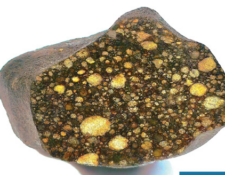
Meteorites pelt our planet at a rate of 80,000 tons per year. About 70% of this material falls into the oceans, but much of the rest is potentially recoverable. And recovery is essential – meteorites are the most important rocks on Earth. They are the number-one source of extraterrestrial material, and they come to Earth […]
Read More
-
Deborah Mayersen
How do we prevent genocide? The modern world has been plagued with this ‘crimes of crimes’, that has claimed many millions of lives over the past century or more. In 1948, in the aftermath of the Holocaust, the international community committed to preventing genocide through the United Nations Convention on the Prevention and Punishment of […]
Read More
-
Shahla F. Ali
While infrastructure development has long been associated with social progress, economic development and advanced living standards, it has likewise given rise to challenges including disruption, environmental harm and inequity. On the one hand, infrastructure development has been described as presenting both ‘immaterial ideals and material notions necessary to change the world’.[1] It speaks to both […]
Read More
-
Tore Rye Andersen
The cover of The Anthropocene and Literature features a photo from an abandoned house in the ghost town of Kolmanskop in Namibia. The former mining town was established in the early twentieth century when Namibia was still a German colony, and it was abandoned only fifty years later, when the diamond mines were depleted. With […]
Read More
-
David Mayers
At a moment when many Americans fear the rise of a zealous, sometimes racist, form of populism, when the “bonds of affection” between citizens have demonstrably frayed, and a version of authoritarianism has emerged in Washington, an unsettling question has arisen: should a reasonable person leave the United States? Interestingly, the question is not a […]
Read More
-
Agnes Mueller
In the wake of the Hamas attacks on October 7, 2023, and the war in Gaza that followed, political conversations in the United States, Germany, and elsewhere have grown more tense and divisive. Accusations of antisemitism circulate with fresh urgency, but often in ways that generate confusion or anger. At the same time, we’re moving […]
Read More
-
Jack McNally, Kate Purcell, Natalie Klein
Among the many different ways that humans interact with the ocean, submarine operations are instrumental in furthering those activities. Submarines are deployed in scientific exploration, seabed exploitation, the development of critical infrastructure and criminal activities. Above all, submarines hold military and strategic significance for States and their navies. Yet the regulation of submarines under international […]
Read More
-
Paul Eggert
For many years I tried, without success, to crack the code of a literary critical puzzle concerning D. H. Lawrence. The tradition of post-World War II Lawrence criticism, remarkable though it was in remaking successive Lawrences sensitive to the discourses of the day (existentialism, feminism, postcolonialism, eco-criticism), hadn’t got me there. But then, amidst the […]
Read More
-
Alan E. Rubin
Meteorites pelt our planet at a rate of 80,000 tons per year. About 70% of this material falls into the oceans, but much of the rest is potentially recoverable. And recovery is essential – meteorites are the most important rocks on Earth. They are the number-one source of extraterrestrial material, and they come to Earth […]
Read More
-
Deborah Mayersen
How do we prevent genocide? The modern world has been plagued with this ‘crimes of crimes’, that has claimed many millions of lives over the past century or more. In 1948, in the aftermath of the Holocaust, the international community committed to preventing genocide through the United Nations Convention on the Prevention and Punishment of […]
Read More
-
Shahla F. Ali
While infrastructure development has long been associated with social progress, economic development and advanced living standards, it has likewise given rise to challenges including disruption, environmental harm and inequity. On the one hand, infrastructure development has been described as presenting both ‘immaterial ideals and material notions necessary to change the world’.[1] It speaks to both […]
Read More
Number of articles per page: