

Products and services

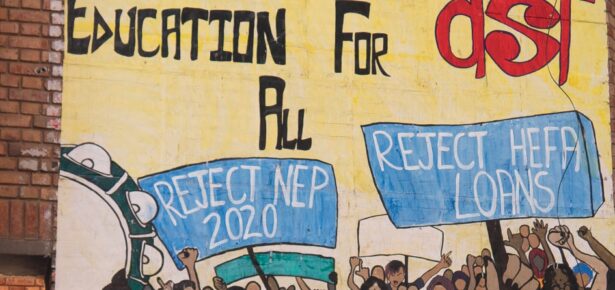
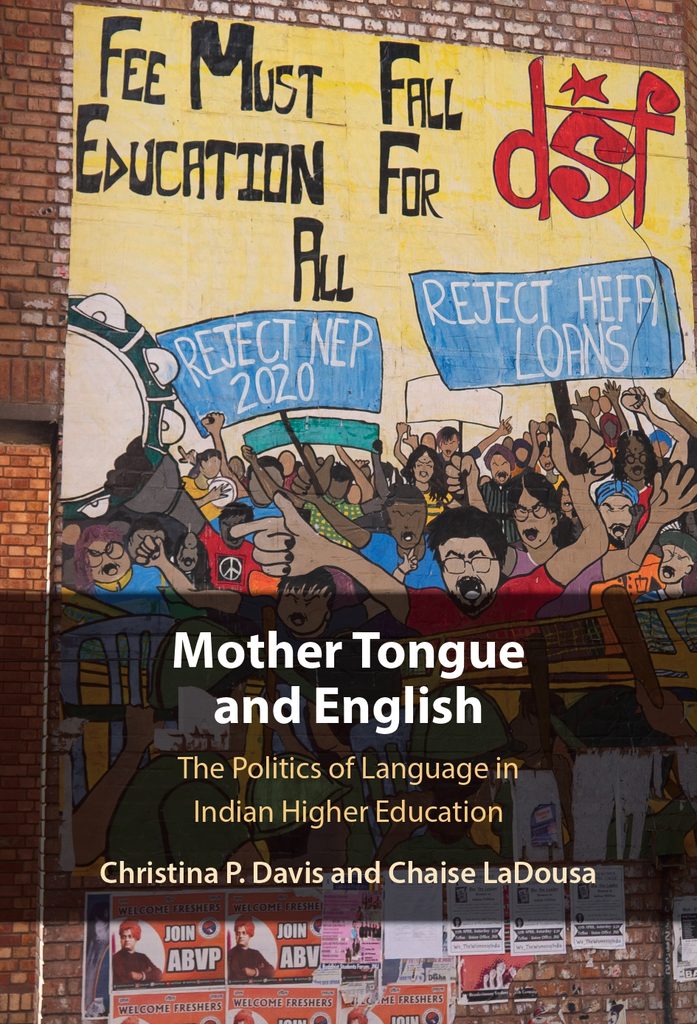
Institutionalized as a census category in 1881, the concept of mother tongue is central in education policy, scholarly discourse, and popular understandings of language and social identity in contemporary India. In 2020, the National Democratic Alliance government, led by the Bharatiya Janata Party, released the National Education Policy 2020 (NEP 2020), which proposes changes to the structure of the national education system. It recommends that students receive instruction in their “mother tongue” whenever possible, but, strikingly, makes little mention of English, despite its desirability at all levels of education. Over the past two decades, globalization and neoliberalism have fueled an ever-growing demand for English among Indians across caste, class, gender, and religious backgrounds. English proficiency is seen as a prerequisite for lucrative jobs in India and abroad. Given the NEP 2020’s emphasis on mother tongue to the near exclusion of English, our new book, Mother Tongue and English, asks: How do the constructions, foci, and relative silences of education policy resonate with Indian higher education students’ understandings and uses of languages?
The book is the first to ethnographically examine mother tongue, a category that is often taken for granted in education policy and scholarly work. It draws on participant observation and interviews at three elite higher education institutions—Indian Institute of Technology Gandhinagar, Delhi University, and Jawaharlal Nehru University—to analyze how students makes sense of the concept of mother tongue in relation to English. The inquiry is grounded in a consideration of ideological constructions of mother tongue and English in education policy, national media activity, cultural performances, and digital media practices.
Mother Tongue and English shows that while some students’ descriptions of mother tongue were consistent with the 2011 census and the NEP 2020, there was no consensus on how mother tongue should be defined. For example, most students associated mother tongues with communicative fluency, but several named regional languages as mother tongues even though they lacked proficiency in them.
The students spoke extensively about the importance of English to their education and job prospects and exhibited a high level of spoken and written proficiency in it. Yet they characterized English in sharp ideological opposition to mother tongues, describing it as “foreign,” “alien,” and “Other.” While several students said it was possible that an Indian may claim English as a mother tongue, they could not come up with any examples. One student whose parents were from diverse linguistic backgrounds described English as his “first” and “primary” language, but stopped short of claiming it as a mother tongue. Thus, English is a crucial part of students’ lives, but it seemed ideologically unavailable as a mother tongue, even when they described using it with ease.
Policy makers, scholars, and students have long sought to reconcile the role of Indian language in relation to the pervasive role of English in colonial and postcolonial India. Mother Tongue and English argues that widely circulating ideas of mother tongue do not fit students’ situations, and contrasts between mother tongues and English do not address the complexity of their multilingual language practices and identifications. The book enhances scholarship on language practices in postcolonial nation-states by illustrating how Indian students wrestle with the concepts that have shaped their educational and life trajectories. We argue that mother tongue is both a key concern and ultimately incoherent ideology in policy and student reflections.

Chaise LaDousa is Sidney Wertimer Professor of Anthropology at Hamilton College. His research focuses on language, culture, and political economy in India and the US. He is the aut...
View profile >
Christina P. Davis is Professor of Anthropology at Western Illinois University. Her research focuses on multilingual education, language policy, and digital media practices in Indi...
View profile >Keep up with the latest from Cambridge University Press on our social media accounts.



Latest Comments
Have your say!