

Products and services


In the summer of 1999, I was studying English at a language center in Canada, one voice among hundreds of accents crowding the poster-lined hallways. A teacher there, Mr. Wilson, was not someone I had ever taken a class with, but he had a habit of stopping students in the hallway to correct them. One afternoon, he stopped me. “How are you?”—a very innocent question. “I am very well, thank you,” I replied. His face fell, and he told me the phrase was not “grammatically correct in this context.” He patted my shoulder. “You’ll get better, though.” He was not my teacher. That was not a classroom. What I met in that hallway was native-speakerism: the condescending belief that English belongs, by default, to those who were born speaking it.
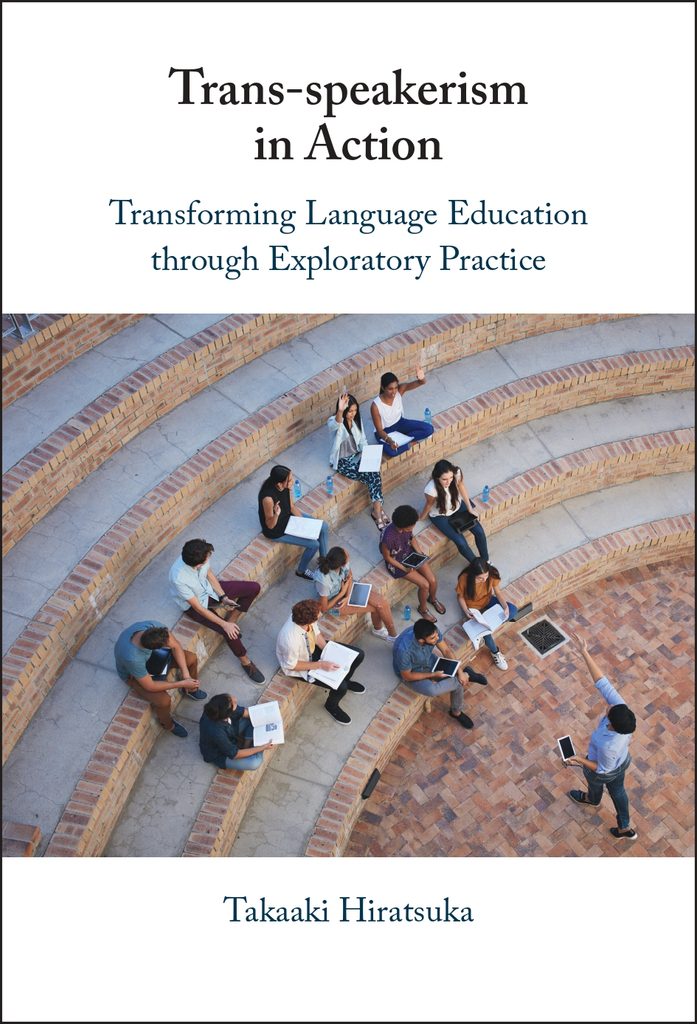
That belief is what my new book, Trans-Speakerism in Action (Cambridge University Press), sets out to subvert—not just as an argument, but as something tested, and undone, in a real classroom. Over one semester, I followed twelve Japanese university students through a course built around a teaching approach called Exploratory Practice that turns ordinary lessons into shared investigations. Instead of lecturing about native-speakerism and trans-speakerism, I asked the students to unpack their own questions about these two ideologies, in their own words, throughout the term.
What they found still surprises me. One student, Hitomi, described her own turnaround directly: “the English spoken by native speakers was so cool. I wanted to be like them. But after taking the course, I am now a little bit proud of my Japanese accent.” Another student, Eri, went further. Near the end of the term, she wrote that with a new term now available to her, she believed the whole speakerhood stratification could recalibrate: “Native speakers will not be seen as the best, and non-native speakers can be seen as good or even better.” A third student, Kai, reached a similar conclusion: “non-native teachers offer … valuable perspectives and experience.”
I have felt the other side of that recalibration myself. Years after the interaction in Canada, while I was working on my PhD in New Zealand, a fellow doctoral student was giving his qualifying presentation, and I raised a question about his sampling methodology, in a room full of native English-speaking academics. Afterward, I received an email from the program coordinator: my question had been serious enough that his supervisory team was revising the research design because of it. English was not my first language, but what mattered was the question itself.
Many years separate that hallway in Canada, that qualifying presentation in New Zealand, and that classroom in Japan. The first taught me who was assumed to own “better” English. The second taught me that ownership does not have to stay there. The third turned that lesson into practice, one classroom, one student, one sentence at a time. Trans-Speakerism in Action is my attempt to hand that judgment of ownership back to the people who have actually earned it through knowledge, awareness, experience, and agency.
Further Reading: Read Takaaki Hiratsuka’s another blog post, “From Imposter to Impact: My Journey with Native-Speakerism and Trans-Speakerism in ELT”

Takaaki Hiratsuka is a Professor at Ryukoku University, Japan. His books include: Narrative inquiry into language teacher identity (2022, Routledge), Team teachers in Japan (2023, ...
View profile >Keep up with the latest from Cambridge University Press on our social media accounts.




Latest Comments
Have your say!