

Products and services

When Maria de la Concepción boarded the ship out of Lisbon bound for Brazil, she never could have anticipated her eventual challenges. After providing an enslaved woman in Mexico with a love potion, Concepción was brought before the inquisition on sorcery charges in 1668. Two hundred and fifty years later, the extended Estevanovich family faced different trials. Originally from Serbia but departing from Buenos Aires, Argentina, the eight adults and twelve children were blocked from entering the United States at Ellis Island and eventually recorded in Recife, Brazil in 1904. Though separated by time and distanced in place, these unlucky sojourners had one thing in common-they were Romani people navigating a world saturated with anti-Romani sentiments. As such, what might have been opportunities for others melted away for them in the face of powerful institutions.
As these stories suggest, Romani people have been part of Atlantic circulations for over five hundred years. Despite this, virtually all scholarship related to them has centered European experiences. The stories of Romani communities in the Americas and Africa remain excluded from collective historical memory. Our collection, The Romani Atlantic, begins to rectify this absence by exploring dozens of episodes from across four continents and five centuries that center Romani experiences. Doing so shows how Romani people, who have most commonly been viewed as the largest European minority, have always been part of the modern global world.
The Atlantic World paradigm has been applied by scholars in multiple ways. Emerging from the work of early modern historians, its expansiveness has much to contribute to other eras and methodological approaches. Although a geographic space, the Atlantic World is helpfully conceived of as a sphere of circulations, interactions, connections, and exchanges, as well as a zone of contact where identities interlace and transform. The transborder considerations of Atlantic history can counter the limitations of the nation-state as a frame for scholarly inquiry and enable a more accurate understanding of the defining features in individuals’ and communities’ lives. As such, it has proven an especially fruitful approach to understanding Romani peoples’ experiences.
Romani people have traveled the Atlantic for a variety of reasons. Some did so voluntarily, while others were coerced. In the colonial era, Portugal notoriously forced many Romani men into Angolan military service, while France transported whole families to Louisiana. In both cases, these exiles managed to shape their futures-as traders, ranchers, and shipbuilders-even in the face of dire circumstances. More recently, Romani immigrants, in search of new opportunities and, at times, fleeing anti-Romani sentiments in Europe, built new communities in the Americas, while staying connected to family back home. Still today, for instance, some young American Roma might think of Macedonia as home, despite never having visited; transatlantic cultural connections can even transcend geographic space.
The Atlantic sits at the complicated center of many contemporary Romani lives. Anti-Romani sentiment, often spoken about today as the last acceptable form of racism, remains widespread due, in many ways, to their emplacement outside history. Maria de la Concepción’s inquisition testimony and the Estevanovich family’s scattered port records are not footnotes to someone else’s story. Recovering them, and the hundreds of stories like them, is how we begin to confront and address Romani marginalization. The Atlantic has been carrying Romani lives for half a millennium-it’s time our histories caught up. We need to write Romani people back into the world they helped build: not as history’s perpetual outsiders, but as co-creators of the modern world itself.
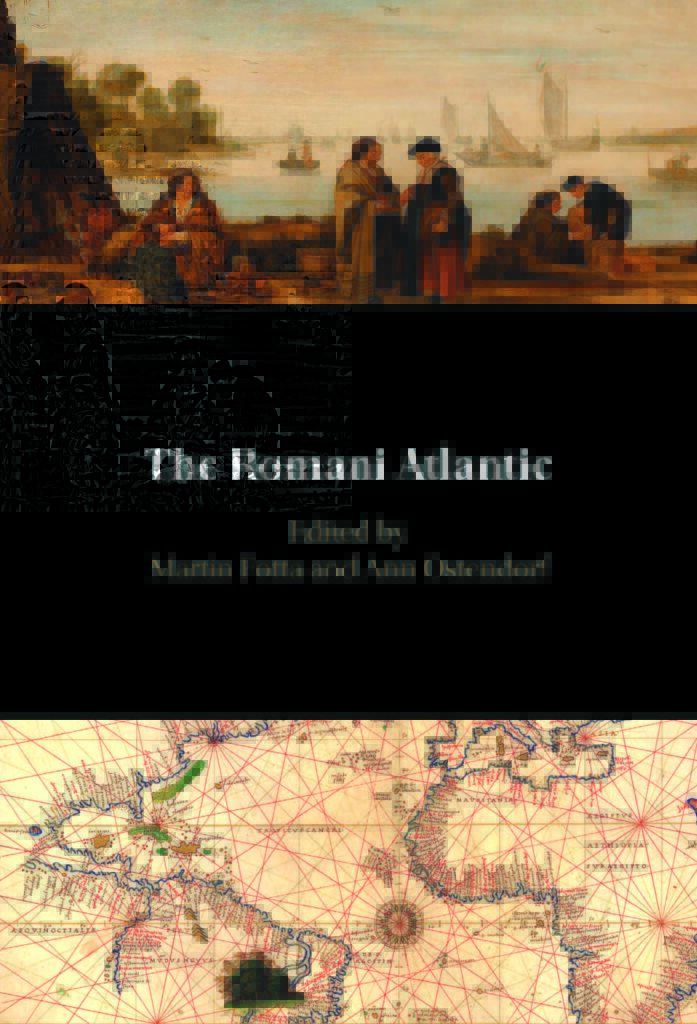
The Romani Atlantic edited
by Martin Fotta and Ann Ostendorf

Martin Fotta is Head of the Department of Mobility and Migration, Institute of Ethnology, Czech Academy of Sciences. He is the author of From Itinerant Trade to Moneylending in the...
View profile >Ann Ostendorf is Professor of History at Gonzaga University. She is the author of Sounds American....
View profile >Keep up with the latest from Cambridge University Press on our social media accounts.


Latest Comments
Have your say!