
Products and services


Presidents have long sought to shape the federal bureaucracy. But few have challenged it as aggressively as Donald Trump. Throughout his political career, Trump has argued that unelected bureaucrats—the so-called “deep state”—exercise too much influence over government policy. In his March 4, 2025 address to Congress, he declared, “The days of rule by unelected bureaucrats are over.” One of the most controversial proposals associated with this effort was Schedule F, a new federal job classification introduced during his first administration that would make it easier to dismiss many career civil servants.
The controversy surrounding Schedule F raises a much broader question: What happens when governments weaken job protections for bureaucrats?
The answer matters because bureaucrats are the people who turn political promises into public policy. More than two million federal employees carry out government programs every day. Presidents and elected officials change, but career bureaucrats remain. Their incentives therefore have profound consequences for how government actually works.
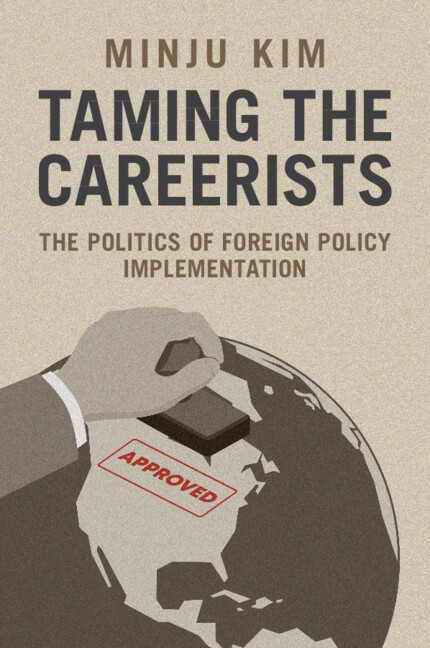
In Taming the Careerists: The Politics of Foreign Policy Implementation, I answer this question through the lens of U.S. foreign economic policy, focusing on the implementation of trade and immigration programs. Rather than treating the bureaucracy as a single institution, the book examines the incentives of individual bureaucrats and shows how something as seemingly administrative as an employment contract can shape the implementation of foreign policy.
To answer these questions, I look well beyond the Trump years. The book draws on evidence spanning more than five decades, combining original datasets assembled through Freedom of Information Act requests, archival research, interviews with current and former officials, hundreds of internal policy memoranda, and computational text analysis. Together, these sources provide a detailed picture of how bureaucrats respond to different institutional incentives over time.
The findings reveal an important trade-off.
On one hand, reducing job protections makes bureaucrats more responsive to elected leaders. Officials who can be dismissed more easily are more likely to implement policies in ways that reflect presidential priorities, particularly when administrations hold sharply polarized policy positions. In this sense, weaker job protections can strengthen democratic accountability by making the bureaucracy more responsive to electoral outcomes.
On the other hand, greater responsiveness comes at a cost. Bureaucrats with weaker job protections also adjust more quickly to changes in political leadership, making policy implementation less consistent across administrations. For foreign policy, this instability matters. Allies and international partners depend on a degree of continuity in U.S. policy when making their own strategic decisions. Frequent shifts in implementation can undermine predictability and weaken confidence in American leadership.
Although the book focuses on the United States, the underlying tension extends far beyond Washington. Similar trade-offs emerge in countries experiencing democratic backsliding, where bureaucrats increasingly face pressure to align themselves with incumbent political leaders. International organizations confront comparable challenges. Strong employment protections can help officials implement long-term mandates consistently, yet they may also raise concerns about democratic accountability when member governments’ preferences change.
The debate over Schedule F therefore reflects more than a dispute about personnel policy. It highlights a fundamental institutional question that every democracy must confront: How should governments balance political responsiveness with policy stability? The answer shapes not only how bureaucracies function but also how governments deliver public policy, maintain democratic accountability, and sustain credibility at home and abroad.

Minju Kim is an assistant professor of political science at Syracuse University's Maxwell School of Citizenship and Public Affairs. Her research examines how bureaucrats in domesti...
View profile >Keep up with the latest from Cambridge University Press on our social media accounts.




Latest Comments
Have your say!