

Products and services


Institutional investors have become some of the most influential actors in modern capitalism. They decide where pension savings are invested, which companies receive capital, and increasingly shape corporate responses to challenges ranging from executive pay to climate change. Yet only a few decades ago, many institutional shareholders were criticised as passive or “absentee owners”. Today, they are expected to be active stewards of companies—and increasingly the economies—in which they invest.
How did we get here? More importantly, who are institutional investors really stewards for?
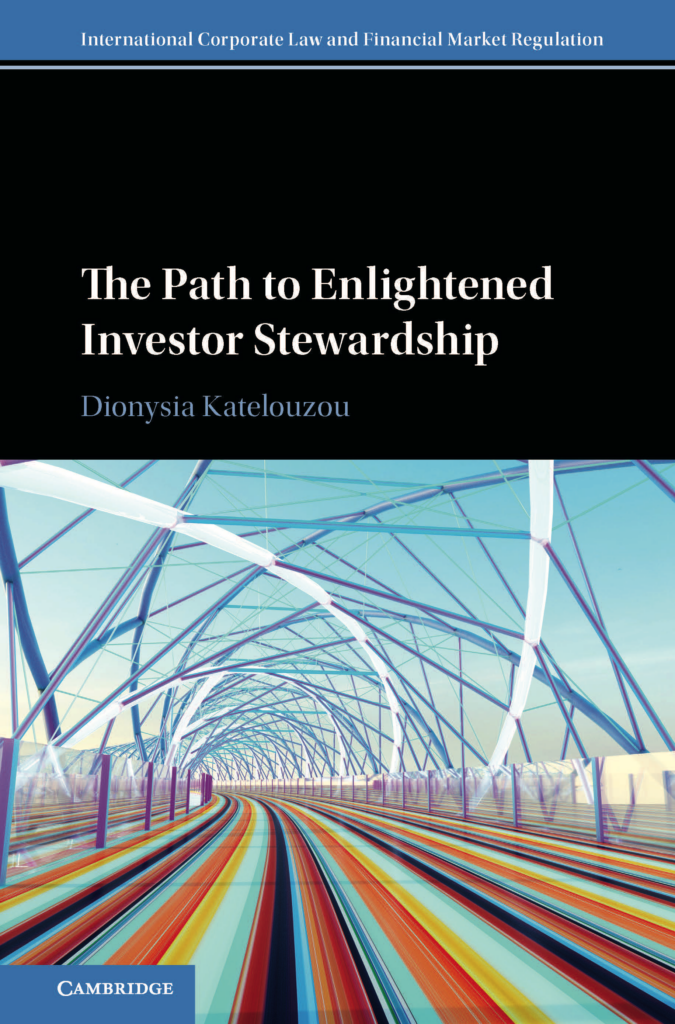
The Path to Enlightened Investor Stewardship tells the story of this transformation. It traces the evolution of shareholder governance over two centuries, from ideas of ownership and control to the rise of institutional investors and the emergence of stewardship as one of the defining concepts in corporate governance.
Along the way, shareholder activism changed. Once associated primarily with hedge funds targeting individual companies, it expanded into broader forms of engagement addressing sector-wide and market-wide risks. As institutional investors became more diversified and systemic risks more prominent, stewardship evolved beyond influencing individual companies towards protecting the long-term health of investment portfolios and the systems on which they depend.
But this evolution raises a more fundamental question: what does it actually mean to be an investor steward?
Investor stewardship is often reduced to voting at shareholder meetings or engaging with company management. The book argues that this is too narrow. Stewardship is about exercising investment power on behalf of others. Institutional investors operate within complex chains of delegation and accountability. They owe fiduciary duties to clients and beneficiaries, yet their decisions increasingly affect end-investors, investee companies and the financial, environmental and social systems on which long-term value depends.
The UK has been at the forefront of this development. Its Stewardship Code has become the international benchmark, influencing stewardship regimes worldwide while expanding expectations of institutional investors. Yet whether these ambitions have translated into practice has remained an open question.
To answer that question, the book combines legal analysis with computational methods, using natural language processing to analyse hundreds of UK stewardship reports. It shows that stewardship is interpreted in strikingly different ways. Some investors embrace broader ideas of long-term responsibility, while others continue to view stewardship primarily as corporate governance or regulatory compliance. Stewardship has become one of the defining ideas of modern corporate governance—but also one of its most ambiguous.
Rather than searching for a single model of stewardship, the book develops a framework showing that investor stewardship takes many forms—across different levels of intervention, actors, asset classes, motivations and methods. It concludes by proposing enlightened investor stewardship as a framework grounded in fiduciary responsibility while recognising that long-term investment increasingly depends on the health of the systems within which markets operate.
If stewardship has become one of the defining ideas of twenty-first-century corporate governance, perhaps the most important question is no longer whether institutional investors should be stewards, but what kind of stewards they should be.

Dionysia Katelouzou is Reader in Law at King's College London and a Research Member of ECGI. She specialises in comparative and transnational corporate law, corporate governance, a...
View profile >Keep up with the latest from Cambridge University Press on our social media accounts.




Latest Comments
Have your say!