

Products and services

Buying furniture from IKEA often feels like a metaphor for European integration. The pieces arrive separately, the instructions are never quite as straightforward as they seem, and assembling the final product requires patience, compromise, and occasional frustration. The European Union has often been built in much the same way-not according to a single grand design, but through countless adjustments over time.
That’s one of the central insights of A Concise History of the European Union. The history that has led to today’s EU was far from inevitable. At several points, integration could have stalled, taken a different direction, or even fallen apart. National governments remained protective of their own interests, and many of the debates that dominate headlines today—about security, democratic accountability, migration, or economic policy—have been present in one form or another since the project’s early decades.
The book provides the kind of robust factual background readers expect from a volume in CUP’s Cambridge Concise History series. Beginning with a quick look back to pre-1945 developments and the foundational treaties of the 1950s, it examines how the EU became an increasingly global actor through the 1980s and 1990s. Focusing particularly on recent developments, the book explores how the EU’s current role was far from a given and remains fragile. While providing empirical details, the book is argument-driven. Among other points, it argues that the late 2000s have seen a major reorientation from liberalization to a focus on security. It traces such changes and highlights the adaptability and resilience of the EU and how it has turned challenges into opportunities and expanded its own role in the process. This book sheds new light on the past in order to understand the present-and possible options for the future. In the process, it challenges conventional wisdoms of Europhiles and Eurosceptics alike.
The book also pays close attention to the wider international forces that shaped the European Union, from American influence during the Cold War and the role of decolonization to the collapse of the Soviet bloc and the accelerating pressures of globalization. Enlargement, particularly after 1989, emerges not simply as an act of political generosity but as a process that fundamentally reshaped the Union’s priorities, institutions, and internal dynamics.
A Concise History of the European Union neither celebrates the European Union as an unqualified success nor dismisses it as a bureaucratic experiment gone wrong. Instead, it presents it as an ongoing political project—one that has solved some problems, created others, and continues to evolve in response to changing circumstances. The only thing that is certain: The EU is too important to ignore. And, like an piece of IKEA furniture, it may be more fascinating than it first appears.
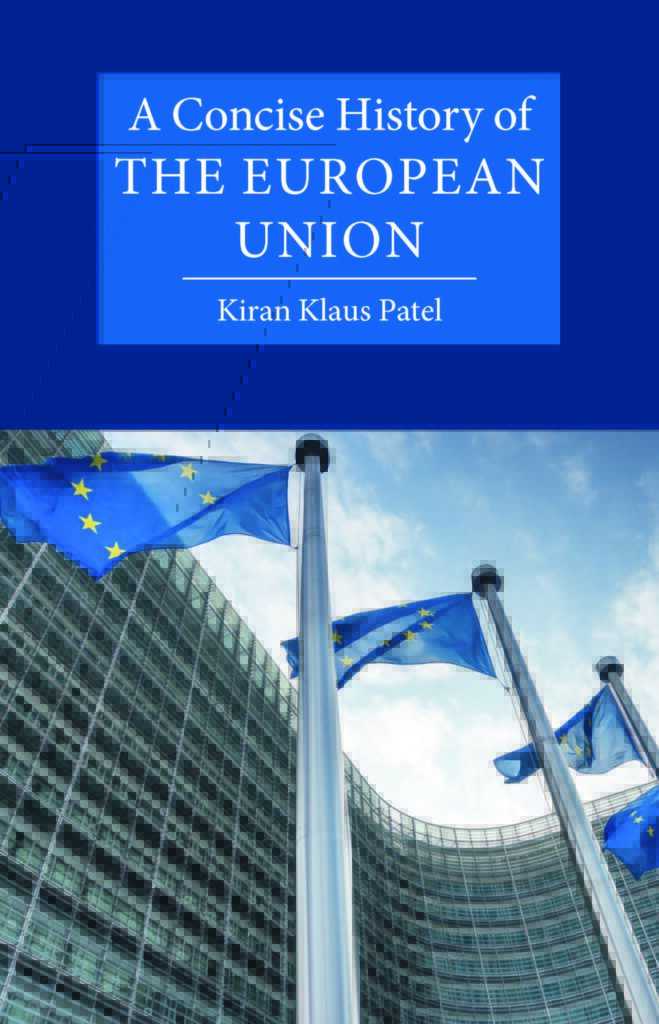
A Concise History of the European
Union by Kiran Klaus Patel

Kiran Klaus Patel holds the Chair for Modern History at Ludwig Maximilian University of Munich where he also serves as the director of Project House Europe, LMU's centre for interd...
View profile >Keep up with the latest from Cambridge University Press on our social media accounts.




Latest Comments
Have your say!